
Wooden Church of St. Barbara near Zagreb
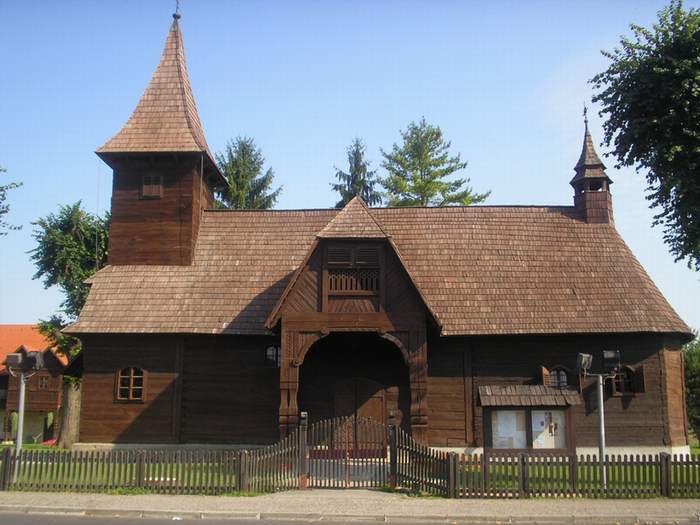
The Church of St. Barbara and its interior are representative examples of Turopolje folk architectural and painting heritage.
The wooden church of Saint Barbara is located in the western part of the Velika Mlaka settlement in Turopolje. Next to the church is the rectory – a wooden blockhouse with a carved wooden porch.
The region of Turopolje and Pokuplje has 11 old wooden chapels and churches that have been preserved over time. These structures were constructed during the 17th century by skilled carpenters and woodworking companies in the Turopolje area.
The basis of the traditional architecture was pedunculate oak, as the indigenous building material the local masters used to build farmhouses, manors – timber framed country houses of wealthy people from Turopolje, blockhouses – wooden homes on floors with beautifully decorated staircases and wooden chapels.
The Sveta Barbara was constructed in 1642 and underwent multiple additions in the following centuries. The last addition was the porch of the southern entrance and it was completed in 1912. The structure was built from hewn oak planks or beams held together. The roof is made of shingles.
The traditional technique of building wooden structures did not require nails or other connecting elements. The joined planks created a strong and rigid connection, making the structure more resistant to wind and earthquakes.
In the interior of Saint Barbara, there is a beautiful winged altar from the 17th century depicting the life and martyrdom of Saint Barbara on the one and the Passion of Christ on the other side. Tabs and wood paneling like a gallery of our domestic paintings preserved about 150 painted surfaces depicting saints and plant motifs. In the chapel, there is a rare iconographic representation of Kümmernisse, the crucified saint with a beard – in other European regions also known as Liberata or Wilgefortis.
According to the legend from the 14th century, she lived in Portugal and Galicia. She was a teenage noblewoman who had been promised in marriage by her father to a Moorish king. To thwart the unwanted wedding, she had taken a vow of virginity and prayed that she would be made repulsive. In answer to her prayers, she sprouted a beard, which ended the engagement. In anger, her father had crucified her.
This fictional folk saint was never canonized or officially recognized by the Church, but she was popular among the people, especially among women who wanted to free themselves from abusive husbands.
Location
Zagreb
Zagreb is the capital and largest city of Croatia. It is situated on the slopes of Medvednica mountain, in the Carpathian Basin, and on the banks of the Sava river. Zagreb has a rich and diverse history, culture, and architecture that reflect its long and turbulent past.
ExploreBaroque
One of the most remarkable periods in Croatian art history is the Baroque, which lasted from the 17th to the late 18th century. During this time, Croatia was reunited with the parts of its territory that were occupied by the Venetian Republic and the Ottoman Empire, after centuries of fragmentation and division. This reunification not only brought political stability and economic prosperity but also stimulated a cultural revival and a flourishing of art in every segment.
Explore


Reviews
There are no reviews yet.