
Church of St. Nicholas near Nin


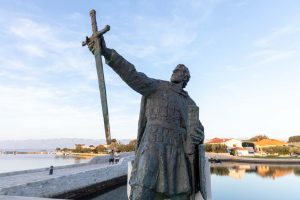
According to tradition, seven rulers from the Croatian dynasty were crowned in Nin. As part of their coronation, they and their entourage were required to ride on horseback to the Church of St. Nicholas.
There, they would present themselves to the people and, as a symbol of their royal authority, strike a sword into the mound, facing all four cardinal directions.
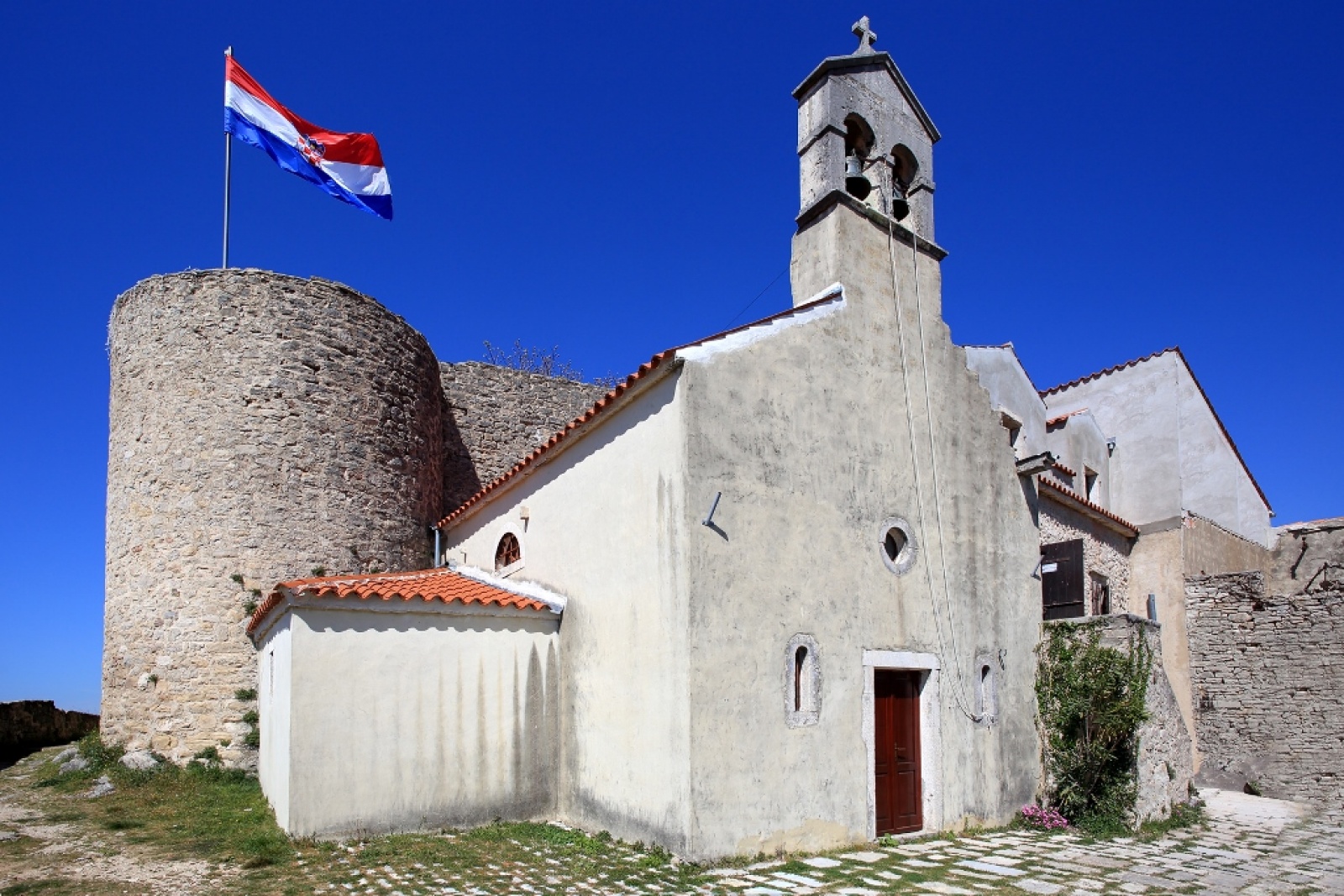
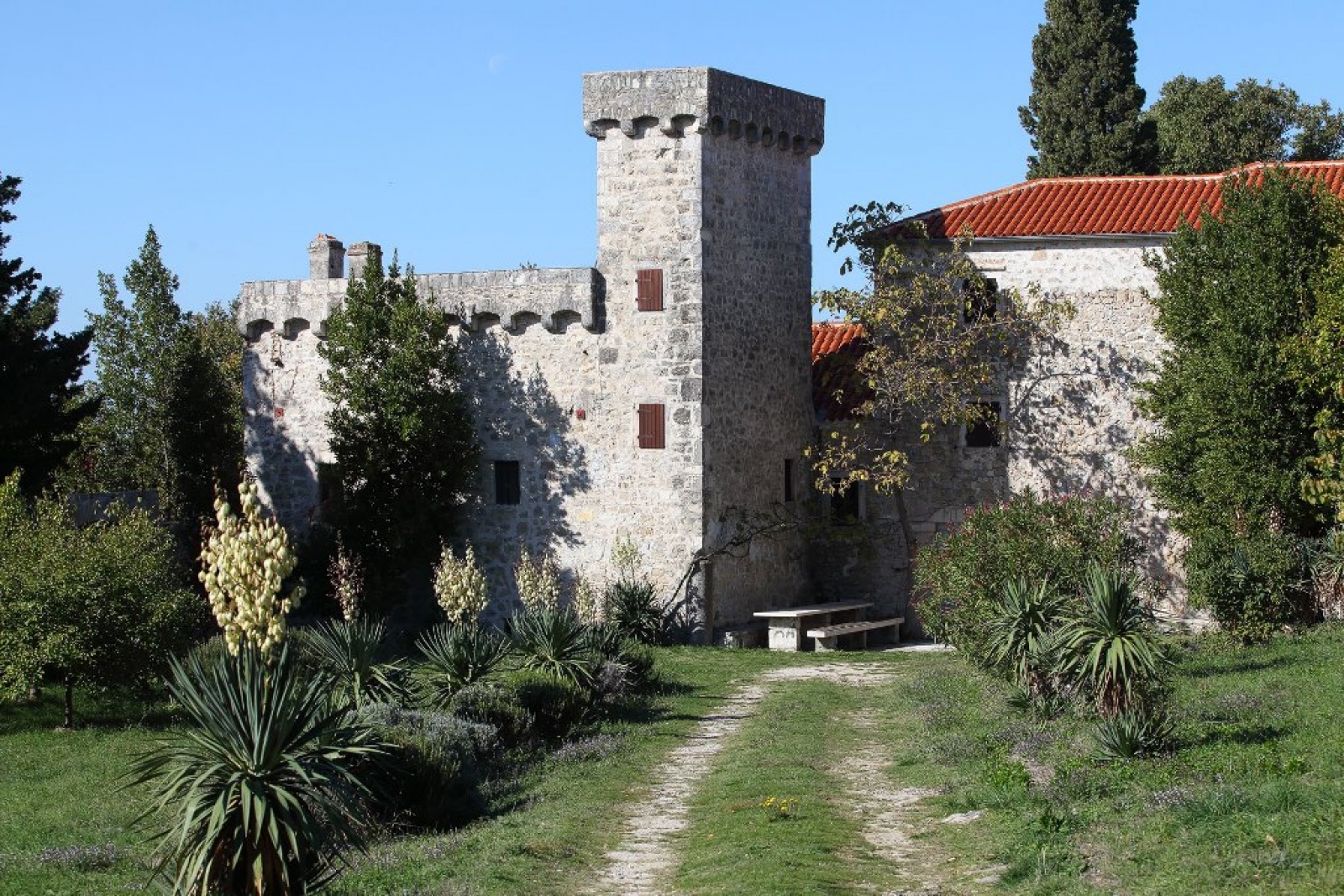
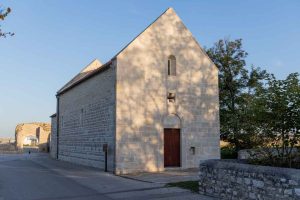
While this is a beautiful story that suits the impressive church on its hill with a defensive tower, it seems unlikely to be true. The church dates back to the end of the 11th and the early 12th century and is the only example of this type of early Romanesque building in Dalmatia. By that time, there were no longer native Croatian rulers, as the Hungarian Arpád dynasty had taken the throne. Therefore, if there is any truth to the legend, it could only have referred to a different church that once stood on or near the same site.
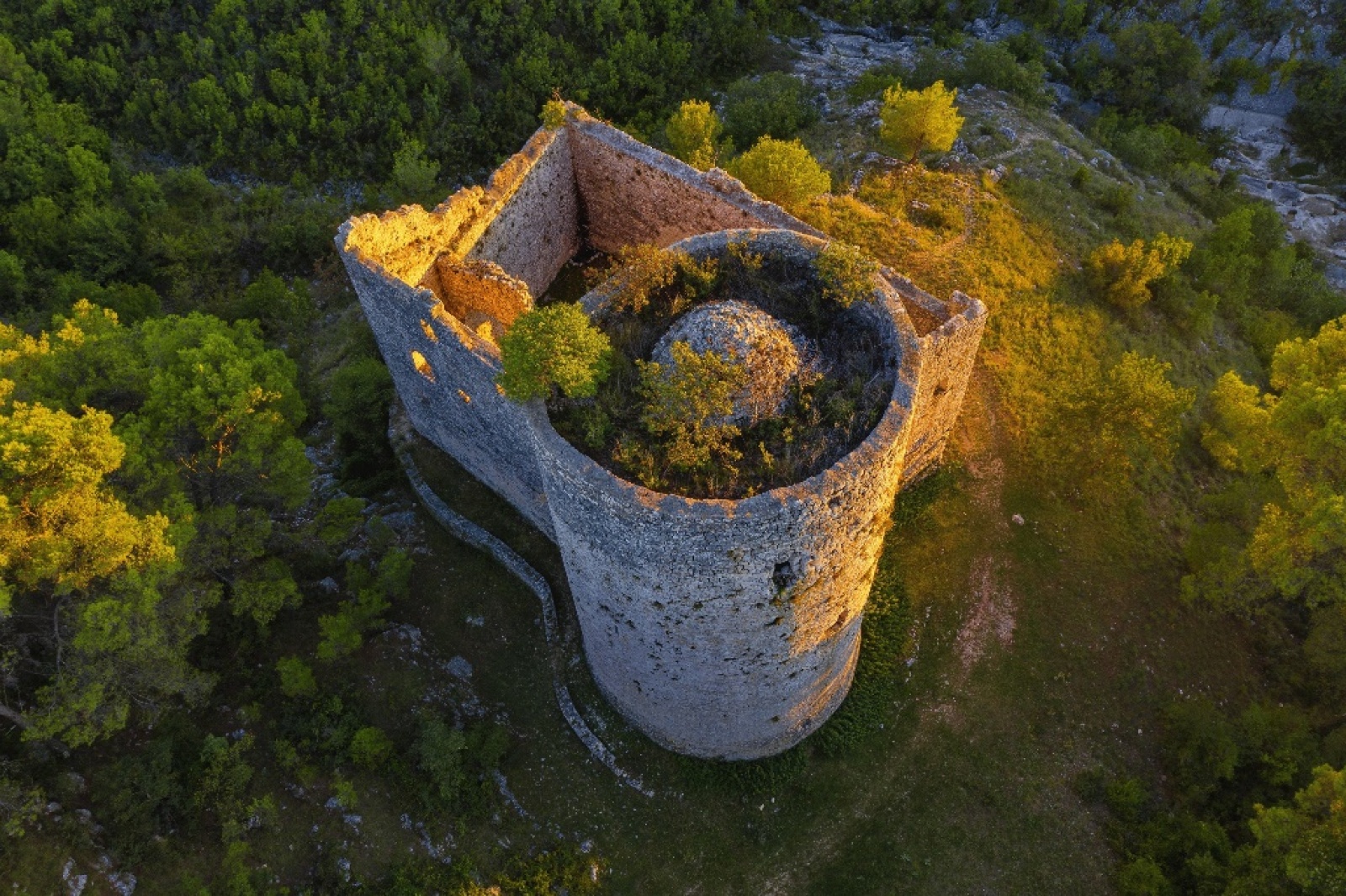
The unusual little Romanesque Church of St. Nicholas is located in the Prahulje area near Nin, on the edge of the cultivated Nin field, atop a prehistoric Liburnian burial mound.
The church was built with small, layered stones on an earthen mound that rises above the field. The floor plan is a pure trefoil (three-leaf clover), the vaults form a quatrefoil (four-leaf clover), and the rectangular entrance is covered by a shallow, circular dome called a calotte. The church is 5.90 meters long, 5.70 meters wide, and 6 meters high (interior measurements), with walls that are 50 cm thick.
Due to the threat of the Ottomans, a defensive crown with eight merlons was added to the church in the 16th or 17th century to serve as a lookout.
For centuries, a Mass has been held at the church on the Feast of St. Nicholas to protect sailors and travelers. More recently, a Mass is also held there on the feast of St. Mark to bless the fields.
Location
Nin
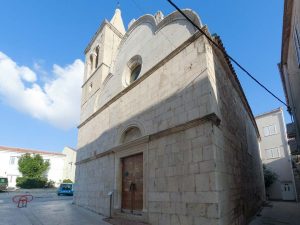
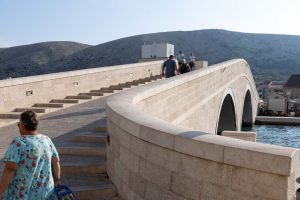
Nin (Aenona or Nona) is a town in the Zadar County of Croatia. Its historical center is located on an islet only 500 meters (yards) in diameter. It is situated in a lagoon on the eastern shore of the Adriatic Sea, surrounded by natural sandy beaches and linked to the mainland by two stone bridges from the 16th century. The present-day town on the islet was founded 3,000 years ago and is one of the oldest towns on the eastern Adriatic. The area of Nin was first colonized by ancient people of the Mediterranean.
ExplorePre-Romanesque
In the 7th century, the Croats, with other Slavs and Avars, came from Northern Europe to the region where they live today. They were on the level of Iron Age nomadic culture, so they did not know how to enjoy the advantages of urban cities. This is why they first inhabited city boundaries on nearby rivers (like Jadro near Roman Salona).
Explore











Reviews
There are no reviews yet.