
Medieval Croatian ship Condura Croatica


These narrow boats, measuring 7-8 meters in length, were the smallest yet most formidable warships in world history.
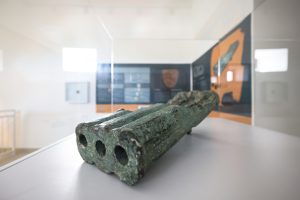
In 1966, the remains of two ships were accidentally discovered at the entrance to the Nin port. These were subsequently excavated in 1974 and transported to Zadar for restoration. Carbon-14 dating revealed that the wood for these ships was harvested in the late 11th century and early 12th century.
It is presumed that these vessels correspond to the “conduras” mentioned by Emperor Constantine Porphyrogenitus in his work De Administrando Imperio, where he discusses the Old Croatian war navy. This is why the discovered ships were named Condura Croatica.
According to Constantine VII Porphyrogenitus, during the reign of King Tomislav, the Croatian merchant navy possessed around 100 conduras (Condura Croatica). Croatian merchants used these ships to navigate the Neretva waters and the Adriatic Sea, reaching as far as Venice. Some sources also claim that King Tomislav alone had 15,000 rowers ready on conduras in Nin.
The “Nin” Conduras were built and likely sailed during the time of Croatian national rulers Krešimir IV and Zvonimir in the second half of the 11th century. Historical records indicate that during the reign of King Krešimir IV, Croatia commanded as many as 20,000 rowers on conduras.
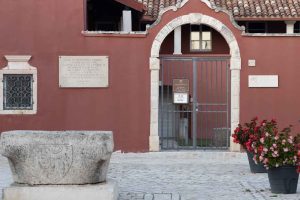
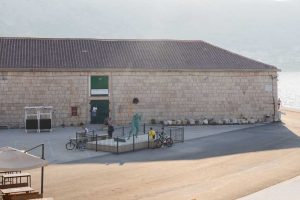
One of the discovered Condura Croatica is now housed in a special pavilion at the Museum of Nin Antiquities. In 1998, replicas of both conduras were built and launched. One replica remains in the Nin port, in the sea near the Lower Town Bridge, while the other is in Zadar (owned by the University and the Archaeological Museum).
The Museum of Nin Antiquities also features a copy of a section of a Serilia Liburnica ship from the 1st century, similar to those found in the ancient port of Old Nin in modern-day Zaton.
The Smallest and Deadliest Warships in World History
The condura was a slender vessel with a rounded bow and a raised stern. It was equipped with one or two masts featuring square sails, which were hoisted when the wind was favorable, and three to eight pairs of oars. Steering was done with one or two stern oars. It could be easily pulled onto land and used for surprise attacks on much slower, larger merchant ships.
Its form is similar to the serilia, testifying to a millennium of shipbuilding continuity on the eastern Adriatic coast and the improvements in shipbuilding tradition introduced by the Croats. The mast on serilias was two-part, while that of conduras was made from a single massive wooden log
Location
Nin
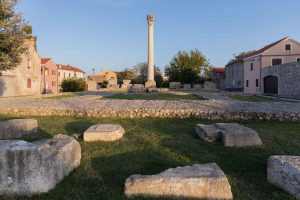
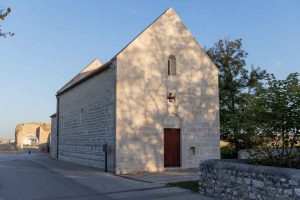
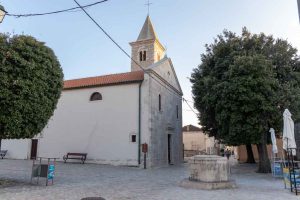
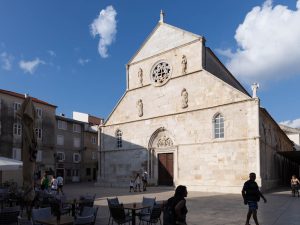
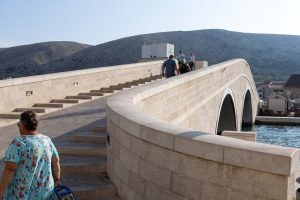
Nin (Aenona or Nona) is a town in the Zadar County of Croatia. Its historical center is located on an islet only 500 meters (yards) in diameter. It is situated in a lagoon on the eastern shore of the Adriatic Sea, surrounded by natural sandy beaches and linked to the mainland by two stone bridges from the 16th century. The present-day town on the islet was founded 3,000 years ago and is one of the oldest towns on the eastern Adriatic. The area of Nin was first colonized by ancient people of the Mediterranean.
ExploreRomanesque
In the 11th century, monumental cities were built along the entire Dalmatian coast. Houses were constructed from stone. On the ground floor there were shops or taverns (natively – konoba), seen today in cities such as Poreč, Rab, Zadar, Trogir, and Split. In those cities the most important buildings were churches. They were commonly stone-built basilicas with three naves, three apses, columns, arches, arcades and wooden roofs, and were erected near the monasteries of Benedictine monks who came out of Italy. St. Peter in Supetarska Draga on the island of Rab (11th century) is the best-preserved church of that type in Croatia. On the same island is the Cathedral of Rab (12th century) has a high-Romanesque bell tower, the largest in Dalmatia. It is specific with its openings, which multiply with each level of floor (Latin: mono-fore, bi-fore, tri-fore, quadro-fore). This is typical for Romanesque architecture, but also architecturally innovative, as each floor is slightly lighter than the one below.
Explore













Reviews
There are no reviews yet.