
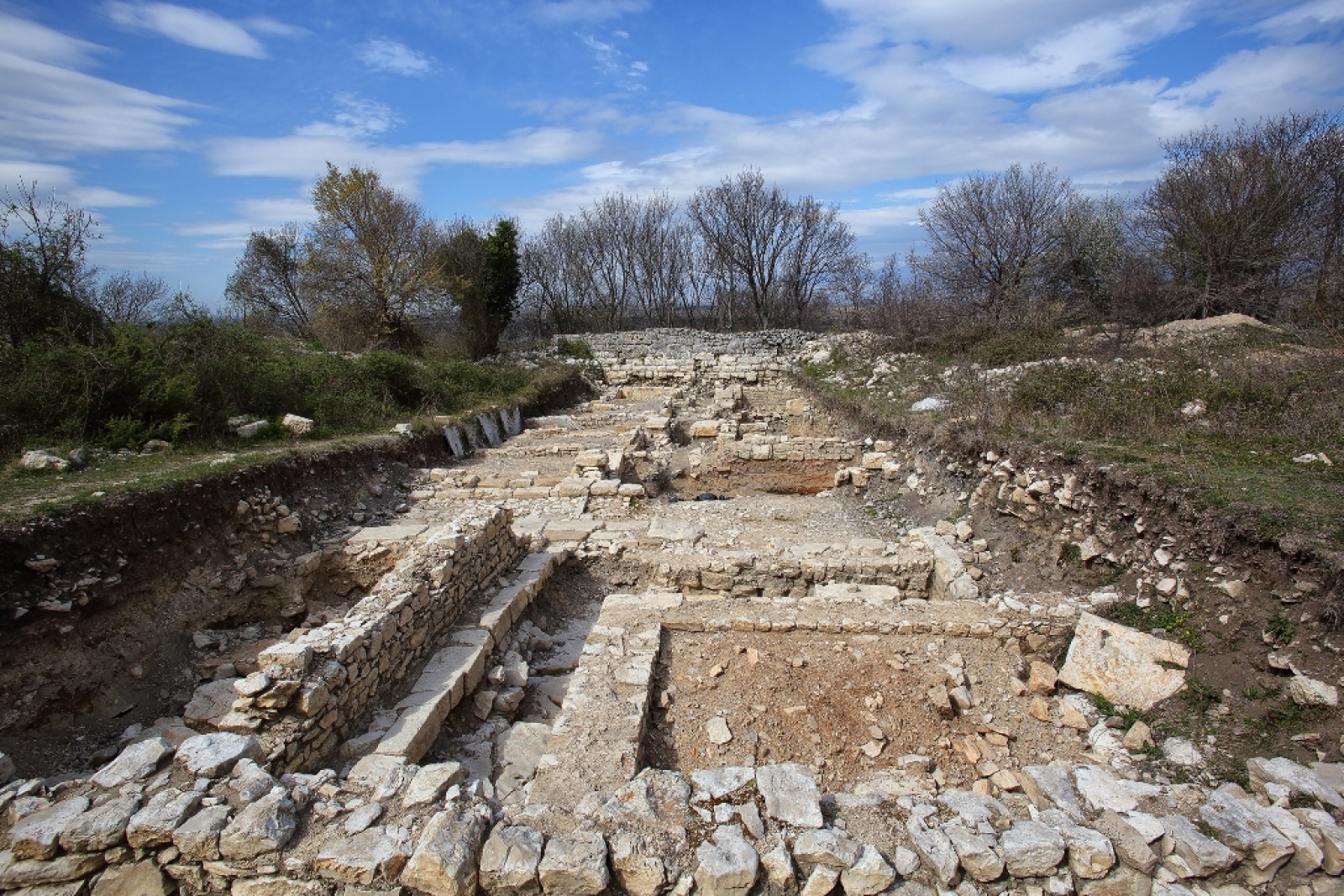
Remains of the Roman city of Corinium in Karin Donji
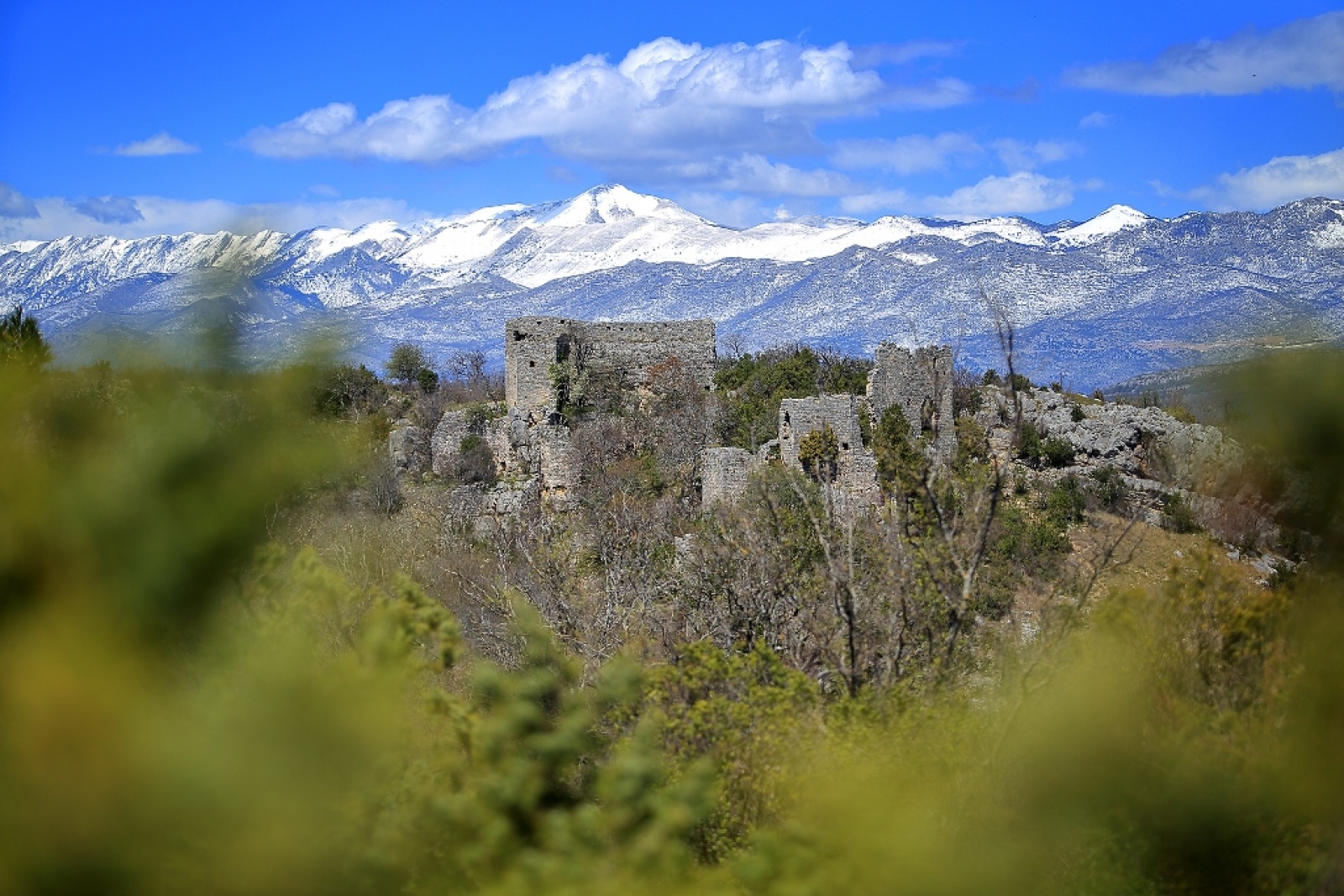
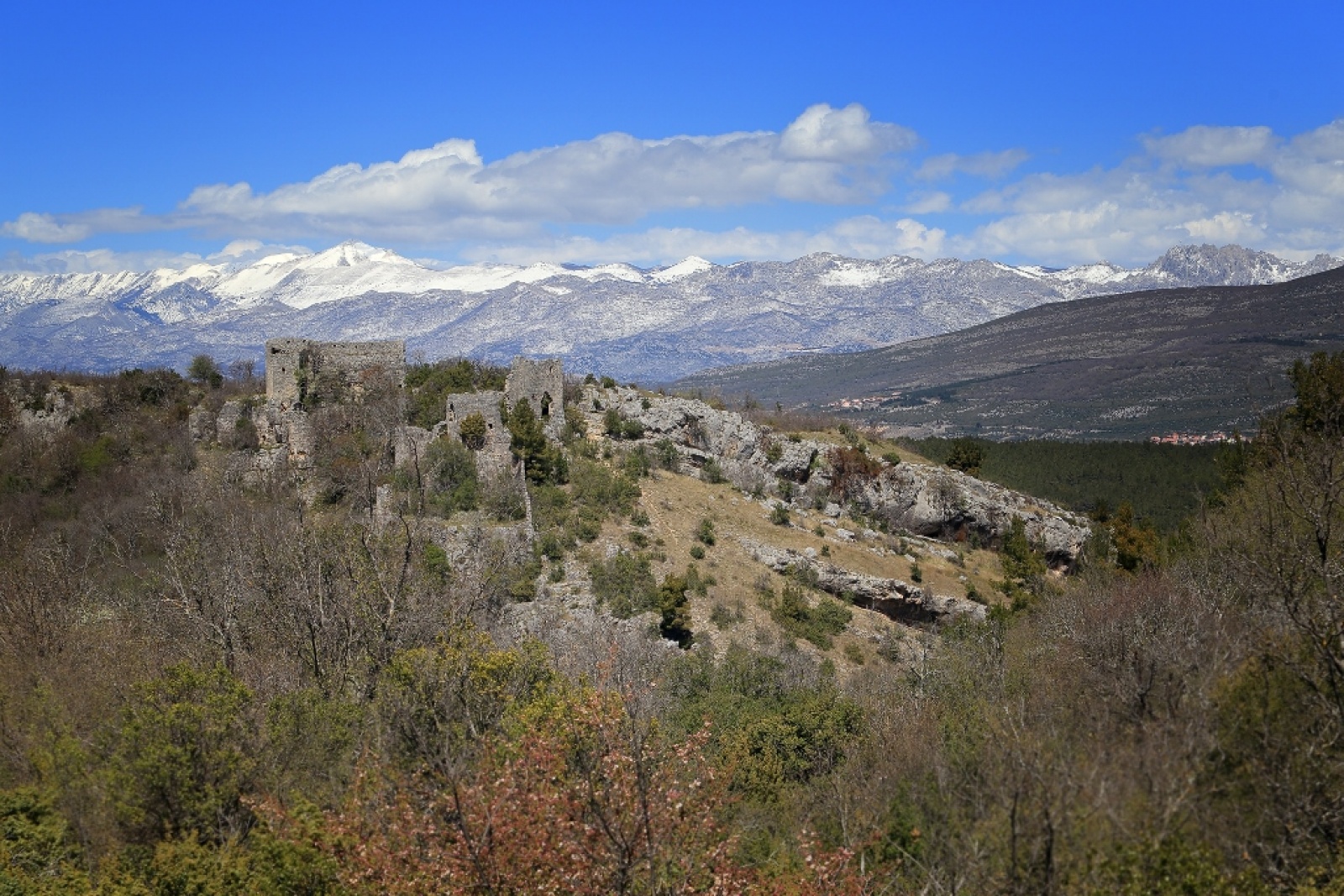

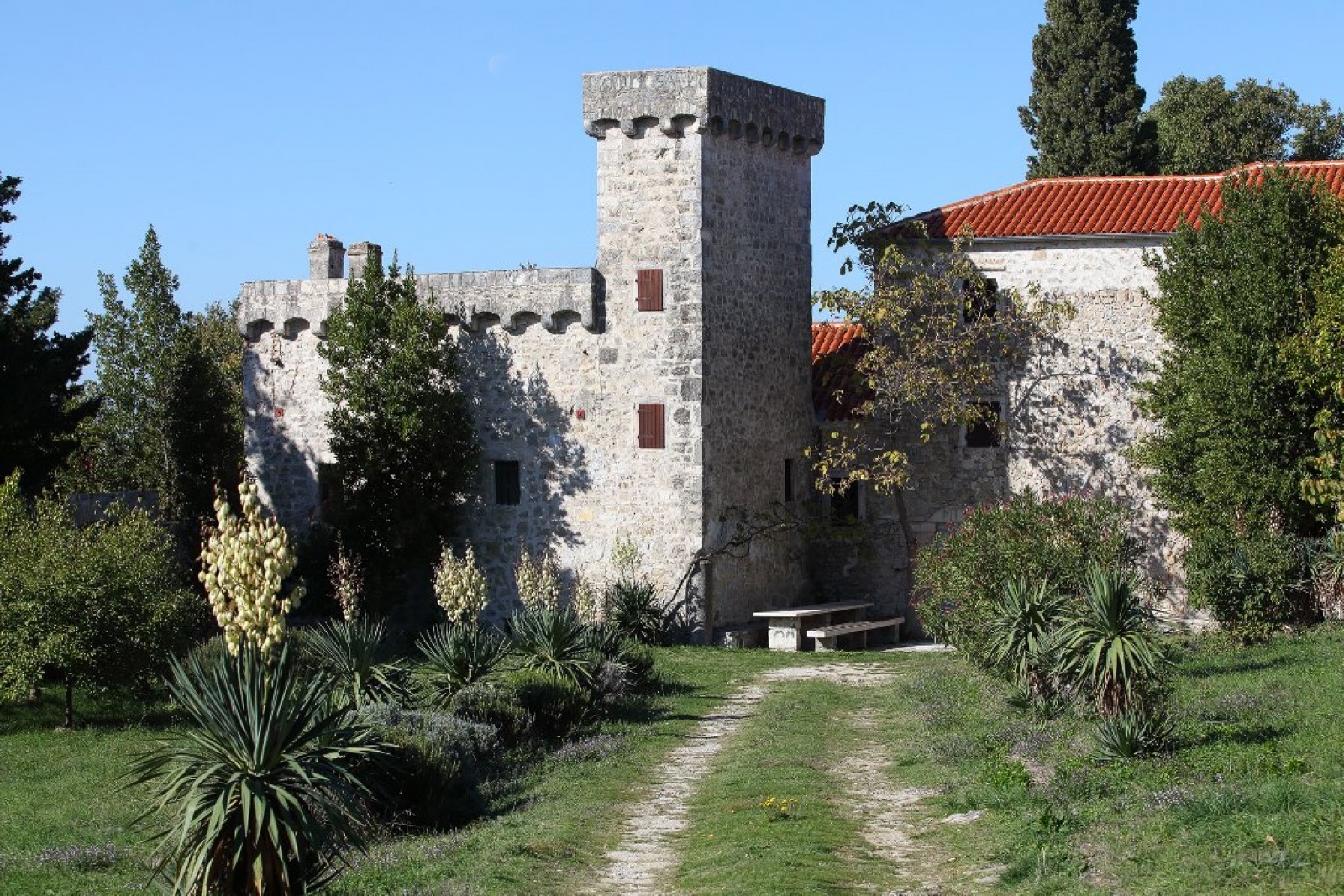
The hillfort is inhabited since the Iron Age and to the New Age. There used to be a settlement Corinium during Liburnian and Roman rules.
The geostrategic location of ancient Corinium, today’s Karin, on the rugged Bukovica plateau in northern Dalmatia, provides direct access to the notable Karin Sea.
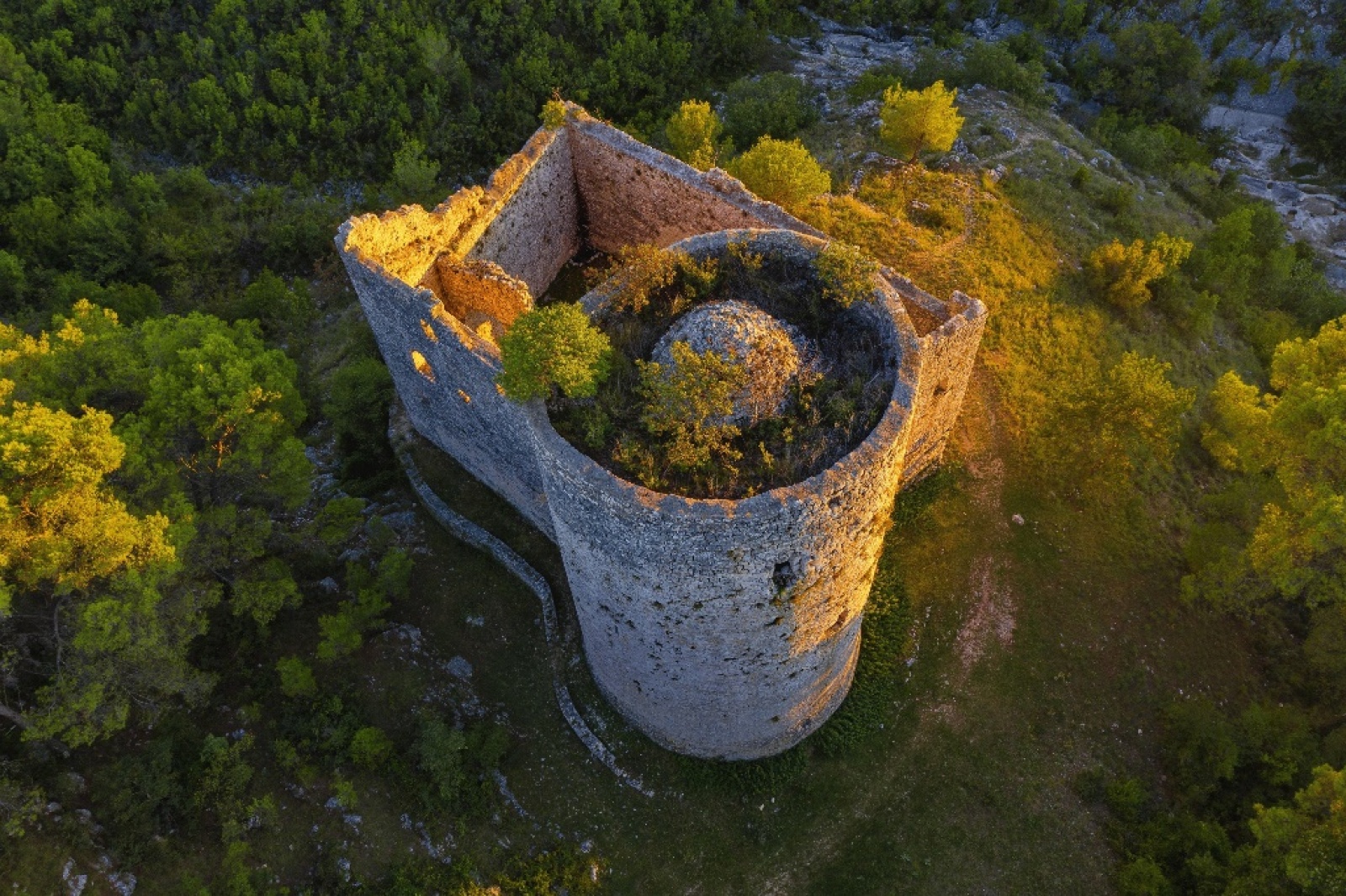
In the Roman era, Karin became the center of a peregrine (Liburnian) community. This community achieved its own degree of civitas and the status of a Roman municipally constituted commune during the reign of Emperor Augustus (27 BC – 14 AD). It is believed that ancient Corinium was located in the area of the Miodrag hillfort, which was described by the renowned travel writer Alberto Fortis during his journey through Dalmatia in the second half of the 18th century.
Based on Fortis’s description, an amphitheater building, intended for the gladiatorial games popular in the Roman world, should very likely be located in this area. Through reconnaissance of the mentioned area, prominent Croatian archaeologists, don Frane Bulić and Šime Ljubić, also indicated the existence of a Roman amphitheater structure. However, there are currently no archaeologically confirmed architectural remains of a Roman amphitheater.
Location
Benkovac
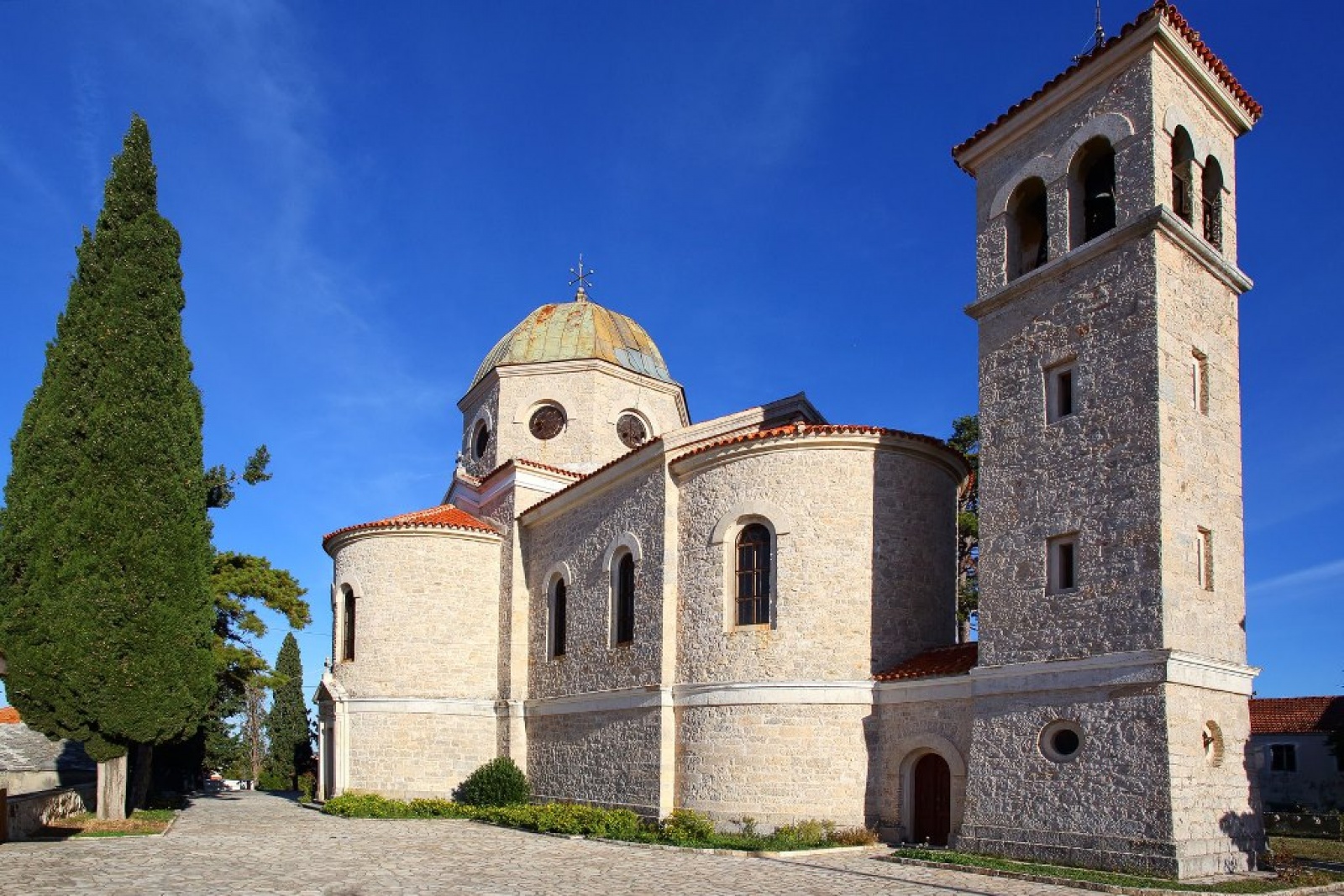
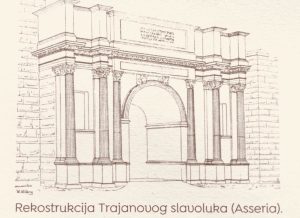
The first traces of human life in the Benkovac area were found around the village of Smilčić that belonged to the Danilo culture. Before Roman conquest the area was inhabited by the Illyrian tribe of Liburnians. During the Roman Civil war the Liburnians sided with Caesar. The Romans mention the following Liburnian settlements: Nedinum (Nadin), Carinium (Karin), Varvaria (Bribir) and Asseria (Podgrađe). In 7th century the area was settled by Croats. The area of Benkovac was at the crossroads of four Croatian župas – Novljanska, Sidraška, Bribirska and Karinska. Near the village of Šopot, an inscription from the 9th century was found that mentions Branimir as a Croatian Duke.
ExploreAncient Rome
Romans subdued the Greek colonial cities in the 3rd century BC. They imposed an organization based on a military-economical system. Furthermore, the Romans subdued the Illyrians in the first century BC and organized the entire coastal territory by transforming the citadels into urban cities. After that, the history of these parts is the history of the Illyrian provinces of the Roman Empire. Numerous rustic villas, and new urban settlements (the most impressive are Verige in Brijuni, Pula, and Trogir – formerly Tragurion) demonstrate the high level of Roman urbanization. There were at least thirty urban cities in Istria, Liburnia and Dalmatia with Roman citizenship (civitas). The best-preserved networks of Roman streets (decumanus/cardo) are those in Epetion (Poreč) and Jader (Zadar). The most perfectly preserved Roman monuments are in Pola (Pula); founded in the first century dedicated to Julius Caesar. It is full of classical Roman art such as: stone walls, two city gates, two temples on the Forum, and remains of two theaters, as well as the Arch from the year 30 AD, and the temple of Augustus built in the years 2 to 14 AD, and finally the Fluvian Amphitheater (so called – Arena) from the 2nd century. In the 3rd century AD, the city of Salona became the largest (it had 40,000 inhabitants) and most important city of Dalmatia. Near the city emperor Diocletian, born in Salona, built Diocletian’s Palace around the year 300 AD, which is the largest and most important monument of late antique architecture in the world. On its pathways, cellars, domes, mausoleums, arcades and courtyards we can trace numerous different art influences from the entire Empire. In the 4th century, Salona became the center of Christianity for the entire western Balkans. It had numerous basilicas and necropolises, and even two saints: Domnius (Duje) and Anastasius (Stošija).
Explore









Reviews
There are no reviews yet.