
The Church of Our Lady of Health and the Promenade of Fame – Zadar


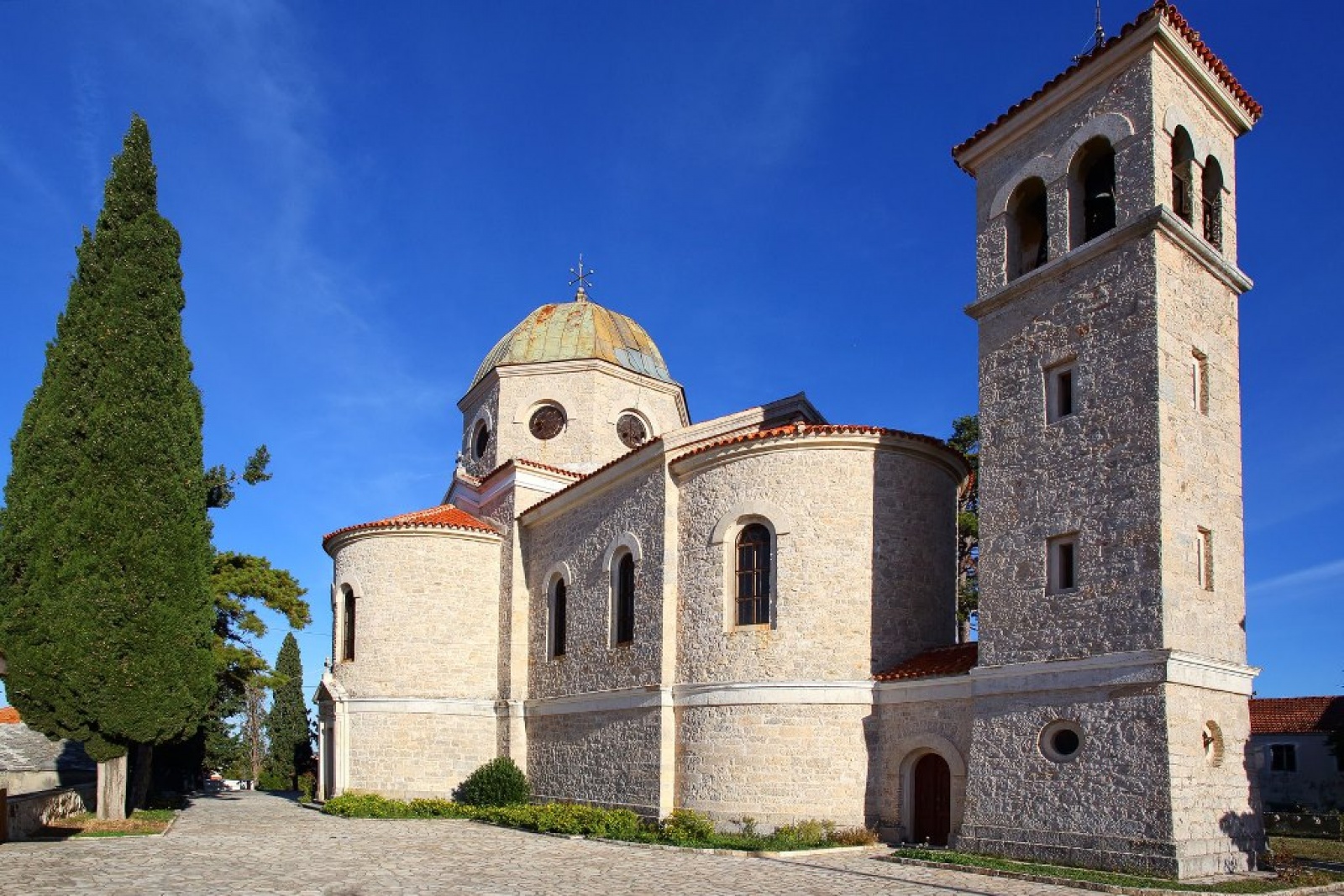
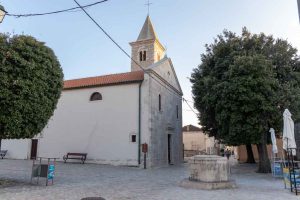
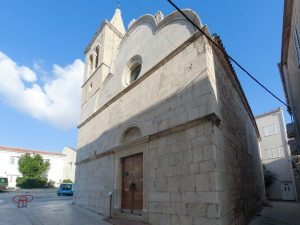
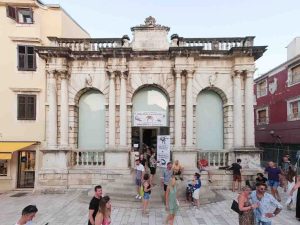
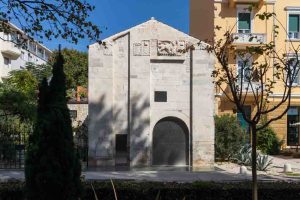
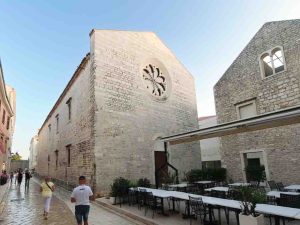
The shrine of the Virgin of the Castle in Zadar, also known as Our Lady of Health, is connected to the veneration of the painting of the Virgin of the Castle created in 1447 by Blaž Jurjev.
The cult of the miraculous painting of Blaž Jurjev, the Virgin of the Castle, gained popularity in the latter half of the 16th century.
In 1752, a massive fire broke out at the Arsenal, a warehouse storing gunpowder for the war fleet of the Republic of Venice. The citizens desperately called upon the Lady of Castello, also known as Our Lady of Health. The fire burned itself out with the help of Our Lady. In gratitude, the citizens of Zadar organize a procession every year on the 21st of November. They distribute fritule (fritters) to passers-by as a sign of gratitude to the Lady.
The cult of the Virgin was rapidly expanded, and already in 1753., the procurators commissioned a silver cover to protect the image of the Virgin of the Castle. By 1582, a larger circular building replaced the old wooden chapel.
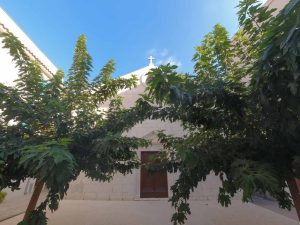
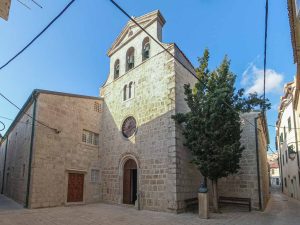
In the first half of the 18th century, a Baroque-style single-nave church was added to the Renaissance rotunda, and a belfry with a bulb-shaped roof was built at the back of the circular building.
The church was partially destroyed in the Allies’ bombing of Zadar at the end of the Second World War and was rebuilt again in the 1980s.
Blaž Jurjev’s painting of the Virgin of the Castle is now on display at the SICU – Permanent Exhibition of Church Art, also known as Gold and Silver of the City of Zadar.
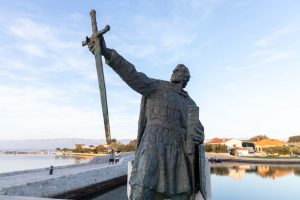
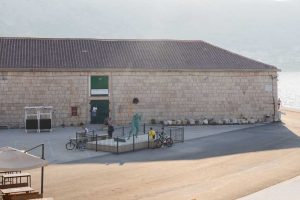
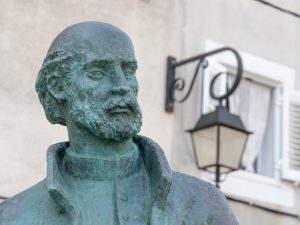
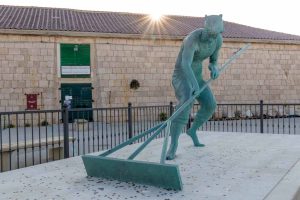
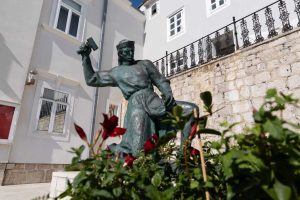
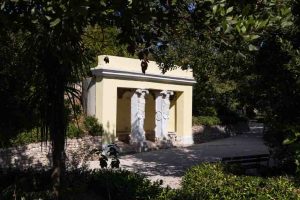
On the Promenade of the Fame, next to and behind the church, there are sculptures of the famous citizens of Zadar throughout history, made by the academic sculptor Ratko Petrić.
Location
Zadar
Zadar is the oldest continuously inhabited city in Croatia. It is situated on the Adriatic Sea, at the northwestern part of Ravni Kotari region. Zadar serves as the seat of Zadar County and of the wider northern Dalmatian region. The city proper covers 25 km2 (9.7 sq mi) with a population of 71,000 in 2025, making it the second-largest city of the region of Dalmatia and the fifth-largest city in the country.
ExploreBaroque
One of the most remarkable periods in Croatian art history is the Baroque, which lasted from the 17th to the late 18th century. During this time, Croatia was reunited with the parts of its territory that were occupied by the Venetian Republic and the Ottoman Empire, after centuries of fragmentation and division. This reunification not only brought political stability and economic prosperity but also stimulated a cultural revival and a flourishing of art in every segment.
ExploreRenaissance
In the 15th century, Croatia was divided between three states – northern Croatia was a part of the Austrian Empire, Dalmatia was under the rule of the Venetian Republic (with the exception of Dubrovnik), and Slavonia was under Ottoman occupation. Dalmatia was on the periphery of several influences, equidistant from Italy, Ottoman Bosnia, and Austria, so it drew influence from all. In those circumstances in Dalmatia flourished religious and public architecture with clear influences of the Italian Renaissance, but still original.
Explore










Reviews
There are no reviews yet.