
The Small Arsenal


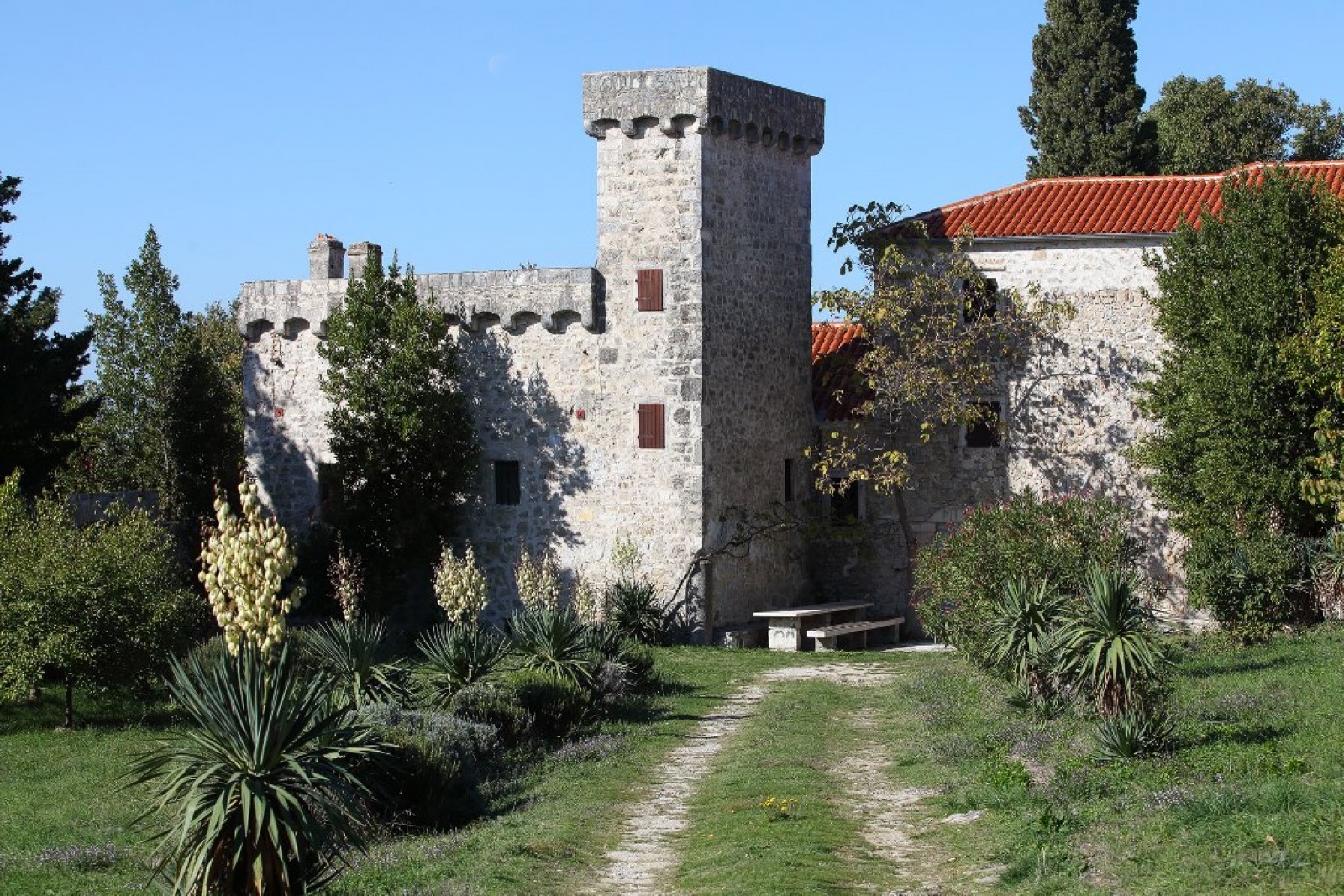
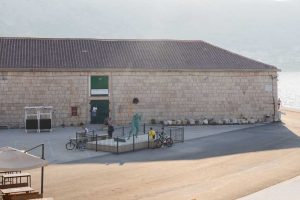
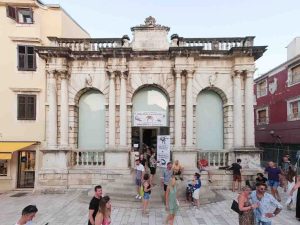
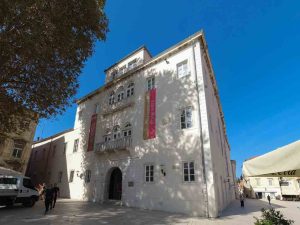
The Small Arsenal is part of the entrance tower of the medieval Kaštel fortress, preserved after its demolition in the 16th century.
The tower was built in the first half of the 15th century during the renovation and expansion of Kaštel.
Today, the Small Arsenal is a smaller, ground-level building with a rectangular layout, measuring 13.10 meters in height, 12.36 meters in length, and 7.10 meters in width. It’s constructed with roughly hewn stone and precisely carved blocks on its facade.
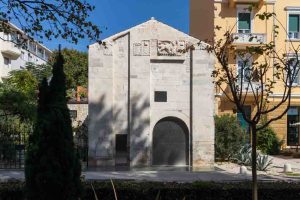
The original elements of the tower have been preserved up to a height of about 9 meters on the side walls and around 12 meters on the front and rear. These clearly illustrate the system of equipping fortress entrances during the Middle Ages – a fortified building with drawbridges raised over a defensive moat.
The facade, built with precisely carved stone blocks and divided by three lesenes with niches containing the entrances, is the most striking part of the Small Arsenal.
Since 2017, the Small Arsenal has served as a visitor center and the starting point for exploring and touring the fortification system in Zadar. Architectural interventions have highlighted all the preserved historical layers of the Small Arsenal, integrating them into a cohesive whole that combines visual appeal with a modern feel.
Location
Zadar
Zadar is the oldest continuously inhabited city in Croatia. It is situated on the Adriatic Sea, at the northwestern part of Ravni Kotari region. Zadar serves as the seat of Zadar County and of the wider northern Dalmatian region. The city proper covers 25 km2 (9.7 sq mi) with a population of 71,000 in 2025, making it the second-largest city of the region of Dalmatia and the fifth-largest city in the country.
ExploreRenaissance
In the 15th century, Croatia was divided between three states – northern Croatia was a part of the Austrian Empire, Dalmatia was under the rule of the Venetian Republic (with the exception of Dubrovnik), and Slavonia was under Ottoman occupation. Dalmatia was on the periphery of several influences, equidistant from Italy, Ottoman Bosnia, and Austria, so it drew influence from all. In those circumstances in Dalmatia flourished religious and public architecture with clear influences of the Italian Renaissance, but still original.
Explore













Reviews
There are no reviews yet.