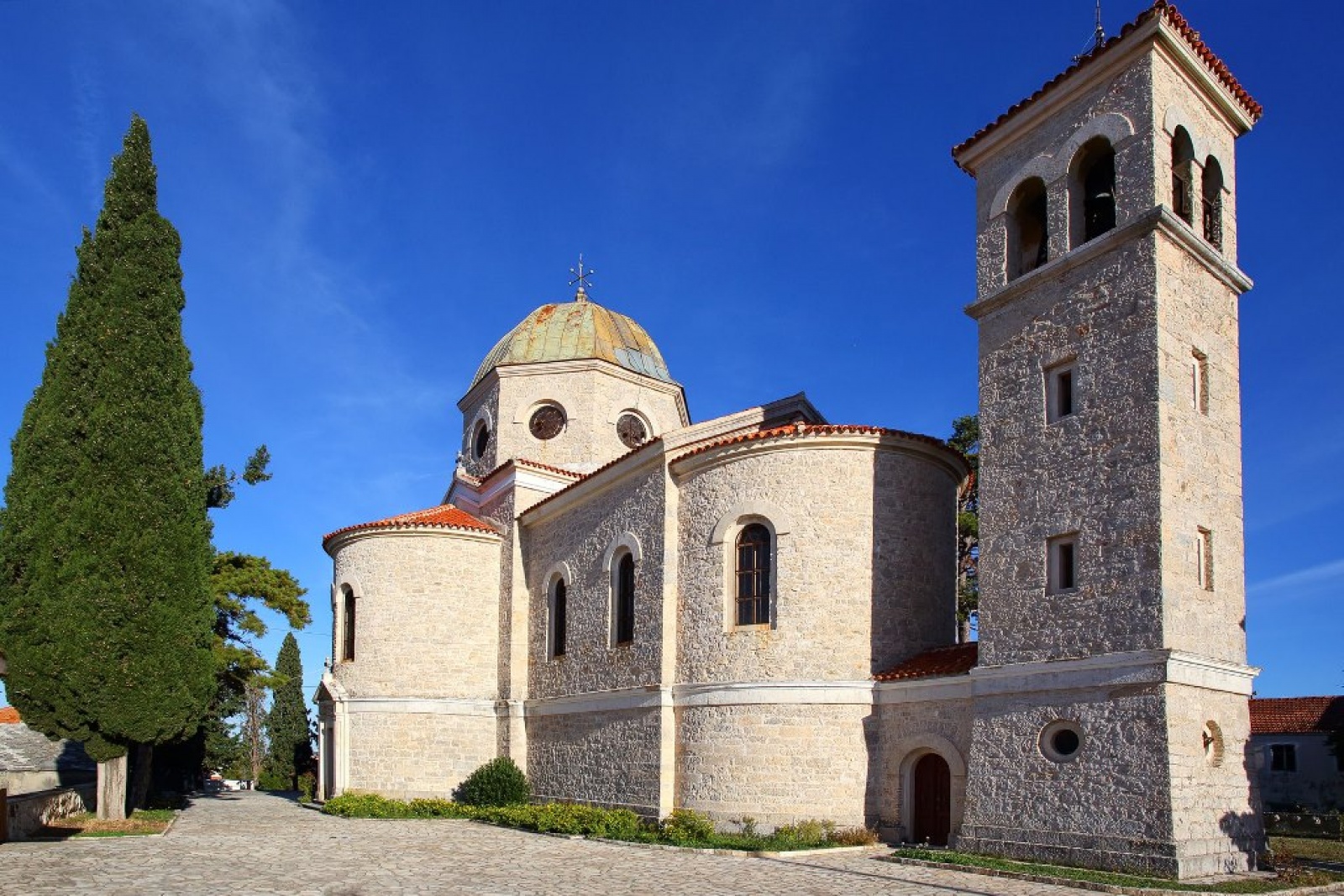
Neo-Byzantine
The Neo-Byzantine style popped up in Croatia around the mid-19th century, and you’ll mostly see it in buildings connected to the Serbian Orthodox Church or the Greek Catholic Church, like churches, parish buildings, and municipal halls.
One of the key figures in the early, more romantic phase of Neo-Byzantine architecture in Croatia was Franjo Klein. He designed the Church of the Transfiguration of the Lord in Zagreb.
But after Hermann Bollé redesigned the interior of the Church of the Transfiguration of the Lord in Zagreb in 1883-84, he became the main guy for this style in Croatia.
Bollé was commissioned to build the Kukulj Chapel in Zagreb’s Mirogoj Cemetery, restore the Cathedral Church in Pakrac, and work on the Grgeteg Monastery in Fruška Gora. He also built a monument to Serbian King Milan Obrenović at the Krušedol Monastery.
Janko Holjac brought a Russian twist to the Neo-Byzantine style in Croatian architecture with his projects for restoring the cathedral church in Plaški and building a new Greek Catholic church in Petrovci.
In the Dalmatia region, you’ll find some impressive Neo-Byzantine churches in Dubrovnik, Kistanje, Benkovac, Drniš, and Obrovac.
Sources: Wikipedija, Wikipedia
Showing all 3 results