Historicism
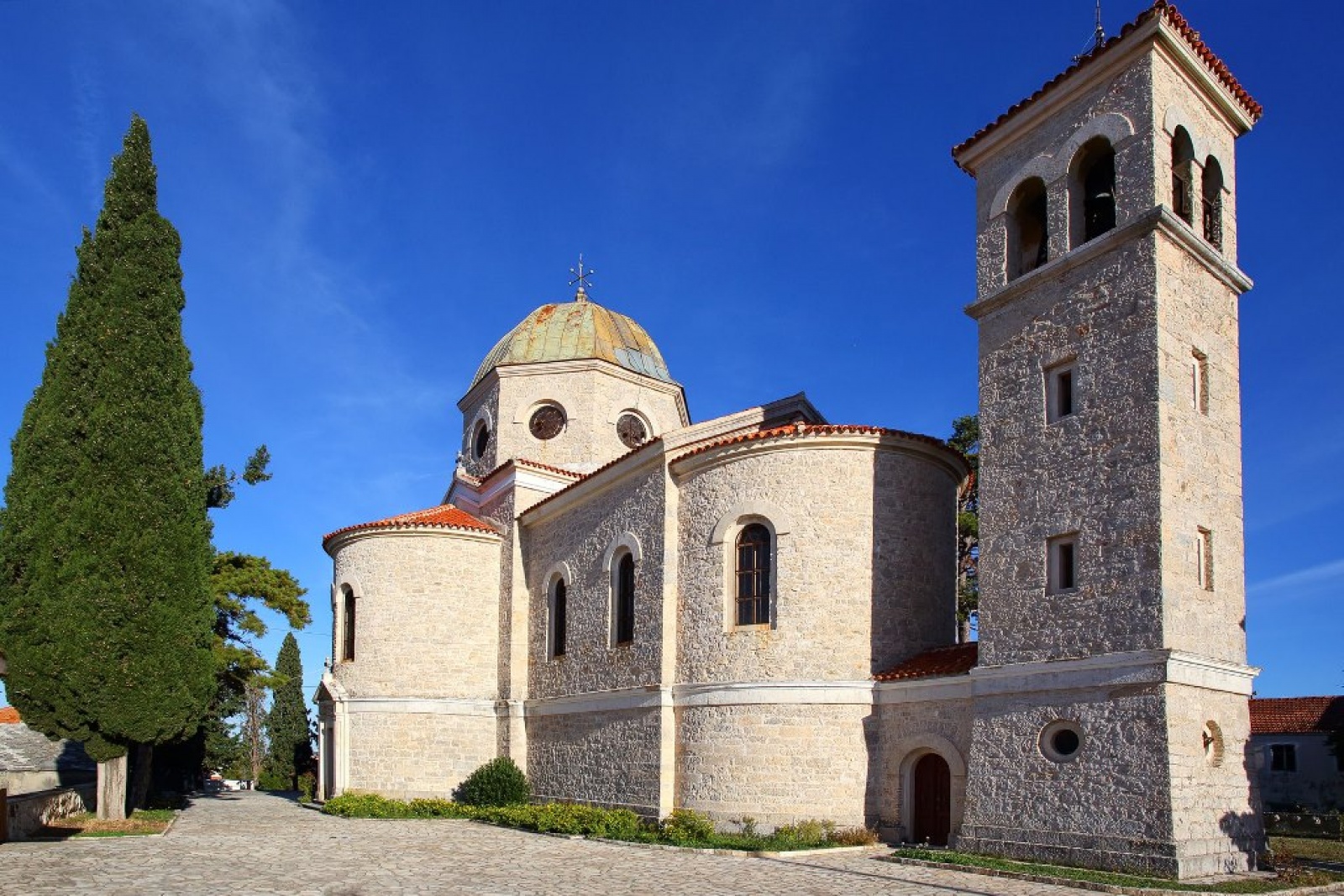
Historicism is marked with building three large churches: the neo-Romanesque cathedral in Đakovo (K. Roesner and F. Schmidt, 1882), monumental parish church of St Peter and Paul in Osijek (1898) and neo-gothic rebuilding of Zagreb cathedral with glazed roof tiles and 105 m tall towers (Herman Bolle, 1880–1902). At the end of 19th century Herman Bolle undertook one of the largest projects of European historicism, a half-kilometer long neo-Renaissance arcade with twenty domes on Zagreb cemetery Mirogoj.
At the same time the cities in Croatia got important urban makeovers: Karlovac transformed its Renaissance bastions into a parkway that surrounds the entire old town (just like Vienna’s Ringstraẞe), while the coastal cities (Trogir, Zadar, Pula, Pag and Šibenik) took down their walls and opened to the sea. The size and importance the urban regulation of Downtown Zagreb (largely the work of Milan Lenuzzio, 1860–1880) was revolutionary. Between Zagreb’s longest street – Ilica, and the new railway the new geometrical city was built with large public and social buildings like the neo-Renaissance building of the Croatian Academy of Science and Art (HAZU, F. Scmidt, 1884), the neo-Baroque Croatian National Theater (HNK, H. Helmer and F. Fellner, 1895), and to that date very modern Art Pavilion (1898) with montage construction of steel and glass – Croatia’s “Crystal Palace“, and finally the masterpiece of Art Nouveau – The National Library (Lubinski, finished in 1912). This urban plan is bounded with a series of parks and parkways decorated with numerous fountains, sculptures, avenues and gardens (known as “Green Horseshoe“) making Zagreb one of the first cities build according to new European art theory of “city as a work of art”.
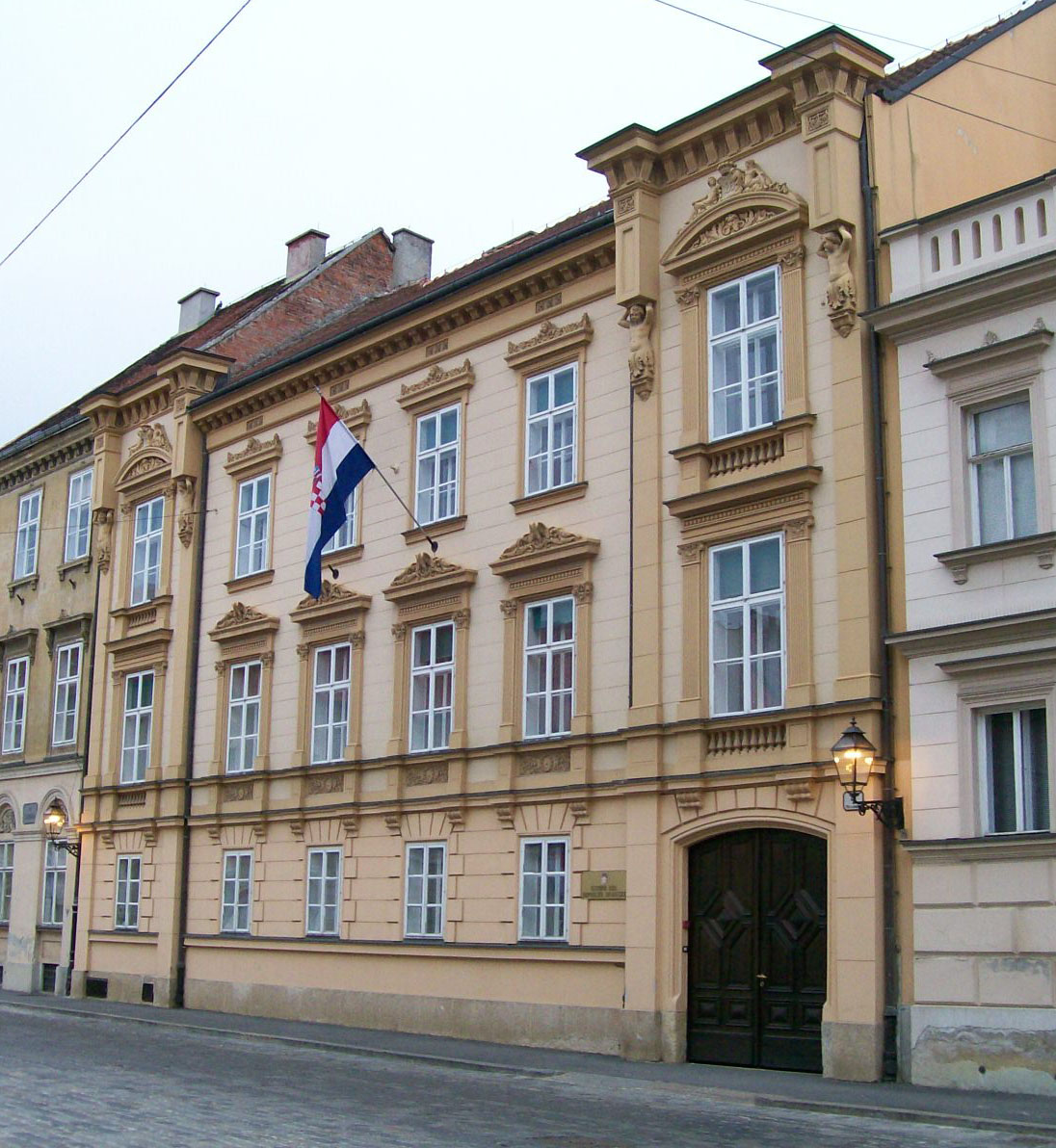
A pseudo building that emphasizes all three visual arts is the former building of the Ministry of Prayer and Education in Zagreb (H. Bolle, 1895). Alongside rooms in Pompeii style and Renaissance cabinet, the large neo-Baroque “Golden Hall” was painted with historic compositions. “The Golden Hall” became a unified monument of its age, one of few in Europe.
Source: Wikipedia
Showing all 24 results