
Serbian Orthodox Cathedral in Zagreb
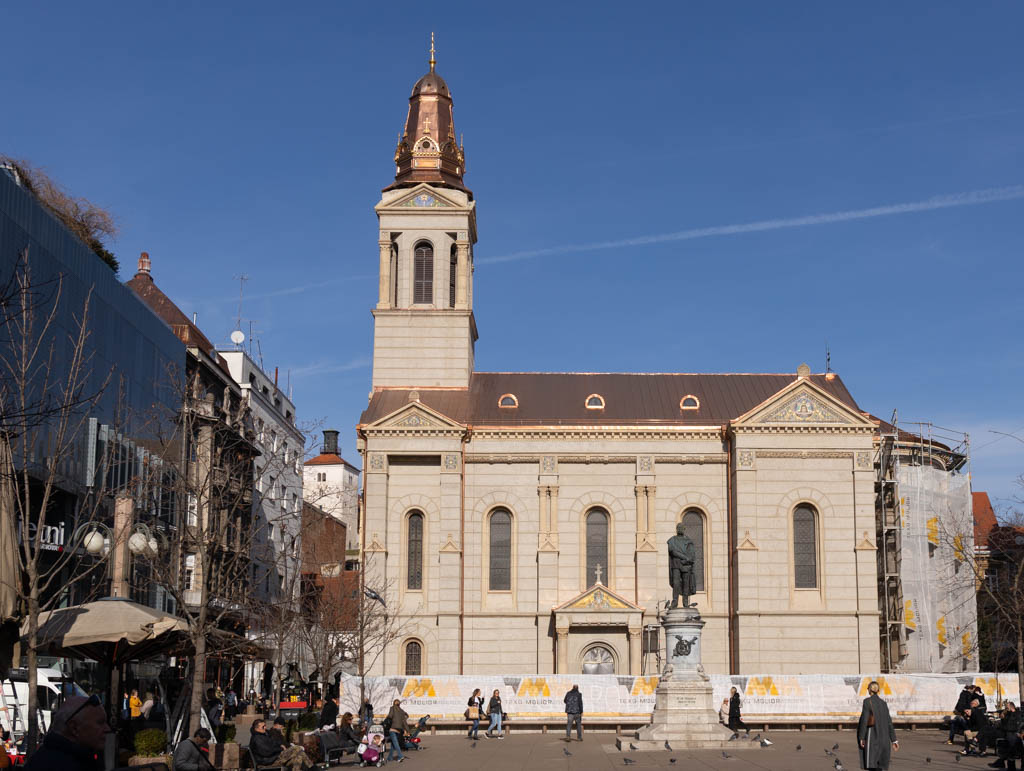
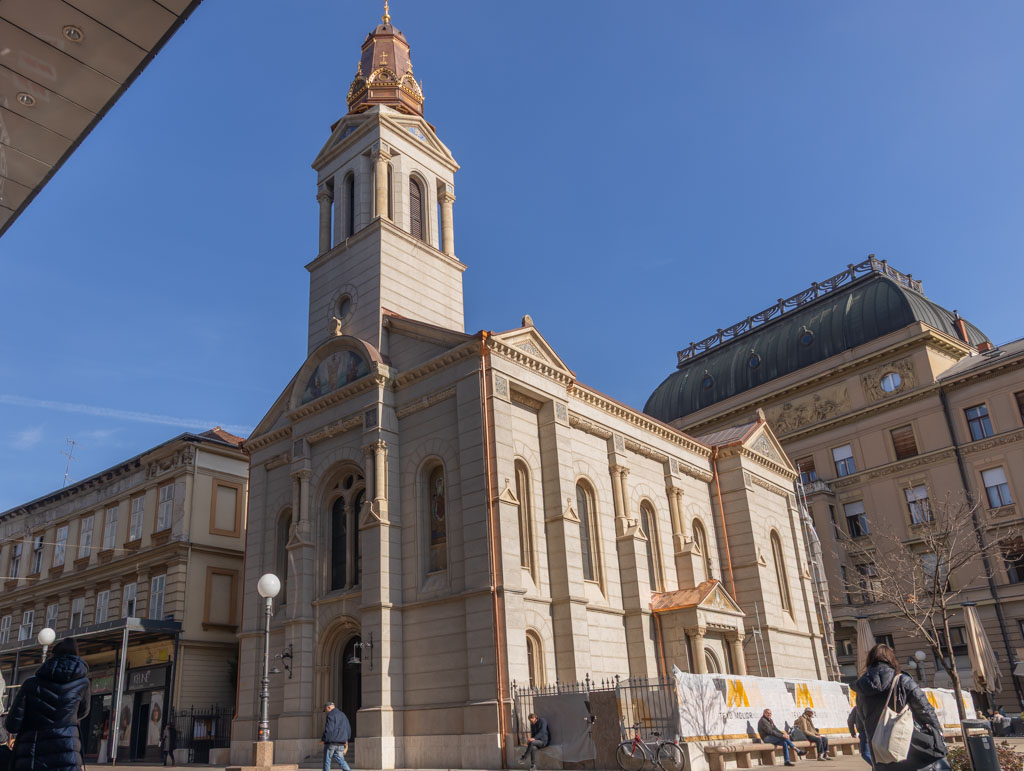


The Cathedral of the Transfiguration of the Lord is ecclesiastically part of the Metropolitanate of Zagreb and Ljubljana, and it is more commonly known as the Zagreb Orthodox Cathedral.
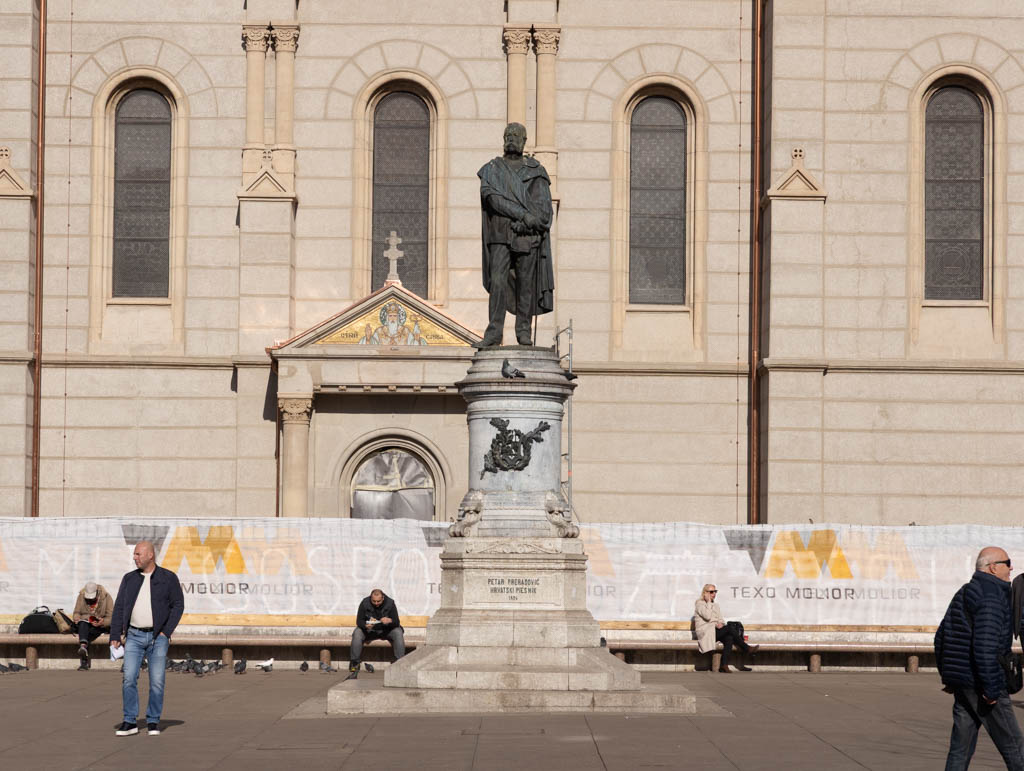
Nestled in the heart of Zagreb, on Preradović Square, also known locally as Flower Square (Cvijetni trg), stands the single-nave Orthodox Church of the Holy Transfiguration. Its layout follows the design of a Latin cross. The church was constructed in 1866 based on the plans of Franjo Klein, on the site of a demolished Catholic Church of St. Margaret. The Orthodox community had purchased this site, along with the adjacent land extending towards Ilica Street, in 1794.
The church’s interior was embellished in 1884, and its exterior was transformed in 1913 to the designs of Hermann Bollé. He also conceived the iconostasis, featuring paintings by Epaminondas Bučevski. The church proudly preserves a valuable collection of historical religious artifacts.
The Church of St. Margaret
The Catholic Church of St. Margaret had a long history, dating back to the early 14th century, with its first mention in records in 1334. It served as the parish church for the lower town of Zagreb. Surrounding it was the St. Margaret’s Cemetery, the final resting place for the lower town’s residents, the serfs from Trnje, and the impoverished from Šoštarska ves (an area north of present-day Ban Jelačić Square). In 1622, the Jesuit priest Ljudevit enclosed the cemetery with a fence. Adjacent to St. Margaret’s Church, the annual St. Margaret’s Fair had been held every July 13th.

When the Church of St. Margaret was sold to Orthodox merchants in 1794, the Zagreb Orthodox Church community, like all Orthodox communities within the Habsburg Monarchy, was part of the “Greek-Uniate Church”. In the beginning, Greek and Cincar merchants played a significant role in its development
This history is reflected in the city’s present-day street names. The name of the street behind the cathedral is Margaretska Street, while the one in front bears the name Preobraženska ulica (Transfiguration Street).
Hermann Bollé’s Renovations
Later, the renowned architect Hermann Bollé undertook three renovation projects on the church. Initially, between 1883 and 1884, he redesigned the interior and installed a historicist iconostasis adorned with paintings by Epaminondas Buczewski. In 1899, the tower’s dome was constructed, and from 1913 to 1914, the church received entirely new facades.
“In line with his understanding of the Byzantine style, Bollé richly embellished the church’s facades with new decorations made of artificial stone, giving this building a significantly more impressive appearance than it had before,” emphasized Professor Damjanović.
Modernist Reconstruction and Recent Enhancements
The church’s interior underwent a thorough modernist reconstruction by architect Stanko Kliska between 1931 and 1932. Following World War II, the interior walls were renovated several times. In 1987, painter Dragoslav Jašović decorated the sanctuary, and between 2005 and 2007, Russian masters, led by painter Nikolay Mukhin, adorned the remaining interior walls and vaults with frescoes.
Post-Earthquake Restoration
Following the 2020 earthquake, the church underwent a comprehensive restoration. During these works, the church’s structure was reinforced, and it was meticulously restored to its former glory.
Location
Zagreb
Zagreb is the capital and largest city of Croatia. It is situated on the slopes of Medvednica mountain, in the Carpathian Basin, and on the banks of the Sava river. Zagreb has a rich and diverse history, culture, and architecture that reflect its long and turbulent past.
ExploreNeo-Byzantine
The Neo-Byzantine style popped up in Croatia around the mid-19th century, and you’ll mostly see it in buildings connected to the Serbian Orthodox Church or the Greek Catholic Church, like churches, parish buildings, and municipal halls.
Explore


Reviews
There are no reviews yet.