
HAZU Palace – Croatian Academy of Science and Arts
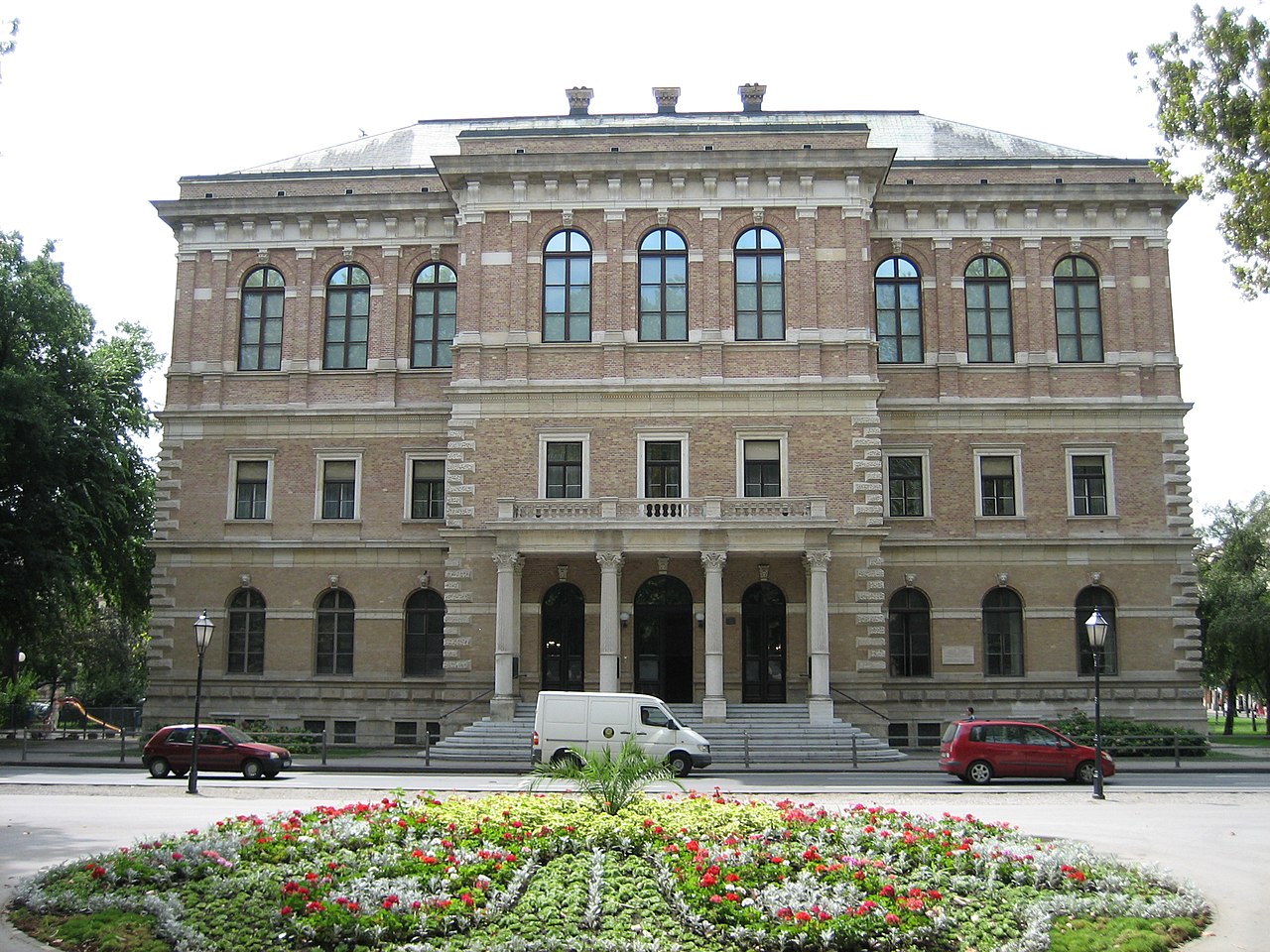


On the southern side of Zrinjevac, in the very heart of Zagreb, stands the Palace of the Croatian Academy of Sciences and Arts (HAZU) – the permanent seat of the highest scientific and artistic institution in the Republic of Croatia.
The HAZU Palace is located on Zrinjevac, the oldest of the seven Lower Town squares that form the so-called “Lenuci’s Horseshoe.” This series of landscaped squares is arranged in a U-shape, encircling the center of the Lower Town.
The concept of Lenuci’s Horseshoe represents the most significant urban planning project of the 19th century, allowing Zagreb to stand alongside other major cities of the Austro-Hungarian Monarchy such as Vienna and Budapest.
From Idea to the Founding of the Academy
Driven by the desire to gather the most distinguished minds of Croatia and the southern Slavic world, Bishop Josip Juraj Strossmayer launched the initiative to establish an academy in Zagreb in 1860, donating 50,000 forints for its foundation. The Croatian Parliament officially accepted the proposal in 1861, and after Emperor Franz Joseph I approved its statutes in 1866, the first 16 members were elected. Strossmayer became the Academy’s patron, and historian Franjo Rački its first president.
Although Strossmayer envisioned an institution open to all South Slavic peoples—hence the name “Yugoslav Academy”—its focus from the beginning was the study and preservation of Croatian national history, language, culture, and natural heritage.
The Construction of the Palace – From Grič to the Cornfield
At its founding in 1861, the Academy had no permanent or suitable headquarters. It first operated in the building of today’s Natural History Museum and later in the National Home on Opatička Street.
Only after the establishment of the Library and Archive, and following Strossmayer’s donation of artworks, did the idea of building a representative palace emerge. In 1875, the Bishop donated an additional 40,000 forints and entrusted the project design to the Viennese architect Friedrich von Schmidt.
The first planned location for the palace was on Grič (the Upper Town), but the proposal was soon rejected due to public opposition. In 1876, the City Committee chose the southern side of Zrinjevac as the new location. Although the area was then a cornfield, Bishop Strossmayer approved the site.
Construction began in 1877 under Schmidt’s associate, Herman Bollé. The palace was built in the Neo-Renaissance style. The tall three-story structure was inspired by Florentine Renaissance architecture, with facades made of yellowish brick from Sveta Klara combined with white stone. At the center of the interior is a wide staircase and a covered atrium, naturally lit and surrounded by elegant galleries.
The palace was completed in 1880, but that same year it was damaged in a major earthquake. It was ceremonially opened only after restoration, on 9 November 1884, in the presence of Strossmayer himself. On that occasion, the public was also introduced to Strossmayer’s Gallery of Old Masters, containing 256 artworks, most of them belonging to Italian painting schools.
Throughout the 20th century the building underwent several adaptations. After the Archaeological Museum was relocated in 1945, architect Ivo Župan redesigned the staircase and atrium, opening the view toward Zrinjevac. A full restoration of the palace was completed in 2000, returning this iconic Zagreb landmark to its former glory.
Treasures Inside the Palace
In addition to the Strossmayer Gallery of Old Masters, the Palace houses:
The Baška Tablet
The Baška Tablet is one of the most precious Croatian monuments and the longest and most information-rich among the earliest Croatian Glagolitic inscriptions, dating from around the year 1100. The text, carved in 13 lines (almost 100 words) into a white limestone slab measuring 199 × 99.5 × 9 cm, records how Croatian King Zvonimir donates a plot of land to the church of St. Lucy in Jurandvor near Baška on the island of Krk.
It is displayed in the palace atrium.
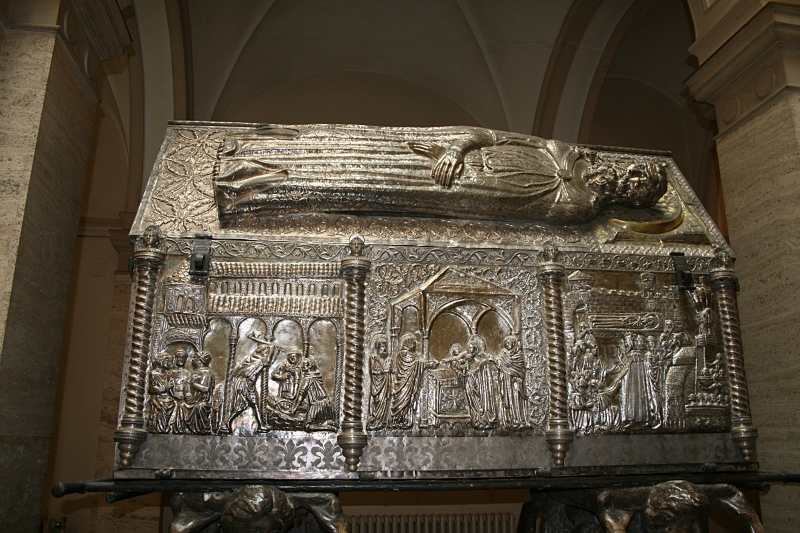
The Copy of the Shrine of St. Simeon
The copy of the Shrine of St. Simeon, located in the palace atrium, was made by Teodor Krivak-Klaužer (1900–1980), a pupil of Ivan Kerdić and one of Croatia’s finest master engravers. The shrine is crafted in silver (about 240 kg) and gold, in quantities identical to the original, using the repoussé technique, and represents a masterpiece of reproductive sculptural art.
The original shrine was created between 1377 and 1380 by the Milanese goldsmith Francesco from Milan, commissioned by Queen Elizabeth of Bosnia, wife of King Louis I of Hungary and Croatia. It is kept in the Church of St. Simeon in Zadar.
The Guarneri Violin
The Guarneri “King” violin from 1735, recognized as one of the nine most significant works of the great Italian violin maker Guarneri del Gesù, was bequeathed to the Croatian Academy of Sciences and Arts by the renowned Croatian violinist Zlatko Baloković. It has been in the Academy’s possession since 1986.
The HAZU Palace also preserves numerous collections of paintings, sculptures, documents, and manuscripts that reflect the rich cultural and historical heritage of Croatia.
Location
Zagreb
Zagreb is the capital and largest city of Croatia. It is situated on the slopes of Medvednica mountain, in the Carpathian Basin, and on the banks of the Sava river. Zagreb has a rich and diverse history, culture, and architecture that reflect its long and turbulent past.
Explore


Reviews
There are no reviews yet.