
The Church and Shrine of Saint Simeon – a masterpiece of Gothic goldsmithing


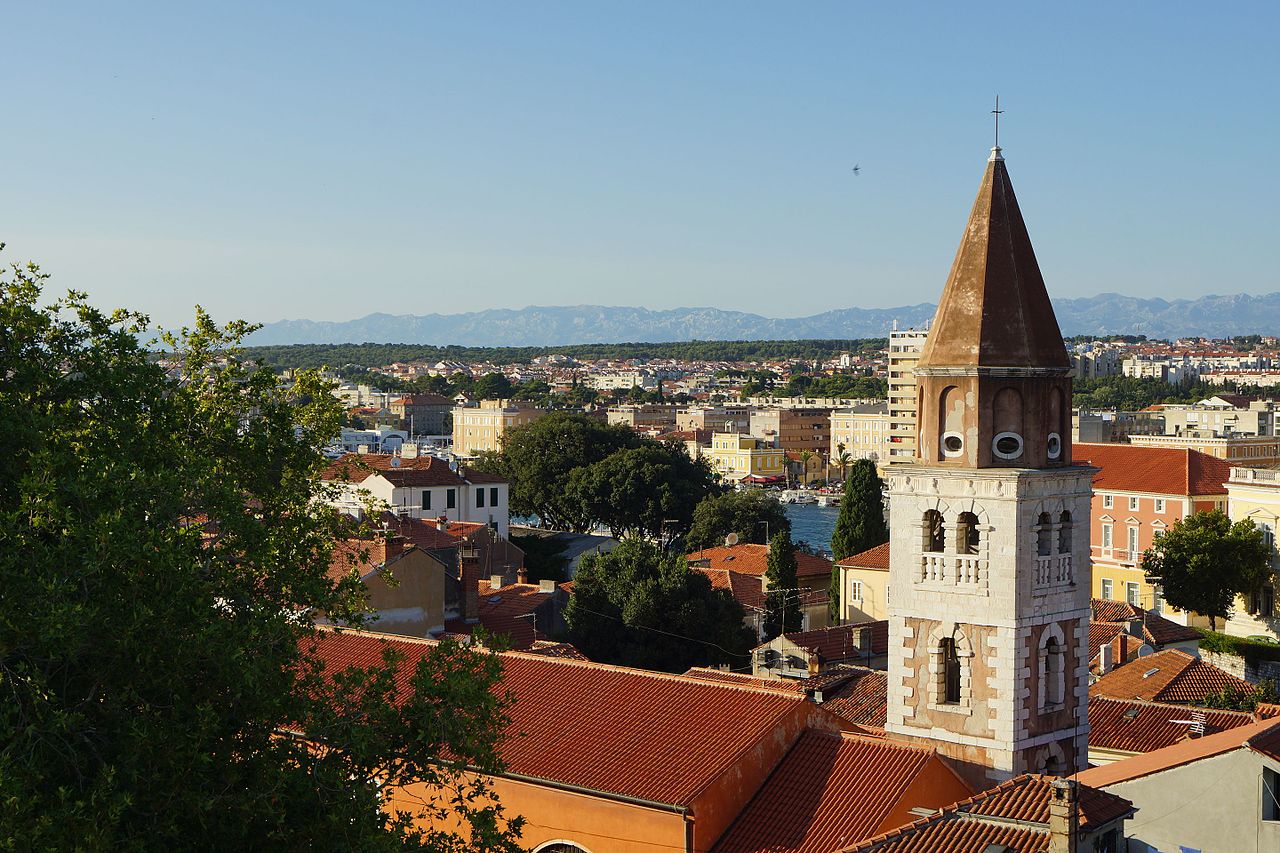

On the main altar of the church stands the silver shrine of Saint Simeon, dating from 1380, a remarkable piece of Gothic goldwork.
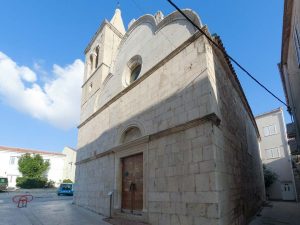
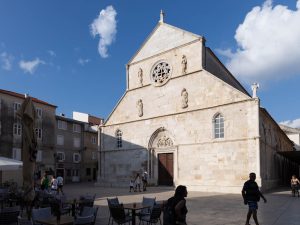
The Church of Saint Simeon, the man who held the infant Jesus in his arms in the Temple of Jerusalem, was initially dedicated to Saint Stephen the Protomartyr, who was stoned in Jerusalem around the year 40 AD.
It only received its new patron saint in 1632 when the renowned shrine containing the relics of Saint Simeon, previously kept in the Church of Saint Mary Major, was placed within it.
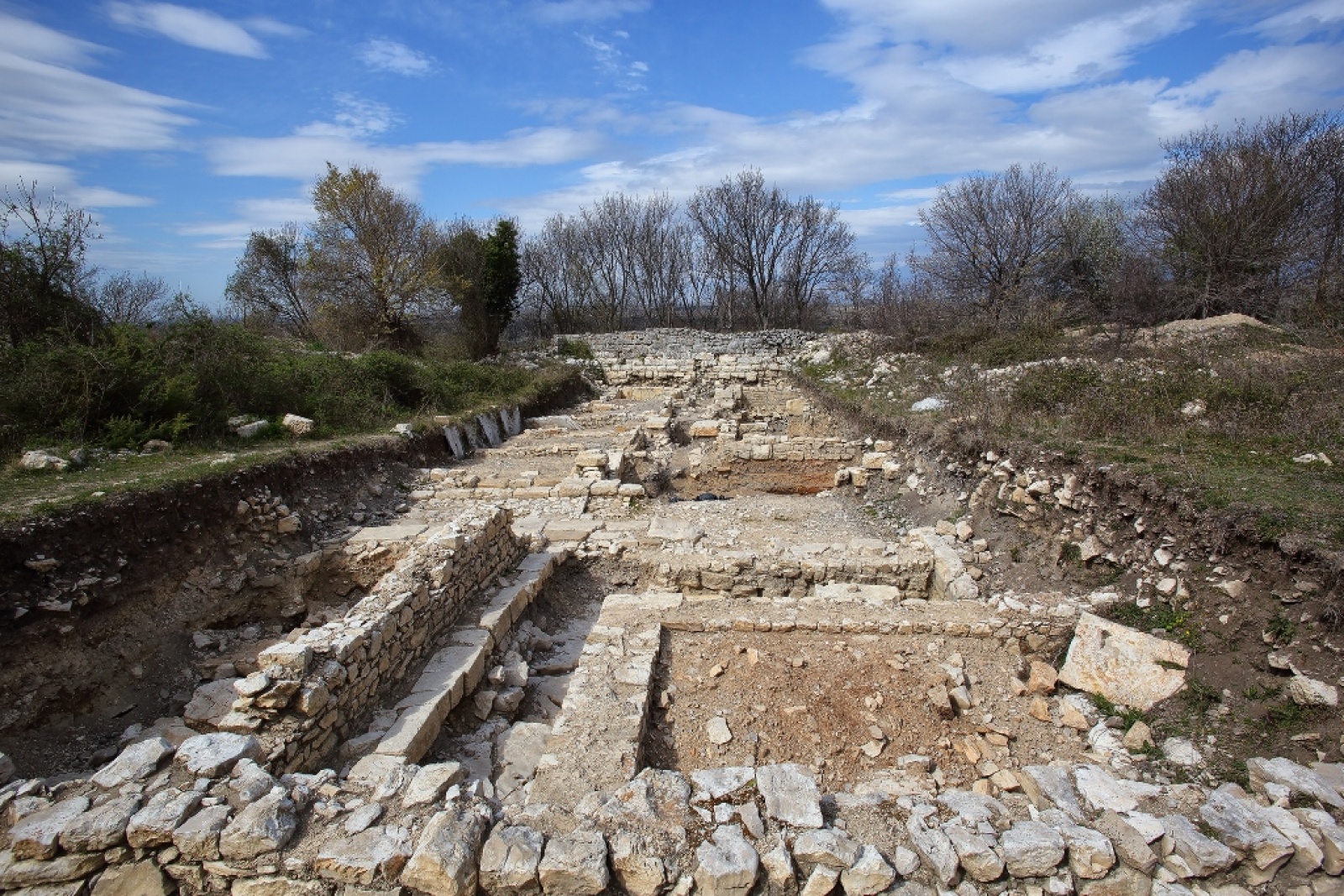
The early Christian three-aisled basilica of Saint Stephen was built near the main city gate of Roman Iadera, along the main street, the decumanus, today’s Kalelarga, likely in the 5th century.
The dimensions of the early Christian basilica were just over 20 x 30 meters. On the eastern side was a horseshoe-shaped apse. Around the apse was a subselium – in early Christian basilicas, a long stone bench with a backrest that follows the curve of the apse. It is located on either side of the cathedra, and the clergy sat on it.
The interior was divided into three naves by a colonnade of 8 columns connected by semicircular arches. On the north side, Roman columns support the arches, while on the south side, early Christian ones do. In 1632, a large rectangular sanctuary was built to house the Shrine of Saint Simeon, a masterpiece of Gothic goldsmithing.
The Shrine of Saint Simeon was crafted by the goldsmith Francis of Milan. It was commissioned by the Croatian-Hungarian Queen Elizabeth Kotromanić, daughter of the Bosnian Ban Stephen II Kotromanić and wife of Louis I of Anjou, the Croatian-Hungarian king who signed the famous Treaty of Zadar with Republic of Venice in 1358 in Zadar, in the sacristy of the Church of Saint Francis.
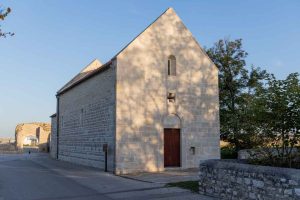
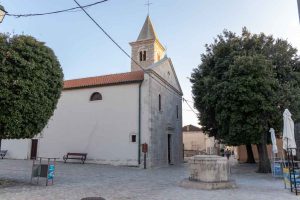
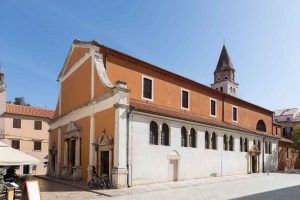
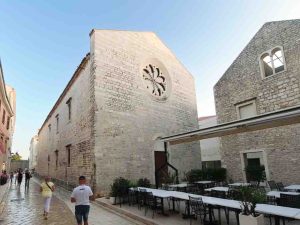
The south wall has been preserved almost entirely and features seven original bifora windows. It is painted white on the exterior to distinguish it from the rest of the later rebuilt church. On the outer wall of the north aisle are three Gothic windows.
The facades of the basilica blend stylistic forms of early Christian, medieval, Renaissance, and Baroque architecture. Today, the church is considered a monument of provincial Baroque.
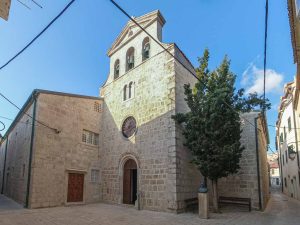
At the beginning of the 18th century, the sacristy and bell tower were added to the rear of the church.
Location
Zadar
Zadar is the oldest continuously inhabited city in Croatia. It is situated on the Adriatic Sea, at the northwestern part of Ravni Kotari region. Zadar serves as the seat of Zadar County and of the wider northern Dalmatian region. The city proper covers 25 km2 (9.7 sq mi) with a population of 71,000 in 2025, making it the second-largest city of the region of Dalmatia and the fifth-largest city in the country.
ExploreBaroque
One of the most remarkable periods in Croatian art history is the Baroque, which lasted from the 17th to the late 18th century. During this time, Croatia was reunited with the parts of its territory that were occupied by the Venetian Republic and the Ottoman Empire, after centuries of fragmentation and division. This reunification not only brought political stability and economic prosperity but also stimulated a cultural revival and a flourishing of art in every segment.
ExploreGothic
Gothic appeared relatively late in Croatia. In addition to the 13th and 14th centuries, as long as it lasted in Europe, its influence is also visible in the 15th and 16th centuries – for example, on the Trogir and Sibenik cathedrals. Also on the territory of Croatia, you can often see admixtures of Romanesque and Renaissance in Gothic buildings. Gothic influence from European countries adapted to its possibilities and needs and thus created a “domestic artistic expression”. This mixture of styles is most pronounced in Dalmatia. The northern regions were exposed to the influences of Central Europe, while the coastal regions tied their artistic expression to Italian models.
ExplorePre-Romanesque
In the 7th century, the Croats, with other Slavs and Avars, came from Northern Europe to the region where they live today. They were on the level of Iron Age nomadic culture, so they did not know how to enjoy the advantages of urban cities. This is why they first inhabited city boundaries on nearby rivers (like Jadro near Roman Salona).
Explore









Reviews
There are no reviews yet.