
Tourist Info Centre – Feller-Stern House and Elza fluid
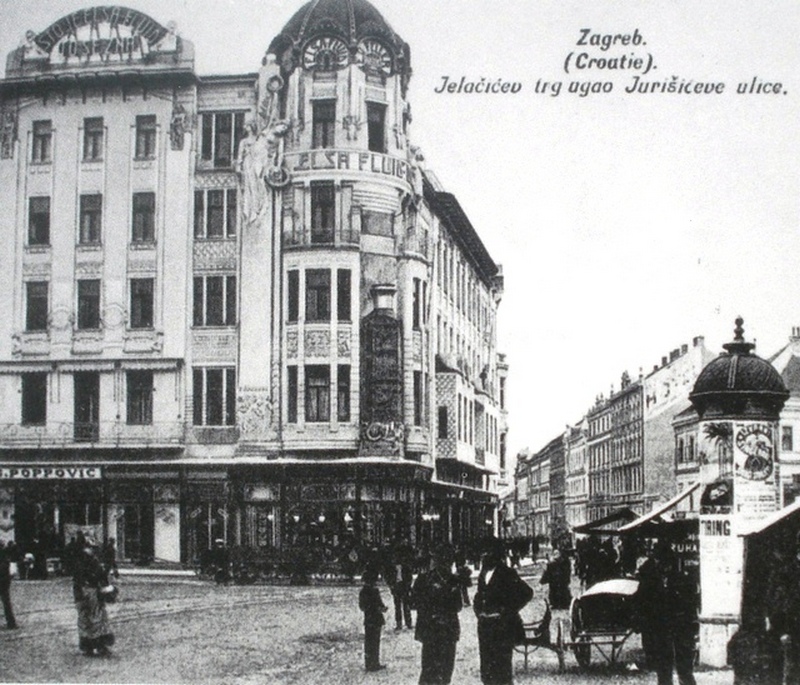
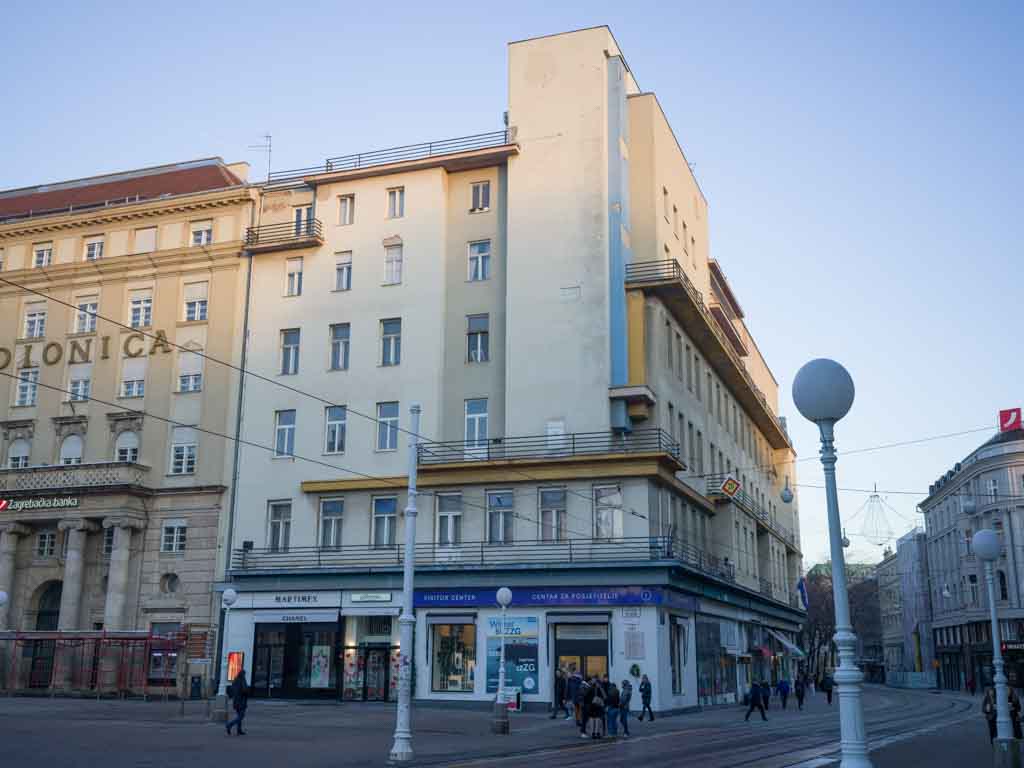
The Feller-Stern House is a remarkable example of the International style of architecture in Zagreb. The Tourist Information Center is located on the ground floor.
It was designed by Peter Behrens, a renowned pioneer of 20th-century Modernism, and occupies a significant place in the European architecture of the interwar period.
The first four-story house in the same place was built in 1904-05. to the project of Vjekoslav Bastl and the architectural studio Hönigsberg & Deutsch.
Initially, the house was referred to as the skyscraper, and it created quite a stir among the people of the province. There was a large bottle of “Elza fluid” advertised on the corner of the building, which was considered superior to the Art Nouveau decorations. Many people believed that Zagreb was being “Americanized” because of this.
The pharmacist Eugen Feller who owned the house, introduced his famous medicine, “Elza fluid” which was advertised in all the leading newspapers of the Austro-Hungarian Monarchy as a “miracle water” capable of curing all kinds of pain and rejuvenating people. The facade of the building was shaped like a bottle, and a message on the roof read, “What is Elza fluid, everyone knows it.”
Legend has it that when asked if his medicine works really, Feller replied, “It should help, it helped me to build the first four-story building on the Jelačić Square.” However, the people didn’t appreciate the size of the house, and they also resented the shadow it cast.
As time passed, the popularity of “Elza fluid” declined, and the building was sold to industrialist Otto Stern, who hired Berlin architect Peter Behrens to modernize the facade. The old Art Nouveau plastic was removed, and the house was transformed into a modern building in 1927-28. The facade was modernized and reshaped to give it a more contemporary feel.
In 1904, Feller relocated from Donja Stubica to Tomislav Square no. 4, where he built a family villa known as the Feller House, which was a two-story building.
Location
Zagreb
Zagreb is the capital and largest city of Croatia. It is situated on the slopes of Medvednica mountain, in the Carpathian Basin, and on the banks of the Sava river. Zagreb has a rich and diverse history, culture, and architecture that reflect its long and turbulent past.
ExploreModernism
Yugoslav architecture emerged in the first decades of the 20th century before the establishment of the state; during this period several South Slavic creatives, enthused by the possibility of statehood, organized a series of art exhibitions in Serbia in the name of a shared Slavic identity. Following governmental centralization after the 1918 creation of the Kingdom of Yugoslavia, this initial bottom-up enthusiasm began to fade. Yugoslav architecture became more and more dictated by an increasingly concentrated national authority that sought to establish a unified state identity. Beginning in the 1920s, Yugoslav architects began to advocate for architectural modernism, viewing the style as the logical extension of progressive national narratives.
Explore




Reviews
There are no reviews yet.