
Zagreb Cathedral
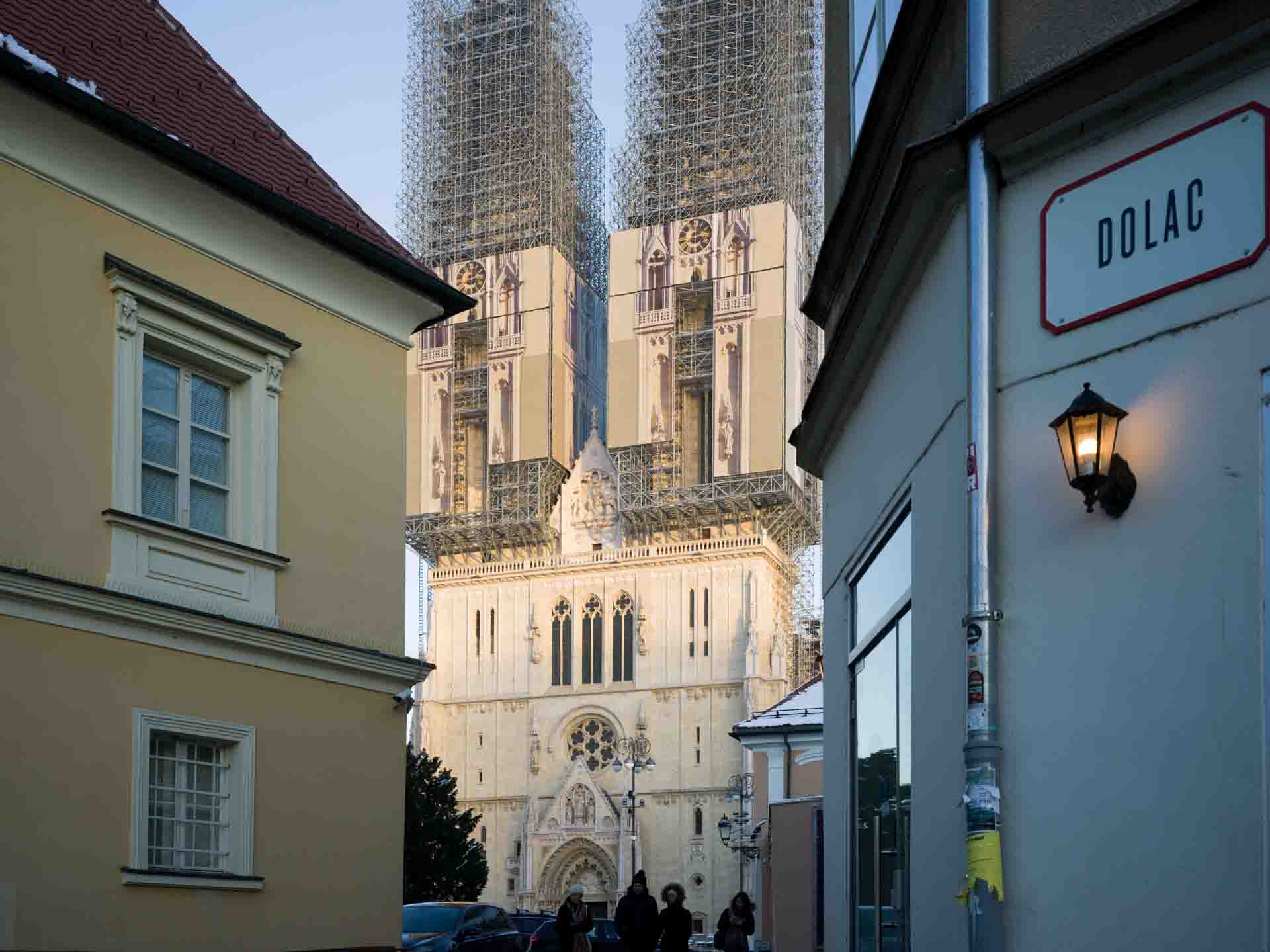
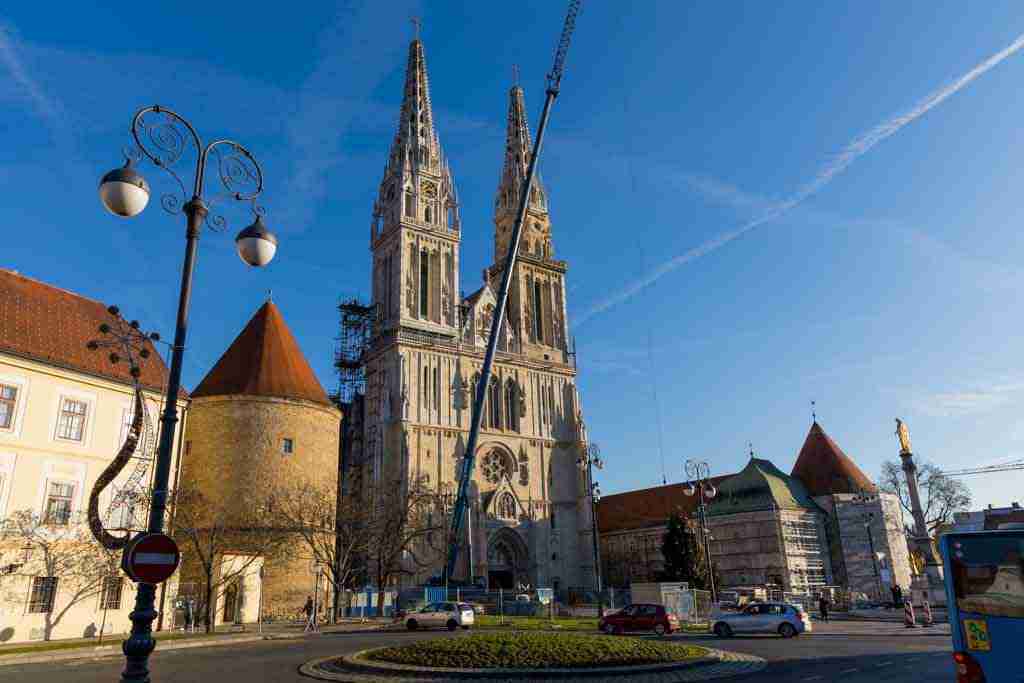
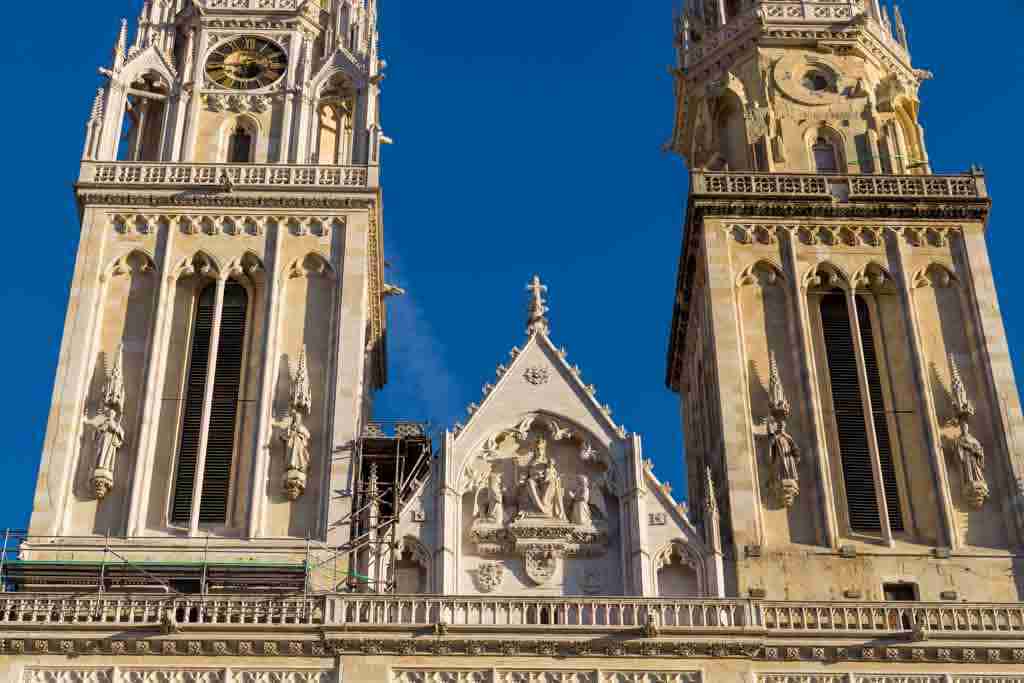
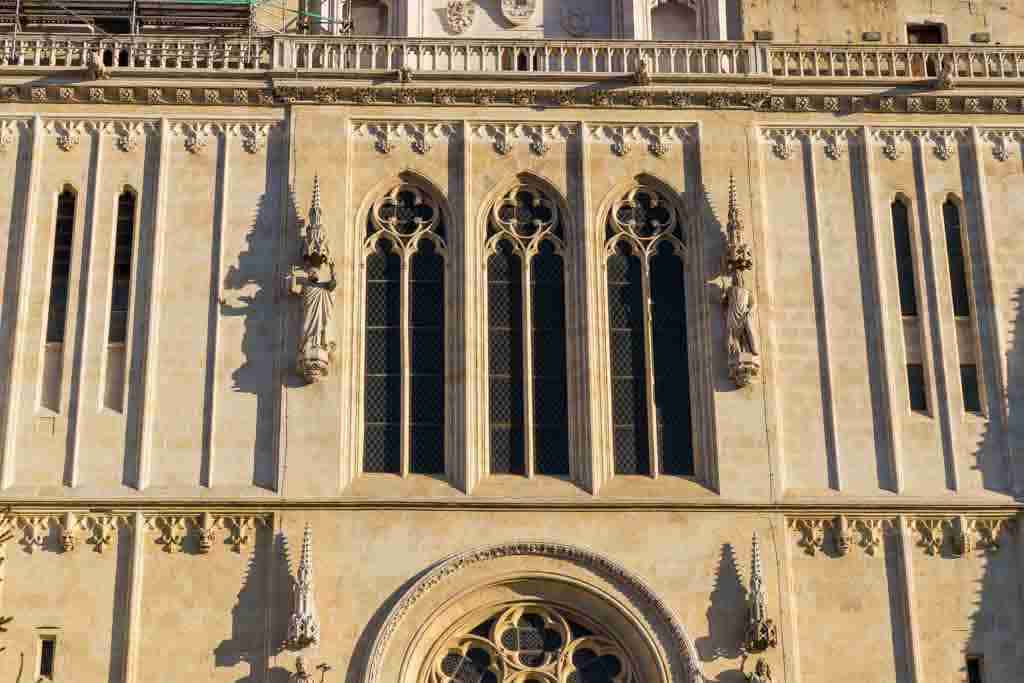
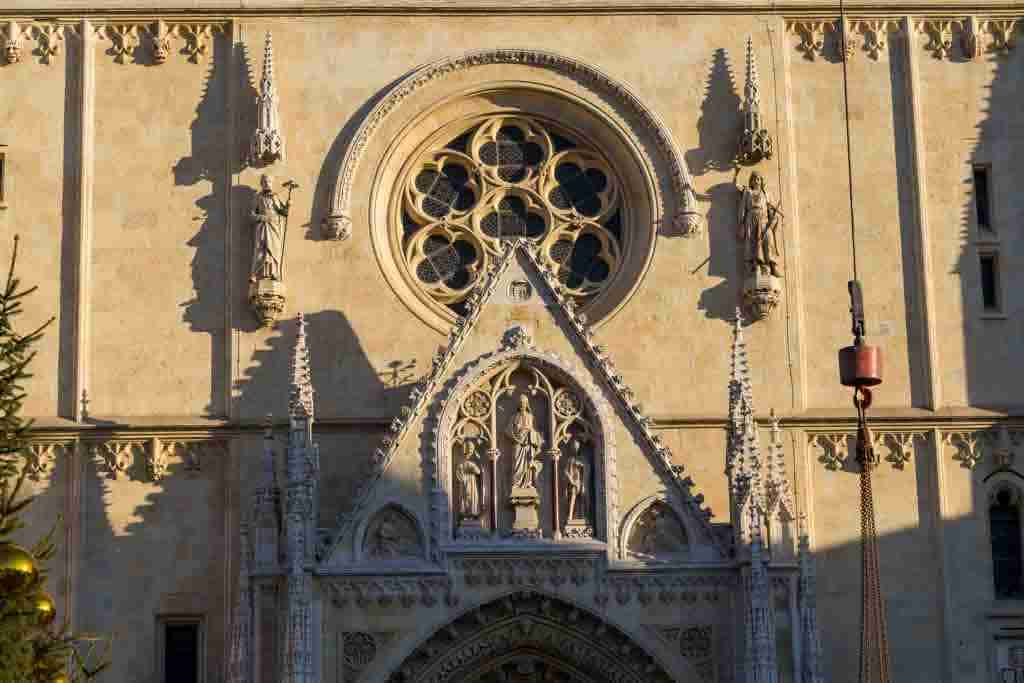
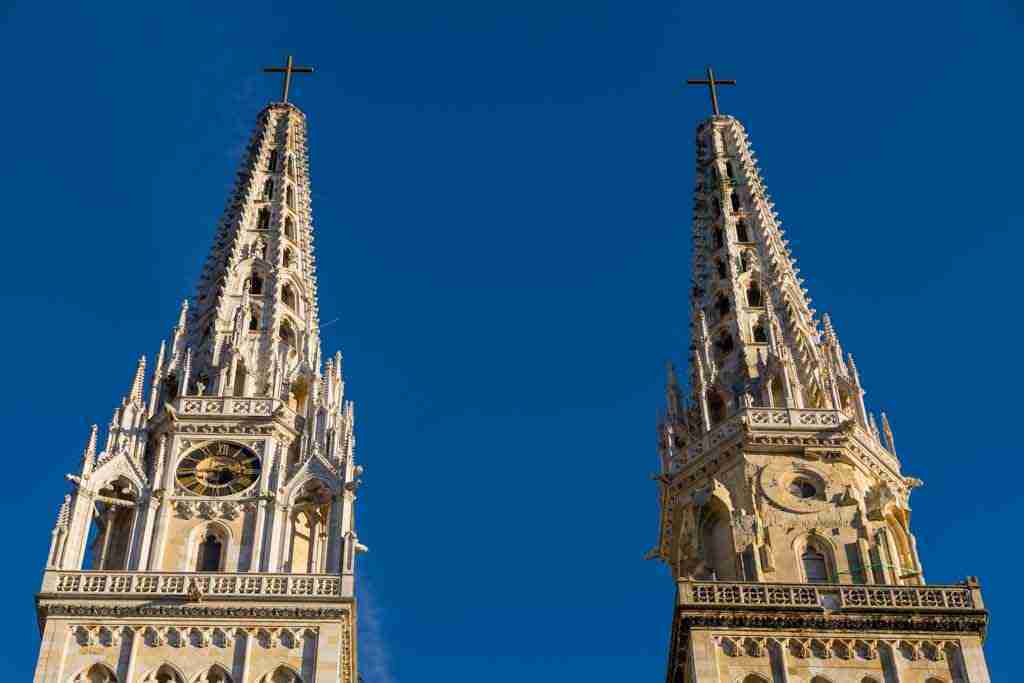
The towers of the Zagreb Cathedral are visible from most of the city. Sadly, the spire of the southern tower fell in the 2020 Zagreb earthquake, and the northern spire was removed due to extensive damage.
The Zagreb Cathedral is the second tallest building in Croatia and the most monumental sacral building in Gotic/Neo-Gothic styles southeast of the Alps. It is dedicated to the Assumption of Mary and kings Saint Stephen and Saint Ladislaus. The cathedral is typically Gothic, as is its sacristy, which is of great architectural value.
In 1093 when King Ladislaus I of Hungary (1040-1095) moved the bishop’s chair from Sisak to Zagreb, he proclaimed the existing church as a cathedral. Soon after the Diocese of Zagreb was established (around 1094) the construction of the cathedral in Romanesque–Gothic style began. The construction lasted for a very long time and was completed and dedicated only in 1217.
In 1242., the cathedral was severely damaged by the Tatars in the Mongol invasion of Europe in the 13th century. But shortly after bishop Timothy (1263-1287) started major reconstruction of the cathedral in Gothic style.
The reconstruction continued in the 14th and 15th century. Because the Ottoman Empire invaded Croatia at the end of the 15th century, in the early 16th century Toma Bakač began the construction of fortification walls around the cathedral. Most of these are still intact except Bakač Tower which was thrown down in 1906 due to it covering the sight of a renowned cathedral. In the 17th century, the cathedral got its massive Renaissance tower.

The fires and enemy attacks damaged the cathedral several times but it suffered its hardest blow in the 1880 earthquake. After the earthquake, the cathedral underwent a major reconstruction in neo-gothic style (1880 -1906) under the supervision of Hermann Bollé and by designs of Friedrich von Schmidt. Then the Zagreb cathedral got its present form with two slim 104-meter towers, a high roof, new pillars in the sanctuary, and altars that replaced the 18th-century baroque ones.

In the same reconstruction, the tomb for Zagreb’s bishops and archbishops was built behind the main altar. Except for them in the cathedral were buried some important persons in Croatian history, like Croatian martyrs Petar Zrinski and Fran Krsto Frankopan, whose bones were transferred from Wiener Neustadt in 1919, Ivan Antun Zrinski, Eugen Kvaternik, etc.
Pope John Paul II visited the cathedral twice, in September 1994 and October 1998, and Pope Benedict XVI was there in June 2011.
The last damage to Zagreb Cathedral was in the 2020 Zagreb earthquake. The southern spire broke off and fell on the Archbishop’s Palace roof and the northern spire was removed on April 17, the same year due to due to extensive damage.
Incredible footage of a daredevil base jumping off Zagreb Cathedral in 2019.
Zagreb Cathedral Treasury includes various metal vessels, liturgical vestments, and liturgical books collected during various periods of its history. Among lots of them most notable objects are the medieval St. Ladislaus cloak, plenarium made out of ivory, baroque reliquary-bust of King Saint Stephen, a Bethlehem child mummy killed by the order of King Herod and brought to Zagreb by King Andrew II.
The Cathedral is closed due to the reconstruction after the 2020 earthquake, but you can still take a virtual tour.
Location
Zagreb
Zagreb is the capital and largest city of Croatia. It is situated on the slopes of Medvednica mountain, in the Carpathian Basin, and on the banks of the Sava river. Zagreb has a rich and diverse history, culture, and architecture that reflect its long and turbulent past.
ExploreGothic
Gothic appeared relatively late in Croatia. In addition to the 13th and 14th centuries, as long as it lasted in Europe, its influence is also visible in the 15th and 16th centuries – for example, on the Trogir and Sibenik cathedrals. Also on the territory of Croatia, you can often see admixtures of Romanesque and Renaissance in Gothic buildings. Gothic influence from European countries adapted to its possibilities and needs and thus created a “domestic artistic expression”. This mixture of styles is most pronounced in Dalmatia. The northern regions were exposed to the influences of Central Europe, while the coastal regions tied their artistic expression to Italian models.
ExploreHistoricism
Historicism is marked with building three large churches: the neo-Romanesque cathedral in Đakovo (K. Roesner and F. Schmidt, 1882), monumental parish church of St Peter and Paul in Osijek (1898) and neo-gothic rebuilding of Zagreb cathedral with glazed roof tiles and 105 m tall towers (Herman Bolle, 1880–1902). At the end of 19th century Herman Bolle undertook one of the largest projects of European historicism, a half-kilometer long neo-Renaissance arcade with twenty domes on Zagreb cemetery Mirogoj.
Explore


Goran –
tnx Hermann Bollé 😉