
Duke Branimir of Croatia – Sculpture in Nin


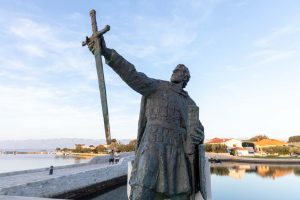
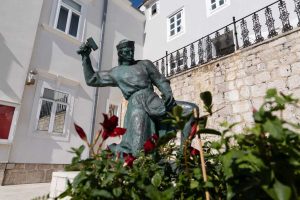
The Monument to Duke Branimir in Nin was erected in 2007. It is the work of sculptor Josip Poljan.
Duke Branimir: A Key Ruler of Croatia in the 9th Century
Duke Branimir ruled Littoral Croatia from 879 to around 892 AD. His reign is considered exceptionally important as it marked a period of significant strengthening of the Croatian state’s independence from external influences, primarily the Byzantine and Frankish Empires. Branimir is mentioned in historical sources with various titles, including princeps, comes, and dux.
Rise to Power and the Fight for Independence
Branimir came to power by overthrowing the pro-Byzantine Duke Zdeslav. His policy was clearly aimed at freeing the state from all foreign hegemonies, representing a continuation of the struggle for autonomy led by his predecessors. He successfully navigated between powerful neighbors, Byzantium to the east and the Franks to the west, avoiding their domination.
Recognition by the Holy See and International Standing
One of the most significant events of Branimir’s reign was the establishment of a direct and historically important connection with Rome. Pope John VIII sent him a letter on June 7, 879, explicitly blessing Branimir, his people, and his land.

This act is widely interpreted in Croatian historiography as the first de facto international recognition of the Croatian state. In response to the papal blessing, Branimir pledged loyalty to the Pope, definitively aligning Croatia with the Western Christian sphere and strengthening its autonomy from Byzantium. June 7th is now celebrated as Croatian Diplomacy Day.
Strengthening Economic and Military Power
Under Branimir’s rule, the medieval Croatian state experienced significant economic and military growth. Byzantium was forced to pay a tribute of peace (tributum pacis) for its interests in the Dalmatian cities, and the Republic of Venice paid a fee (census) for safe passage along the eastern Adriatic coast. This testifies to the Croatian state’s power at the time, especially at sea. Branimir’s era is also characterized by active construction, evidenced by numerous stone monuments adorned with the Croatian interlace (troplet) and Branimir’s name, found at locations such as Šopot, Nin, Muć, and Bribirska Glavica.
Characteristics of the Reign
Branimir’s reign represents a vital step towards the full state independence of Croatia. Thanks to him, Croatia became a subject in international relations, laying the foundation for the future development of the kingdom. His period also marks the first mention of a Croatian female ruler’s name—Branimir’s wife, Maruša (Maria)—visible on an altar screen inscription from the Church of St. Martha in Bijaći. Branimir’s pilgrimage to Aquileia with family members further indicates his importance in European diplomatic circles of the 9th century.
Location
Nin
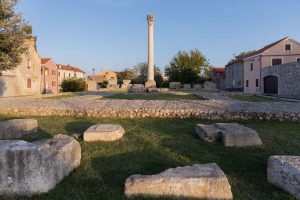
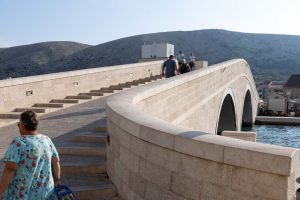
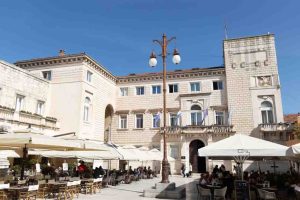
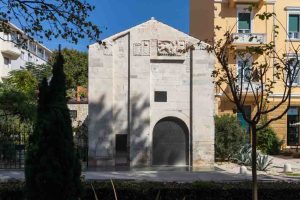
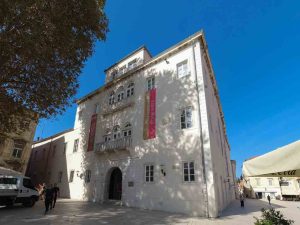
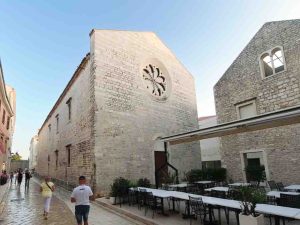
Nin (Aenona or Nona) is a town in the Zadar County of Croatia. Its historical center is located on an islet only 500 meters (yards) in diameter. It is situated in a lagoon on the eastern shore of the Adriatic Sea, surrounded by natural sandy beaches and linked to the mainland by two stone bridges from the 16th century. The present-day town on the islet was founded 3,000 years ago and is one of the oldest towns on the eastern Adriatic. The area of Nin was first colonized by ancient people of the Mediterranean.
Explore










Reviews
There are no reviews yet.