
Church of St. Francis: Architecture of the Mendicant Orders


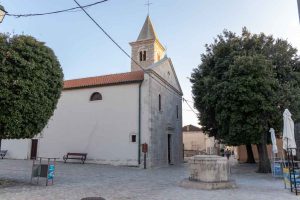
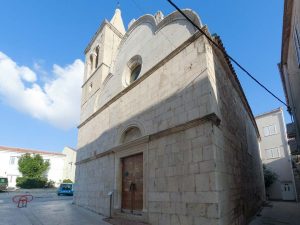
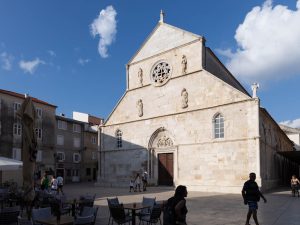
The Church of St. Francis (Crkva Sv. Frane), along with the churches of the Annunciation and St. George, is an important part of the city’s Renaissance heritage and the only remaining part of the large former convent complex of the Conventual Franciscans.
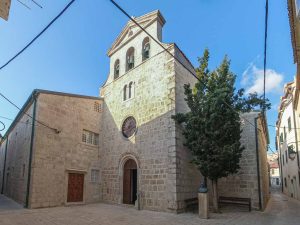
The Church of St. Francis was erected in the second half of the 15th century, following the planned construction of “New Pag.” However, the work was prolonged, and it was only completed in the first half of the 16th century, evidenced by the coat of arms of the Pag Duke Bartol Pesaro on the facade.
Architecture
The architecture of the church is typical for the so-called mendicant (poor) and preaching orders, such as the Franciscans and Dominican order.
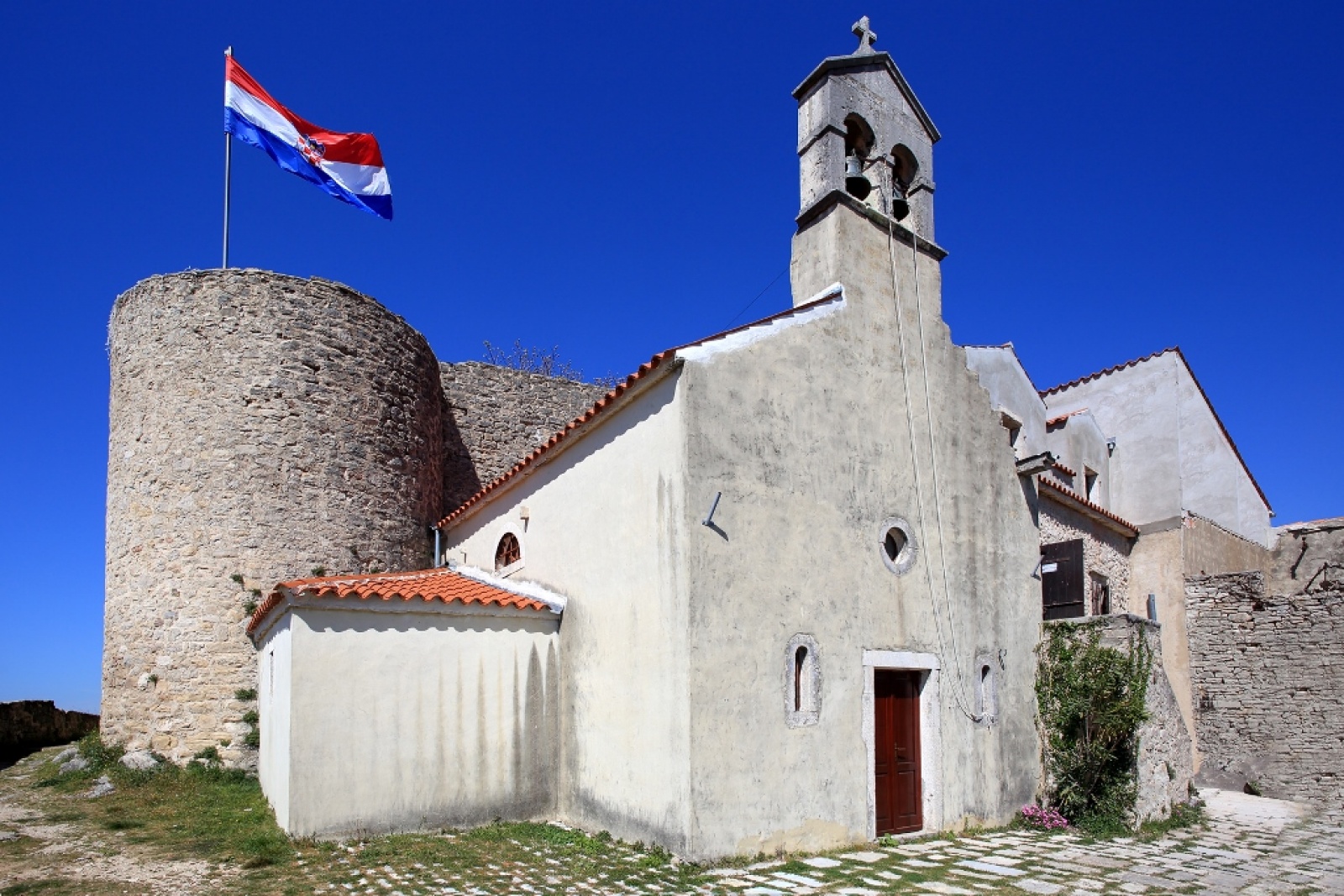
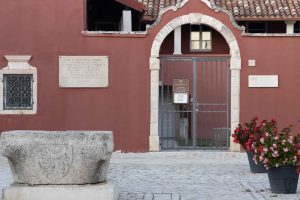
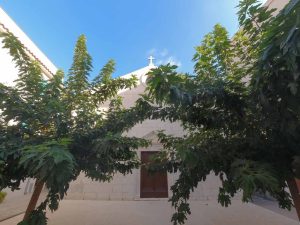
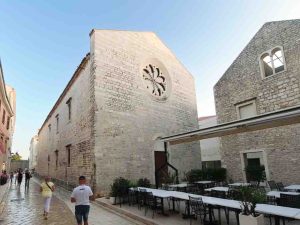
It is a simple, elongated, single-nave rectangular building with a rectangular apse covered by stellar vaulting. The facade is constructed of fine, dressed stone and features a modest portal topped by a triangular gable. Above the rear section of the church rises a simple bell gable (zvonik na preslicu) designed for two bells.
In the Renaissance urban plan of New Pag, the eastern part of the city was intended for the lower and working classes. It is therefore unsurprising that the church and convent of St. Francis, the patron of the poor, were located precisely in this area. The Dominican convent and the Church of St. Anthony were also situated in the eastern part of the city.
Tombstones and Heritage
Although the Church of St. Francis is not rich in major artworks, it preserves the tombstones of distinguished Pag families, complete with their coats of arms and inscriptions. Perhaps the most significant memorial plaque belongs to Elizabeta, the daughter of the Pag Duke Jerolim Bragadin.
The male Franciscan convent that stood adjacent to the church was abolished in 1795.
A Stage for Classical Music
Today, the Church of St. Francis is known as a major cultural venue in Pag. During the Pag Cultural Summer event, the church hosts classical music concerts organized by musicologist Nina Pogorelić and pianist Lovro Pogorelić. These concerts represent the most attractive part of the summer program and draw classical music enthusiasts.
Location
Renaissance
In the 15th century, Croatia was divided between three states – northern Croatia was a part of the Austrian Empire, Dalmatia was under the rule of the Venetian Republic (with the exception of Dubrovnik), and Slavonia was under Ottoman occupation. Dalmatia was on the periphery of several influences, equidistant from Italy, Ottoman Bosnia, and Austria, so it drew influence from all. In those circumstances in Dalmatia flourished religious and public architecture with clear influences of the Italian Renaissance, but still original.
Explore













Reviews
There are no reviews yet.