
The Bust of Bartol Kašić: The Father of Croatian Grammar


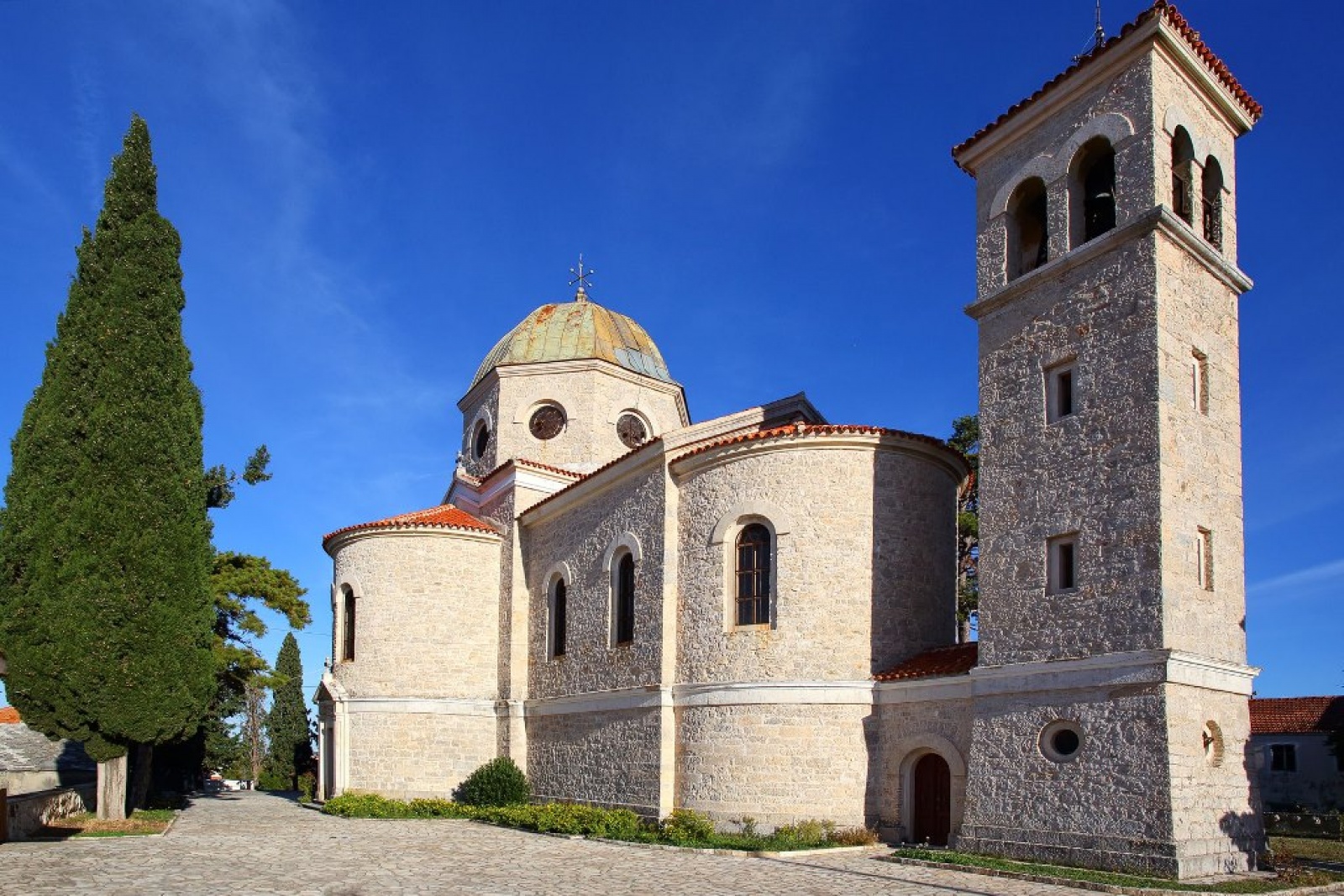
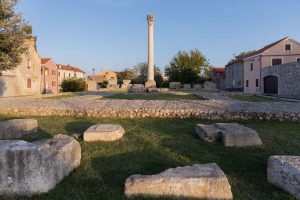
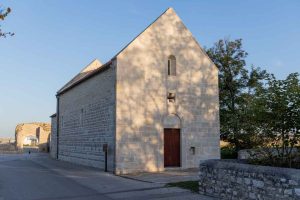
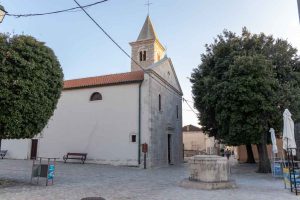
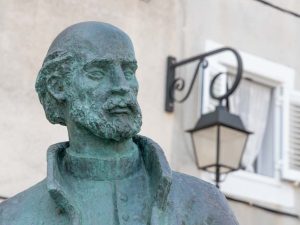
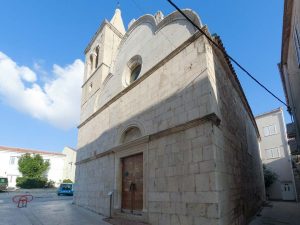
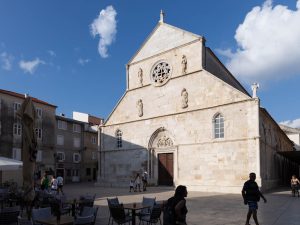
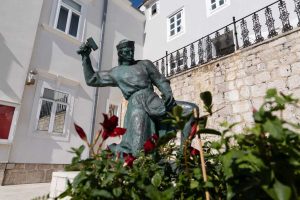
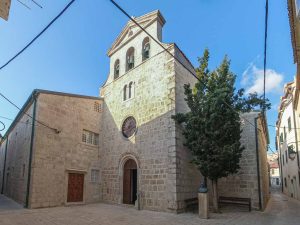
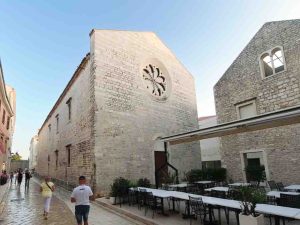
The Bust of Bartol Kašić, which honors the Father of Croatian Grammar, is located on Pag’s central town square (Trg Kralja Petra Krešimira IV) next to the Vela Crikva (Great Church). The bust is the work of the local Pag sculptor Ivan Mirković.
Although it was officially unveiled in 1991 by the first Croatian President, Dr. Franjo Tuđman, evidence suggests the sculpture was completed much earlier. A letter Mirković sent to writer Ante Zemljar dated January 27, 1974, included a photograph of the completed bust, suggesting it was finished in early 1974 or late 1973.
Bartol Kašić (1575–1650): Missionary and Creator of the First Croatian Grammar
Bartol Kašić, born in Pag in 1575 and deceased in Rome in 1650, is one of the most important figures in the history of Croatian language and culture. As a Jesuit, linguist, and missionary, Kašić dedicated his life to serving his faith and standardizing the Croatian language.
Early Life and Education in Pag
Born on Pag Island on August 15, 1575 (the Feast of the Assumption), Kašić was orphaned early. He was raised by his uncle, the Pag priest Luka Deodati Bogdančić, who taught him to read and write. Kašić received his foundational education at the municipal school in the town of Pag.
Life’s Journey Between Rome, Dubrovnik and the Missions
Kašić’s journey continued in 1590 when he became a student at the Illyrian College in Loreto (near Ancona). Just five years later, in 1595, he entered the Jesuit Order in Rome. His exceptional linguistic talent was quickly recognized, and by 1598, he was appointed a grammar teacher at the esteemed Roman College of the Jesuits.
He was ordained a priest in 1606. His pastoral and missionary activities were intense:
- Dubrovnik: He lived in Dubrovnik from 1609 to 1612 and again from 1620 to 1633, where he was a popular preacher and teacher.
- Missionary Journeys: On two occasions (first in 1612 and again in 1618), the Pope sent him on dangerous missions to territories under Ottoman rule, including Bosnia, Serbia, and eastern Slavonia. He traveled disguised as a merchant to aid the Christian population.
- Loreto and Rome: He served as a confessor multiple times in Loreto and returned to Rome in 1635, where he died in 1650. He is buried in the Church of St. Ignatius.
The 1604 Croatian Grammar: Institutiones linguae Illyricae
Kašić’s most significant linguistic achievement, the first grammar of the Croatian language, was written in Rome under direct orders.
Context and Commission
The Academy of the Illyrian Language was founded in 1599, and Pope Clement VIII personally recommended commencing a systematic study of the language. The primary goal was to make it easier for Jesuit missionaries heading to South Slavic regions to learn the language of the people they were assigned to serve.
Pioneering Work
The general of the Jesuit Order, Claudius Aquaviva entrusted this task to the young and talented Kašić. Kašić was aware that he was a pioneer in this field, as there were no predecessors in Croatian grammar. The result of this groundbreaking work was printed in Rome in 1604 under the title: Institutiones linguae Illyricae (Foundations of the Illyrian Language).
The Term “Illyrian”
The term “Illyrian” in the title was common at the time, adopted from ancient tradition. It was considered the precise term by Kašić’s superiors to name the people and their language across the broad South Slavic region. Kašić’s grammar, written for practical use, became the fundamental manual and indispensable resource for all future Croatian linguists.
Ritual Romanum and the Forbidden Bible
Two other works stand out among Kašić’s many writings:
- Ritual Romanum (1640): This most-published work by Kašić, a translation of the Roman Ritual, played a crucial role in standardizing the national language. It served as the official liturgical book in most Croatian dioceses until 1929.
- Translation of the Holy Scriptures (Bible): Though finished by 1633, Kašić’s first complete translation of the Bible into Croatian (Dubrovnik Shtokavian-jekavian dialect) was not approved for printing in Rome. The ban on its publication caused significant harm to the later development of the Croatian literary language. This priceless manuscript, containing about 20,000 different words, was finally published in 2000.
Permanent Exhibition in Pag
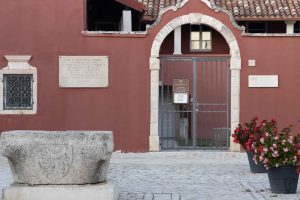
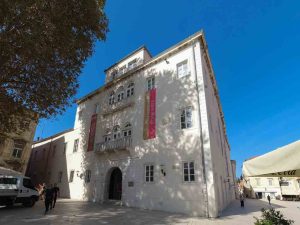
Although Bartol Kašić is buried in Rome, his legacy lives on in Pag. You can gain insight into the work of the greatest historical figure from Pag by visiting the “Bartol Kašić” Permanent Exhibition in the town dedicated to his life and achievements.








Reviews
There are no reviews yet.