
Remains of the Church of St. Thomas in a residential building
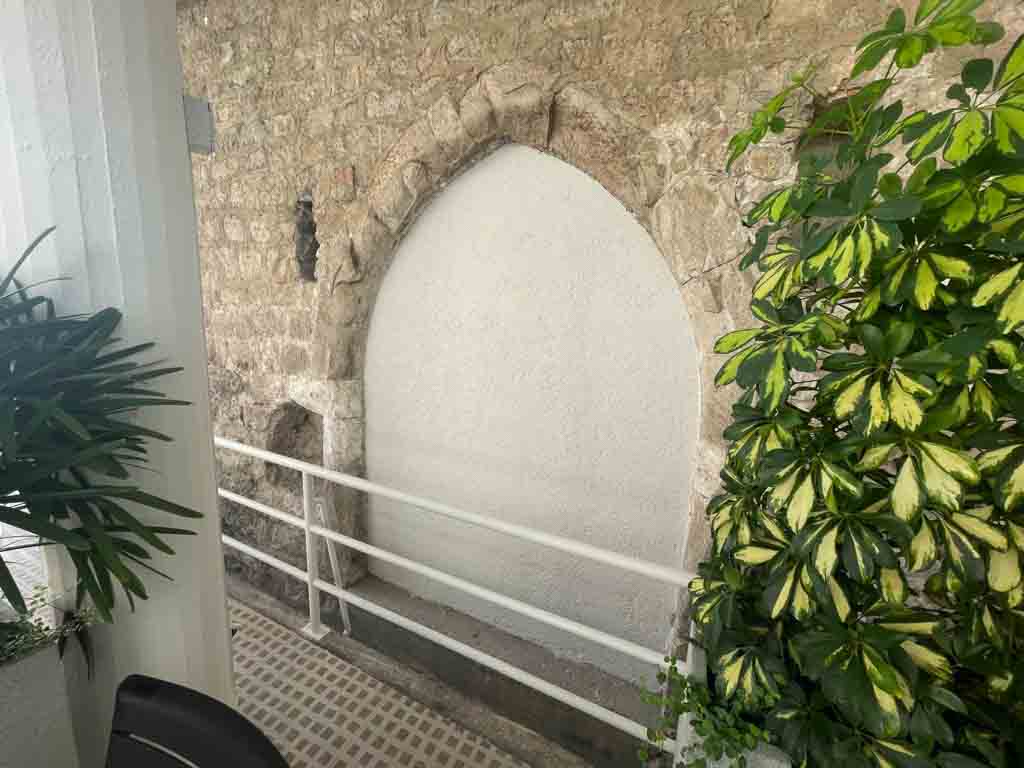
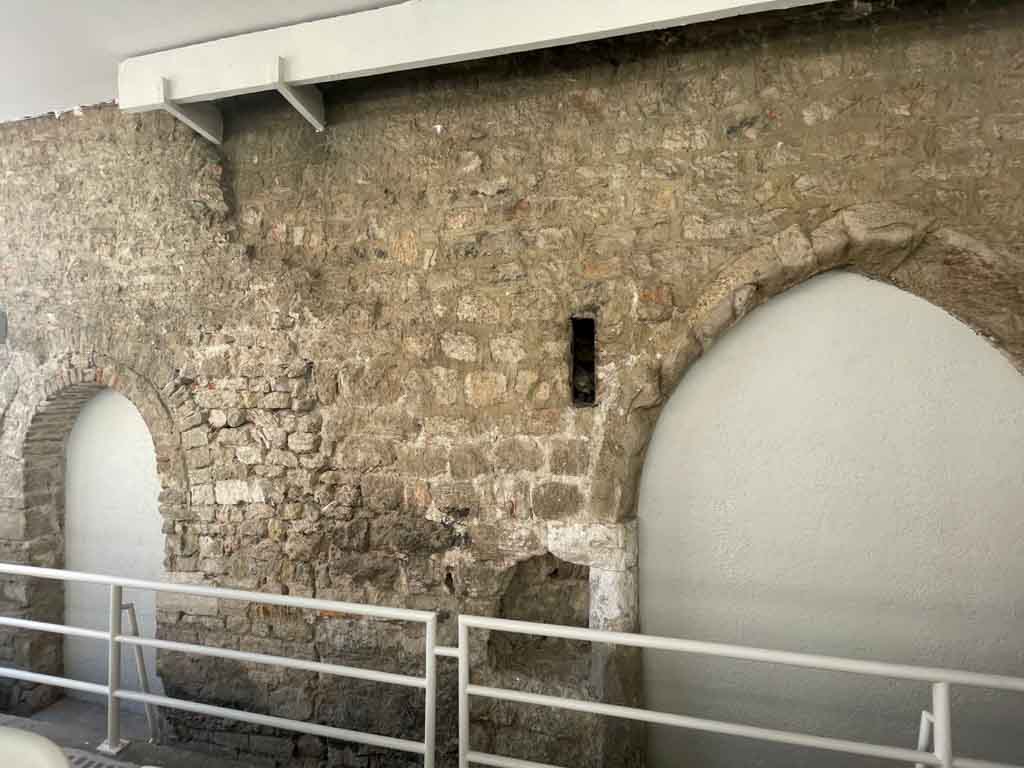
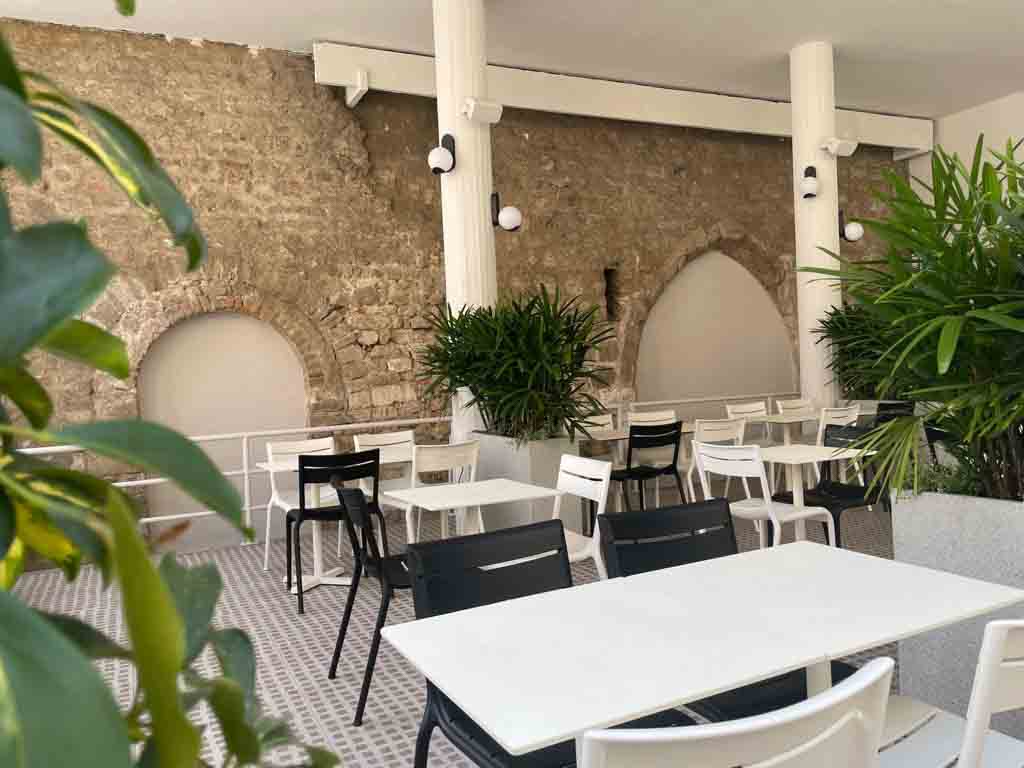
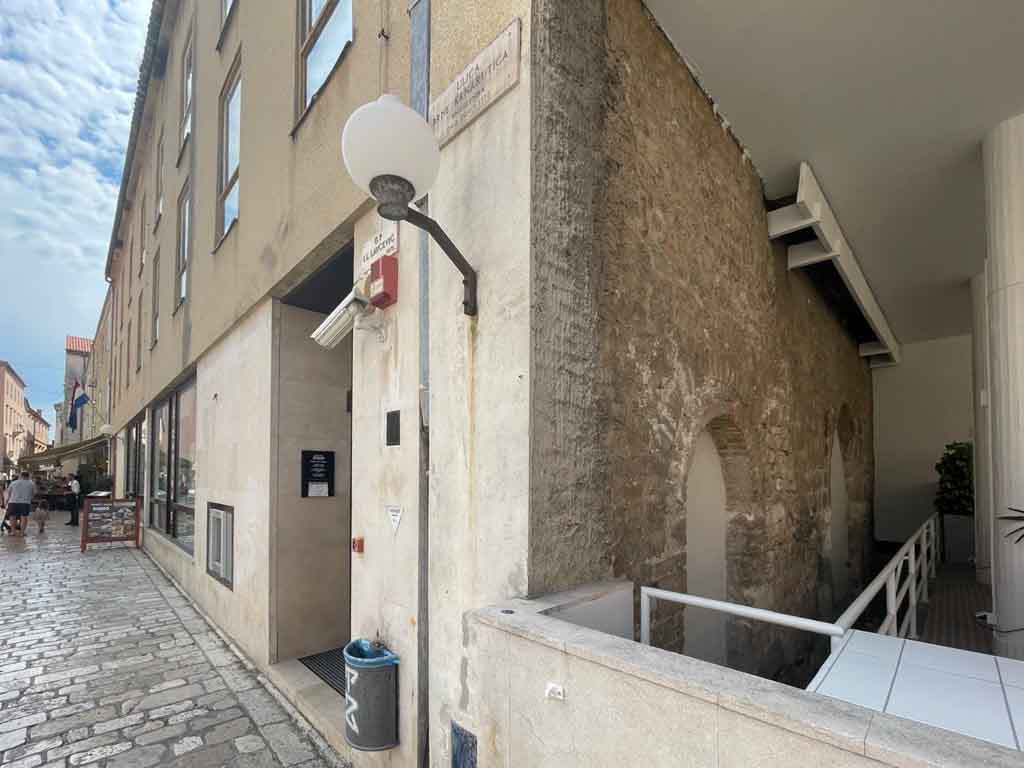
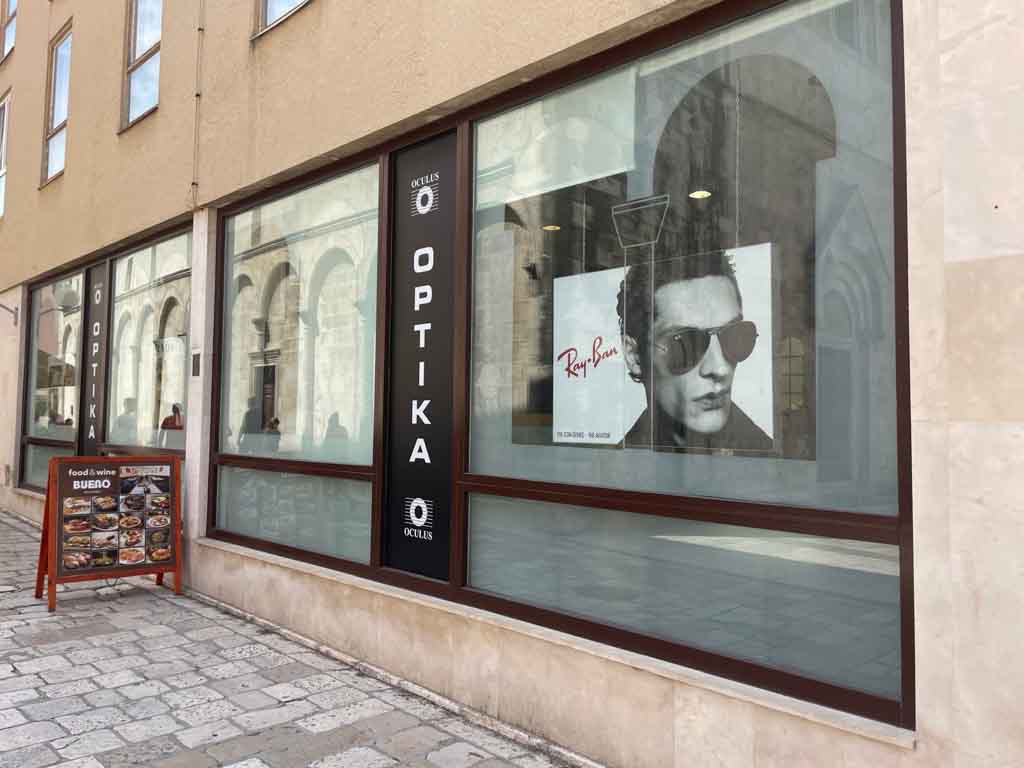
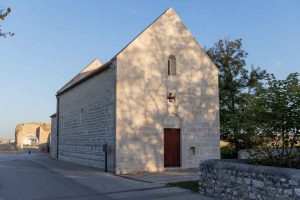
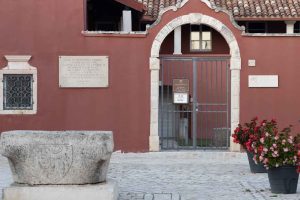
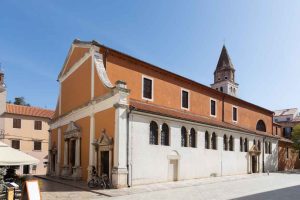
South of the Church of St. Chrysogonus, on the ground floor of a residential building, are the remains of the Church of St. Thomas. Until recently, the space housed a bank branch, and today it is a glasses store.
The Old Christian three-nave basilica, built in the 5th century, was historically known by the names of St. Sylvester and St. Cross.
Changing its name throughout history, it functioned as a church until Napoleon’s rule in Zadar in 1807. A large part of it was demolished in 1822 to make way for a school building.
The church was severely damaged by bombing during World War II. After the war, it was decided that a new building would be constructed on its site. Before construction began in 1969, a systematic investigation of the church’s area was carried out.
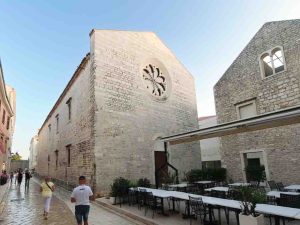
On the ground floor of the new building, within the commercial space, the visible remains of seven columns with cubic capitals in each arcade and a semicircular apse have been preserved. On the southwestern facade, three original bifora windows have also survived.
The facade, with the bricked-up remains of three portals—a Gothic one in the center and two side portals—is less noticeable because a restaurant is located in front of it.
Location
Zadar
Zadar is the oldest continuously inhabited city in Croatia. It is situated on the Adriatic Sea, at the northwestern part of Ravni Kotari region. Zadar serves as the seat of Zadar County and of the wider northern Dalmatian region. The city proper covers 25 km2 (9.7 sq mi) with a population of 71,000 in 2025, making it the second-largest city of the region of Dalmatia and the fifth-largest city in the country.
ExploreGothic
Gothic appeared relatively late in Croatia. In addition to the 13th and 14th centuries, as long as it lasted in Europe, its influence is also visible in the 15th and 16th centuries – for example, on the Trogir and Sibenik cathedrals. Also on the territory of Croatia, you can often see admixtures of Romanesque and Renaissance in Gothic buildings. Gothic influence from European countries adapted to its possibilities and needs and thus created a “domestic artistic expression”. This mixture of styles is most pronounced in Dalmatia. The northern regions were exposed to the influences of Central Europe, while the coastal regions tied their artistic expression to Italian models.
ExplorePre-Romanesque
In the 7th century, the Croats, with other Slavs and Avars, came from Northern Europe to the region where they live today. They were on the level of Iron Age nomadic culture, so they did not know how to enjoy the advantages of urban cities. This is why they first inhabited city boundaries on nearby rivers (like Jadro near Roman Salona).
Explore










Reviews
There are no reviews yet.