
Church of Saint Chrysogonus – the patron saint of Zadar


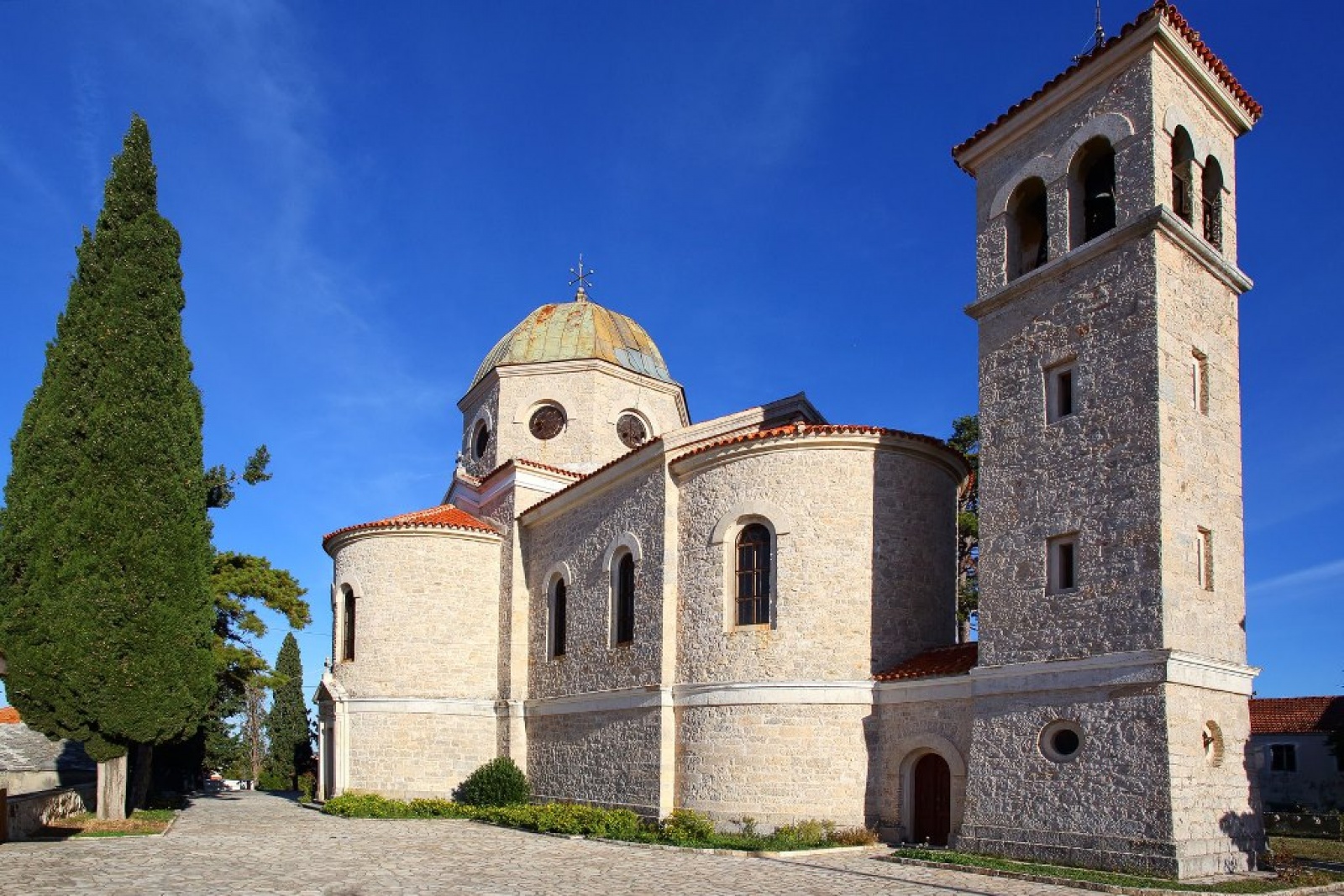
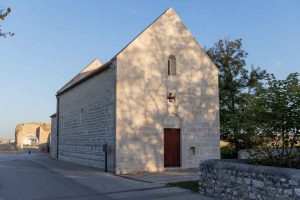
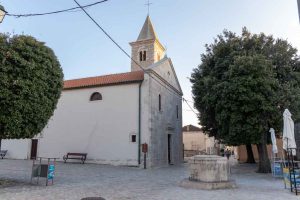
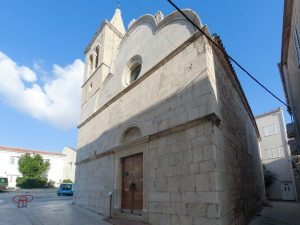
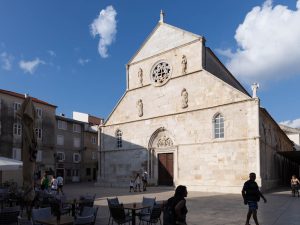
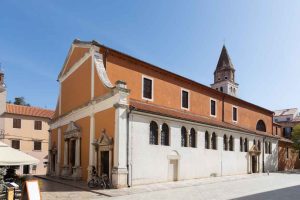
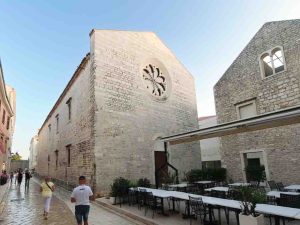
Church of St. Chrysogonus with the Cathedral of St. Anastasia is the most significant example of Romanesque architecture in Dalmatia, and it shows the high level of development of Zadar in the 12th century.
The Romanesque church was consecrated by Lampridius, Archbishop of Zadar, in 1175.
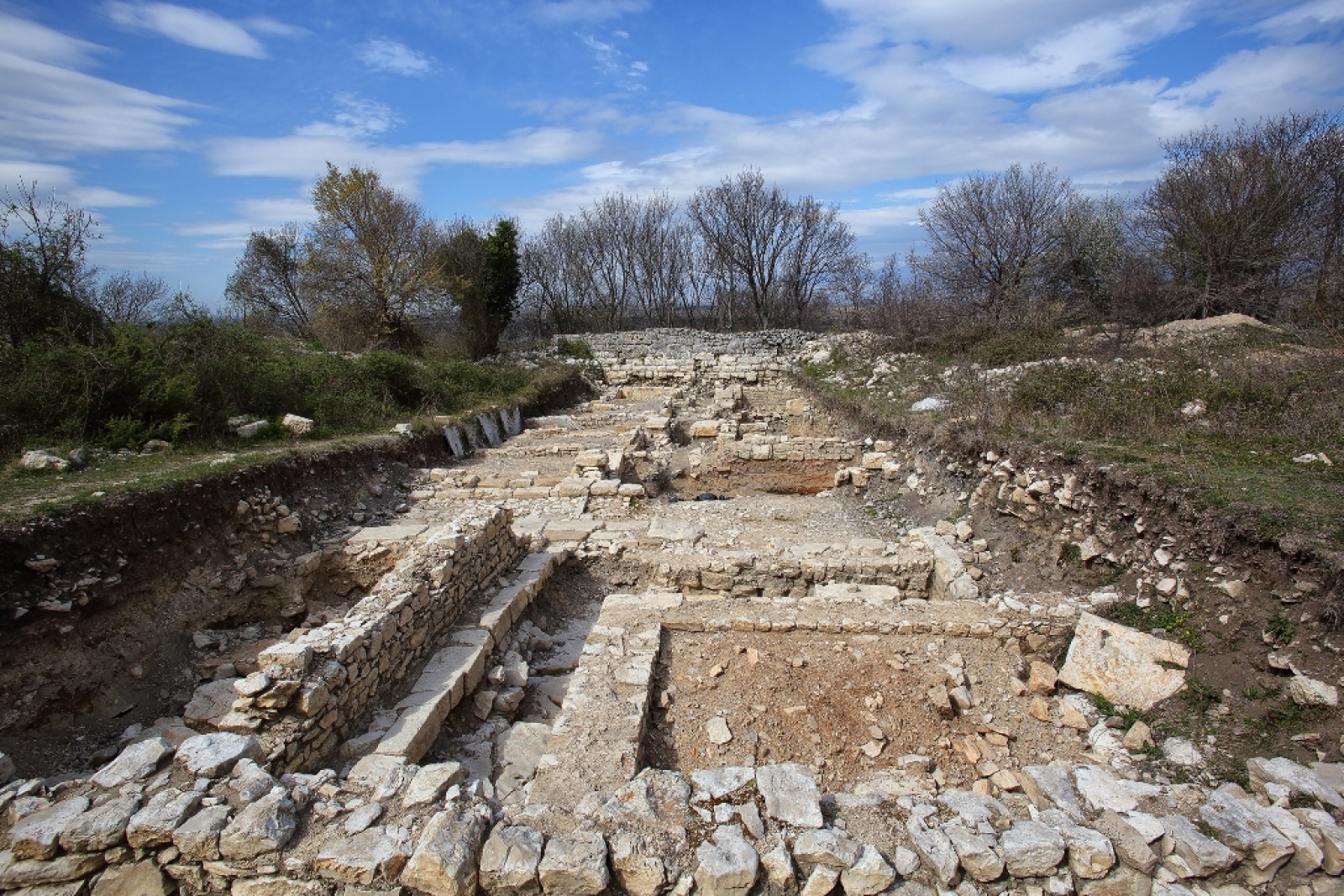
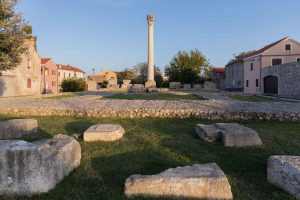
Built at the site of a Roman emporium, it replaced the Church of Saint Anthony the Hermit and is the only remaining part of a large medieval Benedictine abbey.
In 1387, the body of Elizabeth of Bosnia, the murdered queen dowager of Hungary and Dalmatia, was secretly buried in the church. After three years, her remains were moved to the Székesfehérvár Basilica.
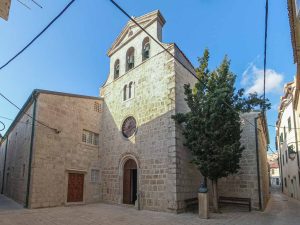
The bell tower construction lasted from 1485 to 1546 but was never completed.
Chrysogonus was martyred at Aquileia, probably during the Diocletianic Persecution (303–311), was buried there, and publicly venerated by the faithful of that region. He is the patron saint of Zadar.
In the 6th century, a legend emerged about a martyr who was believed to be a Roman and was associated with Saint Anastasia. The legend suggests that Chrysogonus was a Christian teacher who taught Anastasia, the daughter of the noble Roman Praetextatus. During the persecution of Diocletian, when Anastasia was imprisoned, Chrysogonus wrote letters to comfort her.
By persecution of Diocletian both Chrysogonus and Anastasia were condemned to death. He was beheaded and thrown into the sea. He was found and buried by the aged priest Zoilus, also the patron saint of Zadar.
In the legend the death of the saint is placed on 23 November. The Catholic Church celebrates him on 24 November when is the fest of Zadar.
The Eastern Orthodox Church celebrates his feast day on 22 December together with his spiritual daughter Saint Anastasia of Sirmium.
Location
Zadar
Zadar is the oldest continuously inhabited city in Croatia. It is situated on the Adriatic Sea, at the northwestern part of Ravni Kotari region. Zadar serves as the seat of Zadar County and of the wider northern Dalmatian region. The city proper covers 25 km2 (9.7 sq mi) with a population of 71,000 in 2025, making it the second-largest city of the region of Dalmatia and the fifth-largest city in the country.
ExploreRomanesque
In the 11th century, monumental cities were built along the entire Dalmatian coast. Houses were constructed from stone. On the ground floor there were shops or taverns (natively – konoba), seen today in cities such as Poreč, Rab, Zadar, Trogir, and Split. In those cities the most important buildings were churches. They were commonly stone-built basilicas with three naves, three apses, columns, arches, arcades and wooden roofs, and were erected near the monasteries of Benedictine monks who came out of Italy. St. Peter in Supetarska Draga on the island of Rab (11th century) is the best-preserved church of that type in Croatia. On the same island is the Cathedral of Rab (12th century) has a high-Romanesque bell tower, the largest in Dalmatia. It is specific with its openings, which multiply with each level of floor (Latin: mono-fore, bi-fore, tri-fore, quadro-fore). This is typical for Romanesque architecture, but also architecturally innovative, as each floor is slightly lighter than the one below.
Explore









Reviews
There are no reviews yet.