
Fort Remains and the Church of St. John the Baptist at the Locality Gradina in Tinj
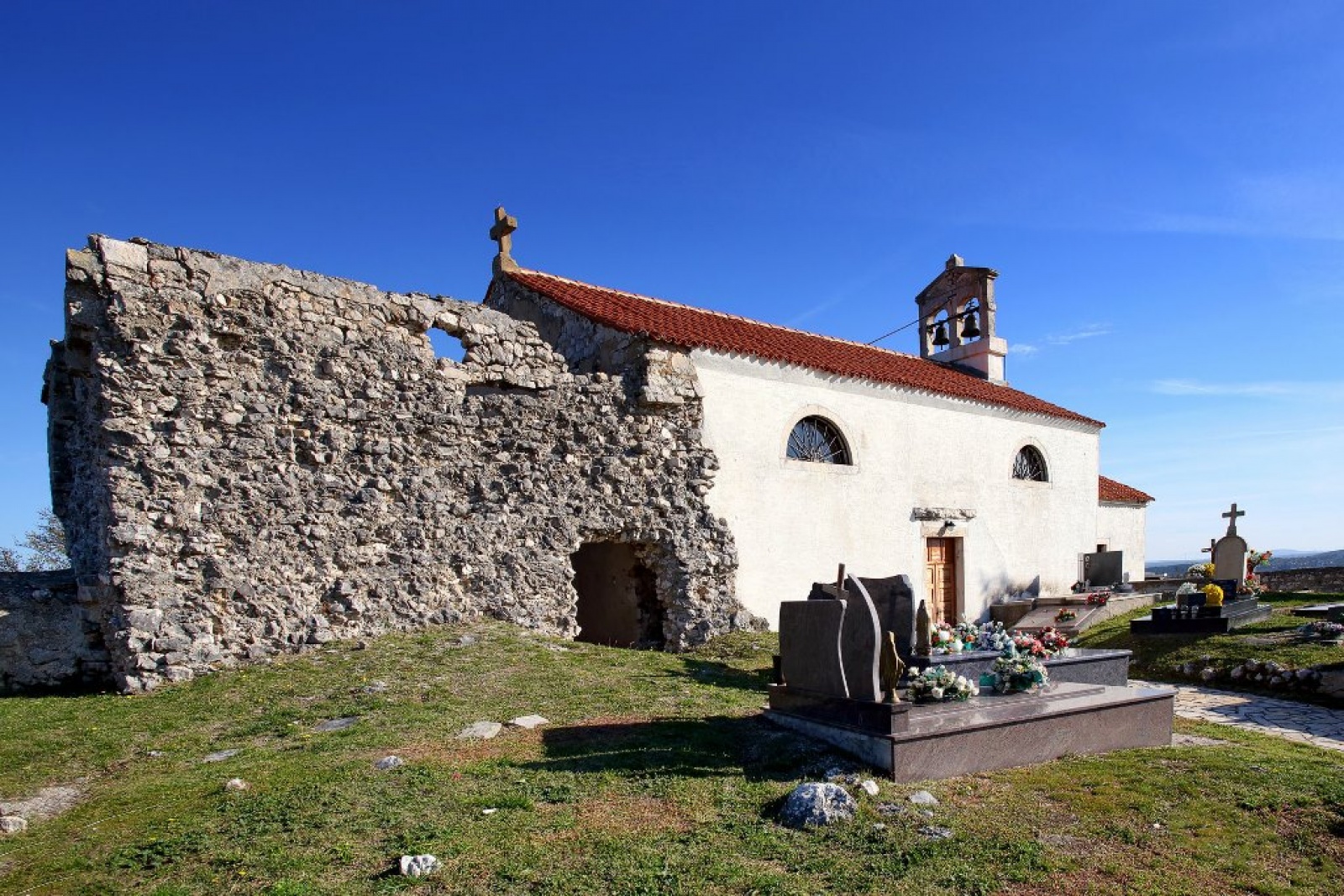
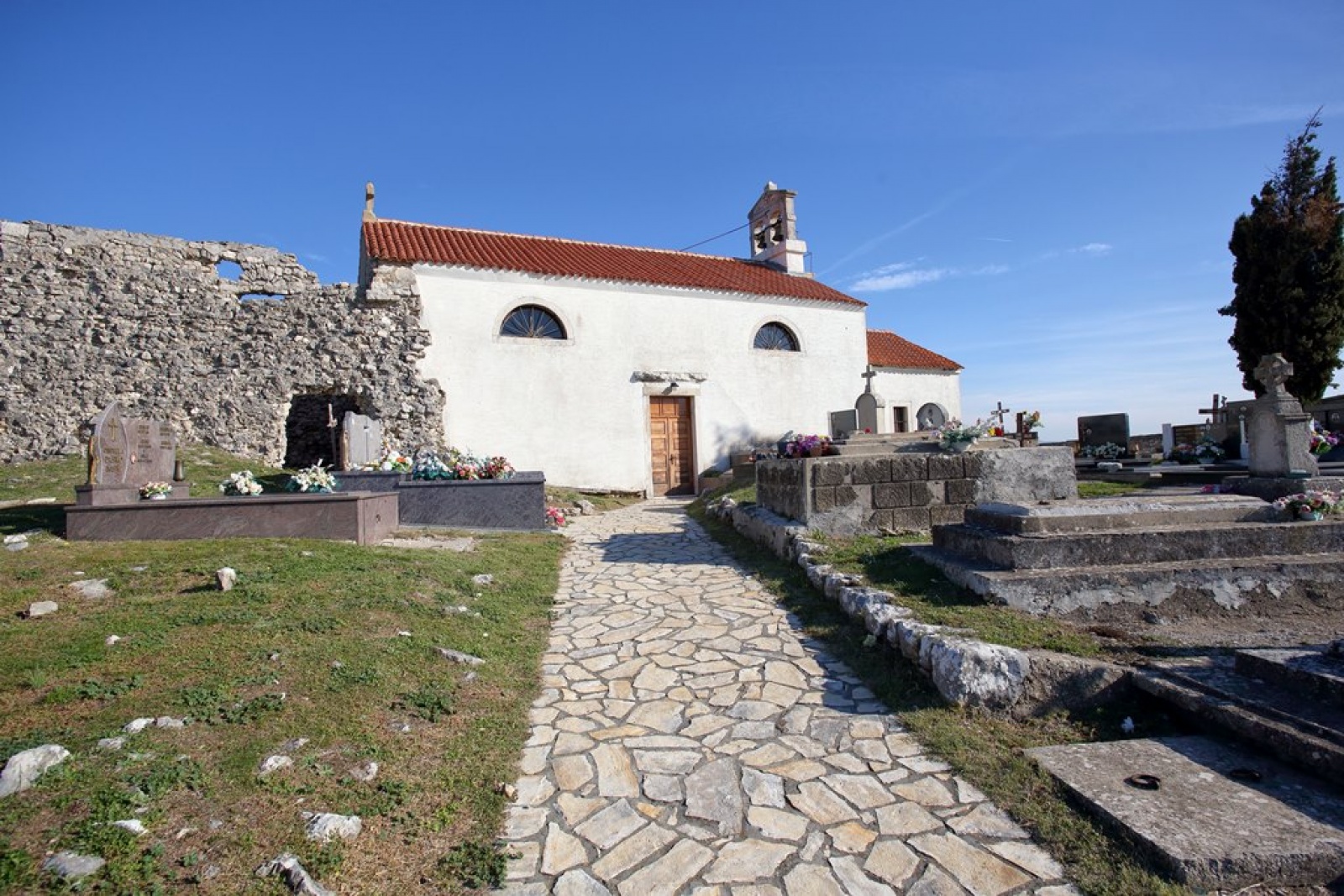
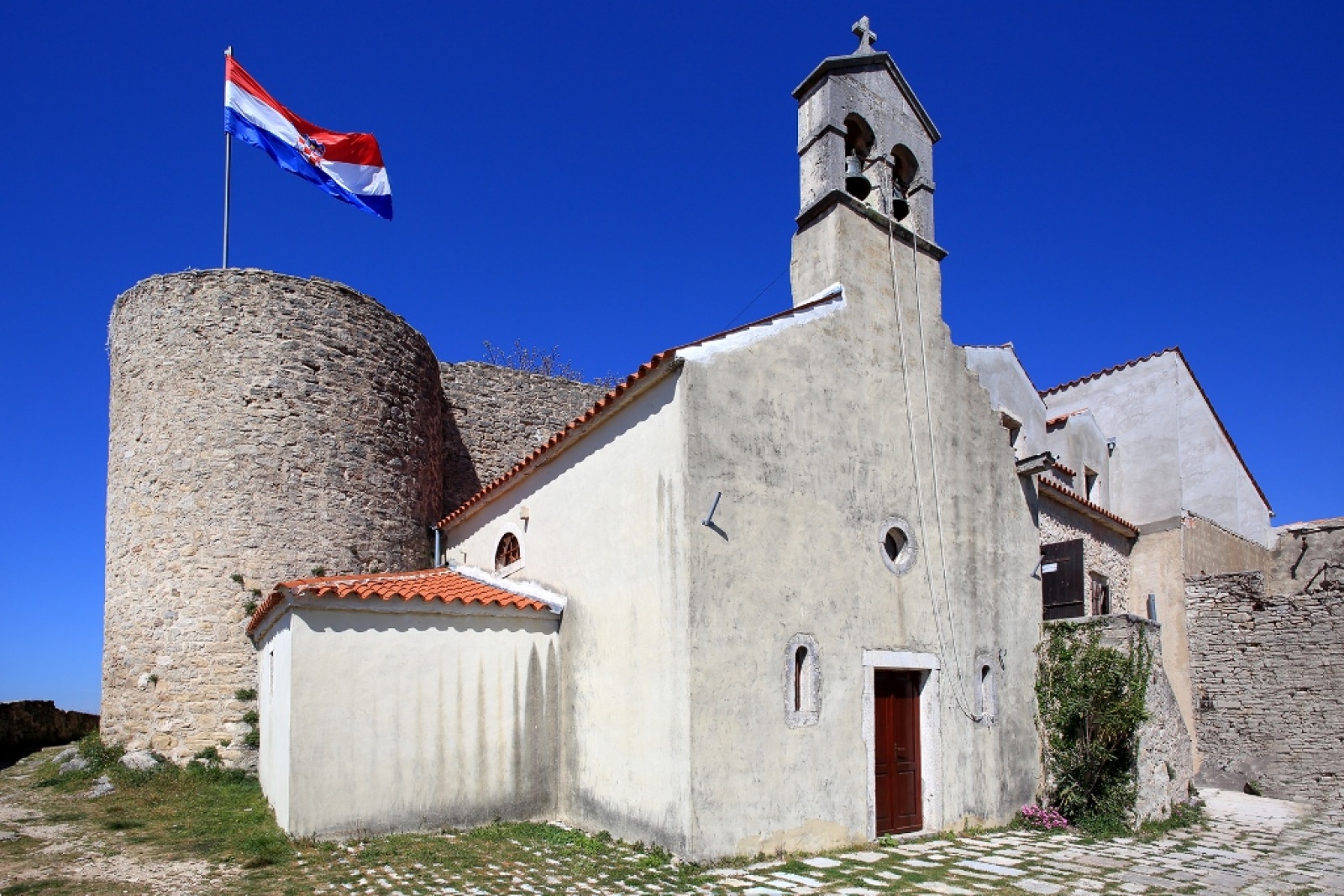
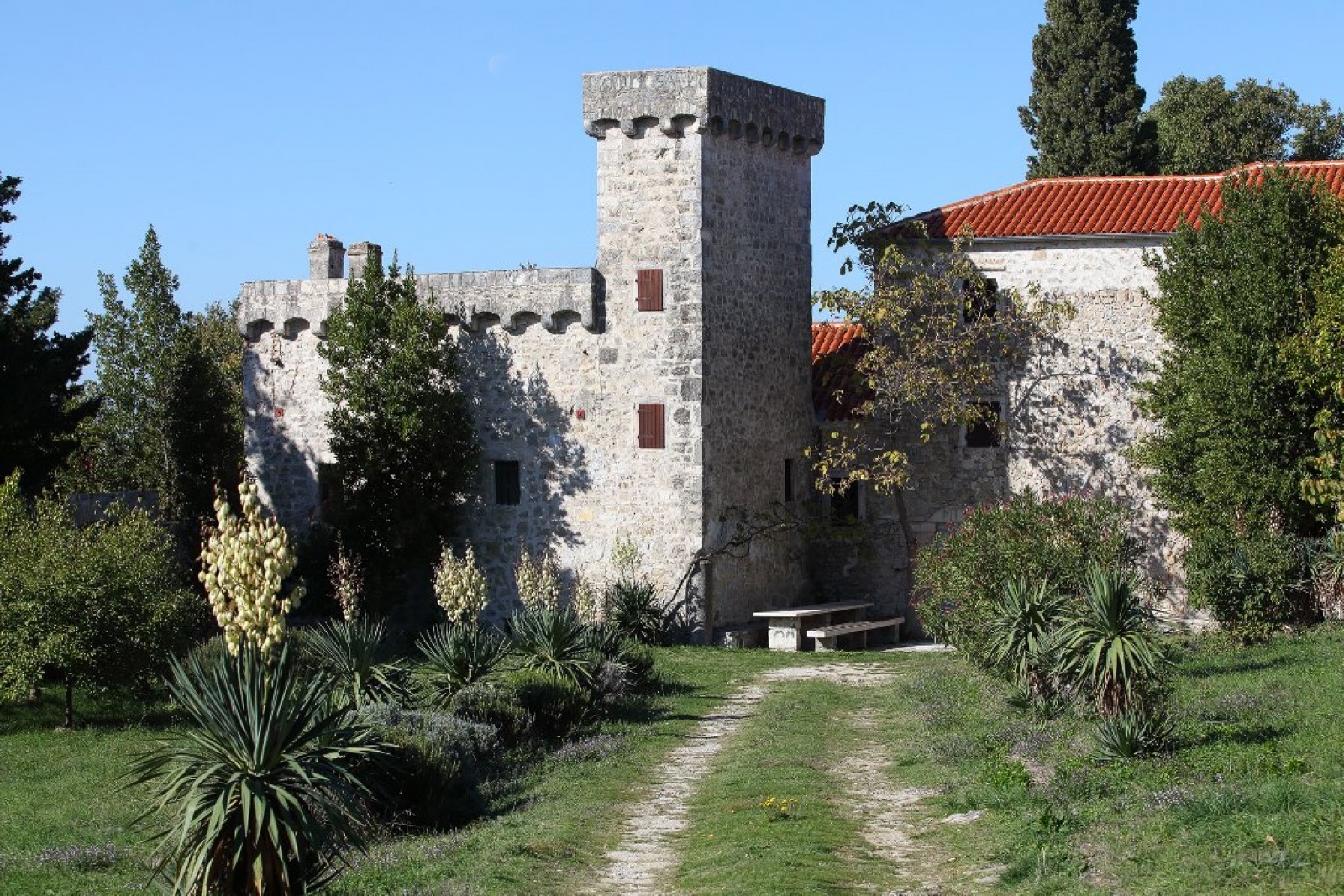
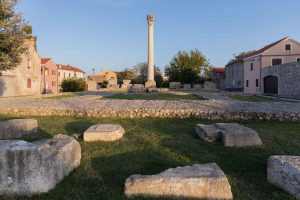
At the Tinj locality, you’ll find the remains of a medieval rectangular fort featuring a preserved square tower.
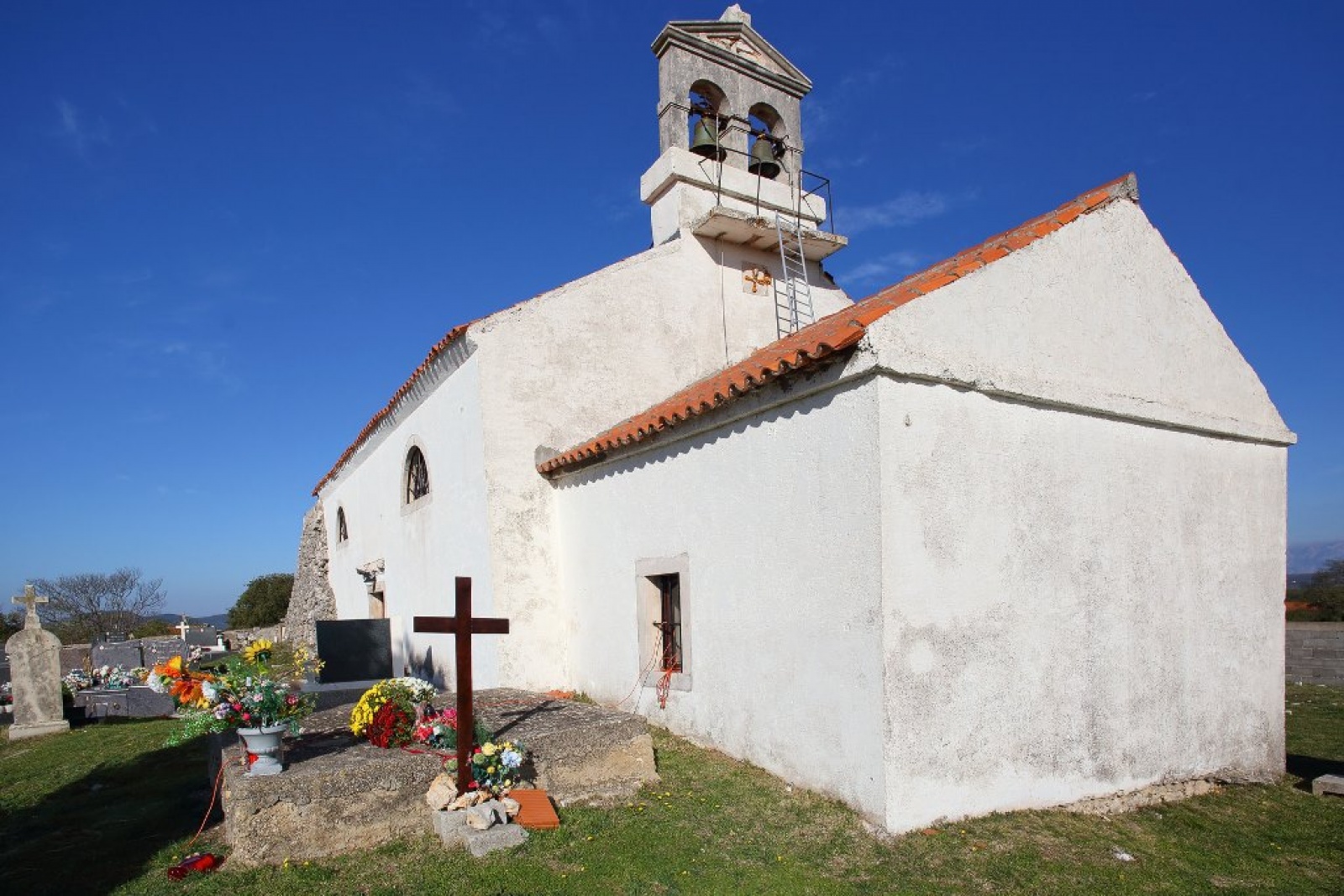
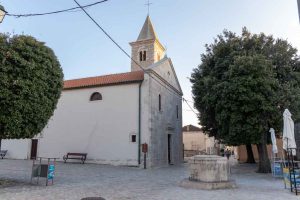
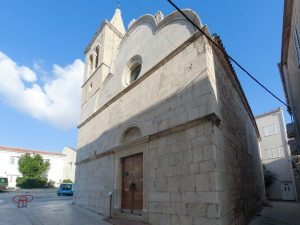
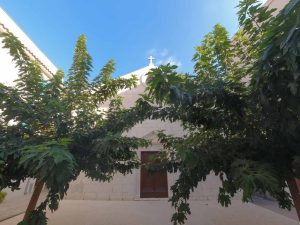
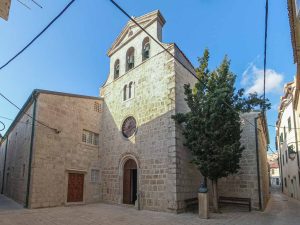
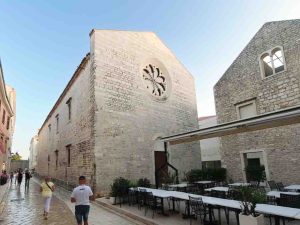
The front of the Parish Church of St. Ivan the Baptist, which was consecrated in 1852, is leaning against the eastern wall of the fort.
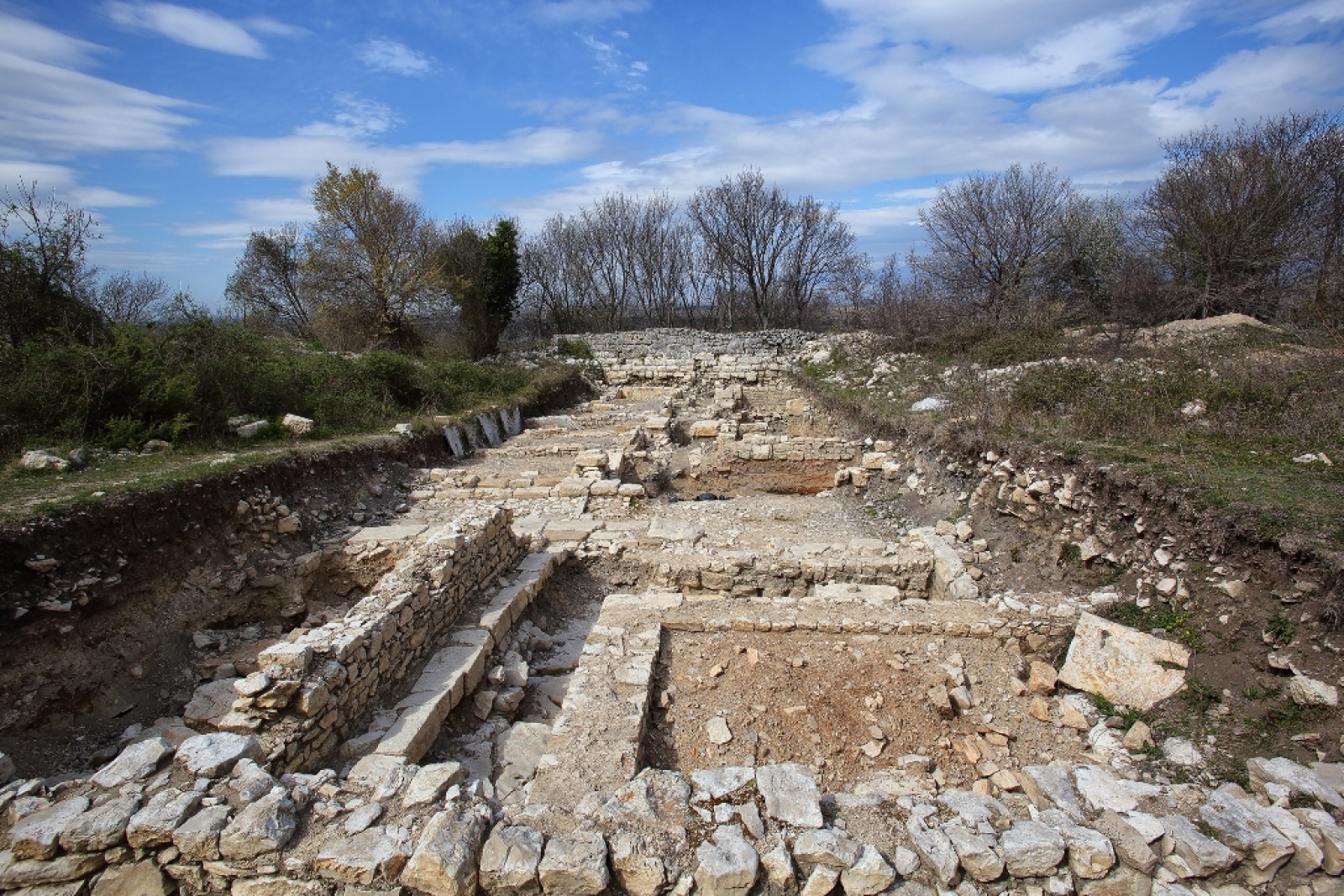
They were built at the locality of a prehistoric Liburnian settlement, and together with the discovered architectural remains and a large number of transportable archaeological materials, they show the continuity of settlements in the Roman period.
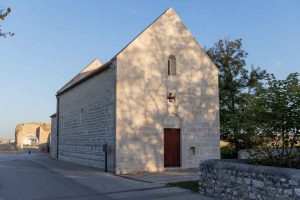
Several fragments of the church inventory, decorated with a plateresque ornament, originate from that locality and indicate the existence of a Pre-Romanesque sacral object.
The church is a single-nave longitudinal building with a sacristy on the eastern side, half-round windows (mezzaluna) on the sidewalls, and a portal with an architrave lintel in the middle of the southern sidewall.
Location
Benkovac
The first traces of human life in the Benkovac area were found around the village of Smilčić that belonged to the Danilo culture. Before Roman conquest the area was inhabited by the Illyrian tribe of Liburnians. During the Roman Civil war the Liburnians sided with Caesar. The Romans mention the following Liburnian settlements: Nedinum (Nadin), Carinium (Karin), Varvaria (Bribir) and Asseria (Podgrađe). In 7th century the area was settled by Croats. The area of Benkovac was at the crossroads of four Croatian župas – Novljanska, Sidraška, Bribirska and Karinska. Near the village of Šopot, an inscription from the 9th century was found that mentions Branimir as a Croatian Duke.
Explore









Reviews
There are no reviews yet.