
Otavac Tower and the remains of the Roman Quarry in Popovići
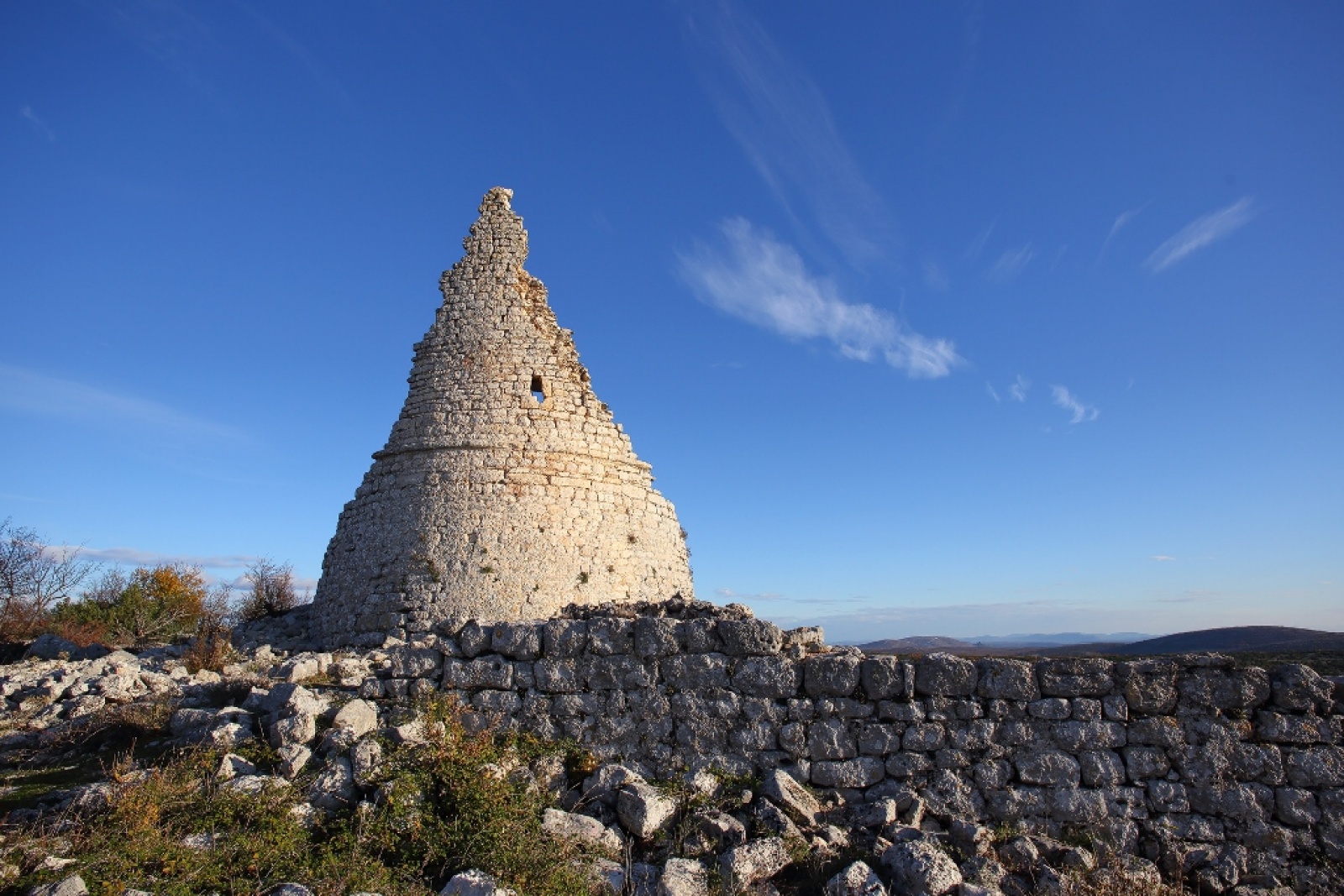
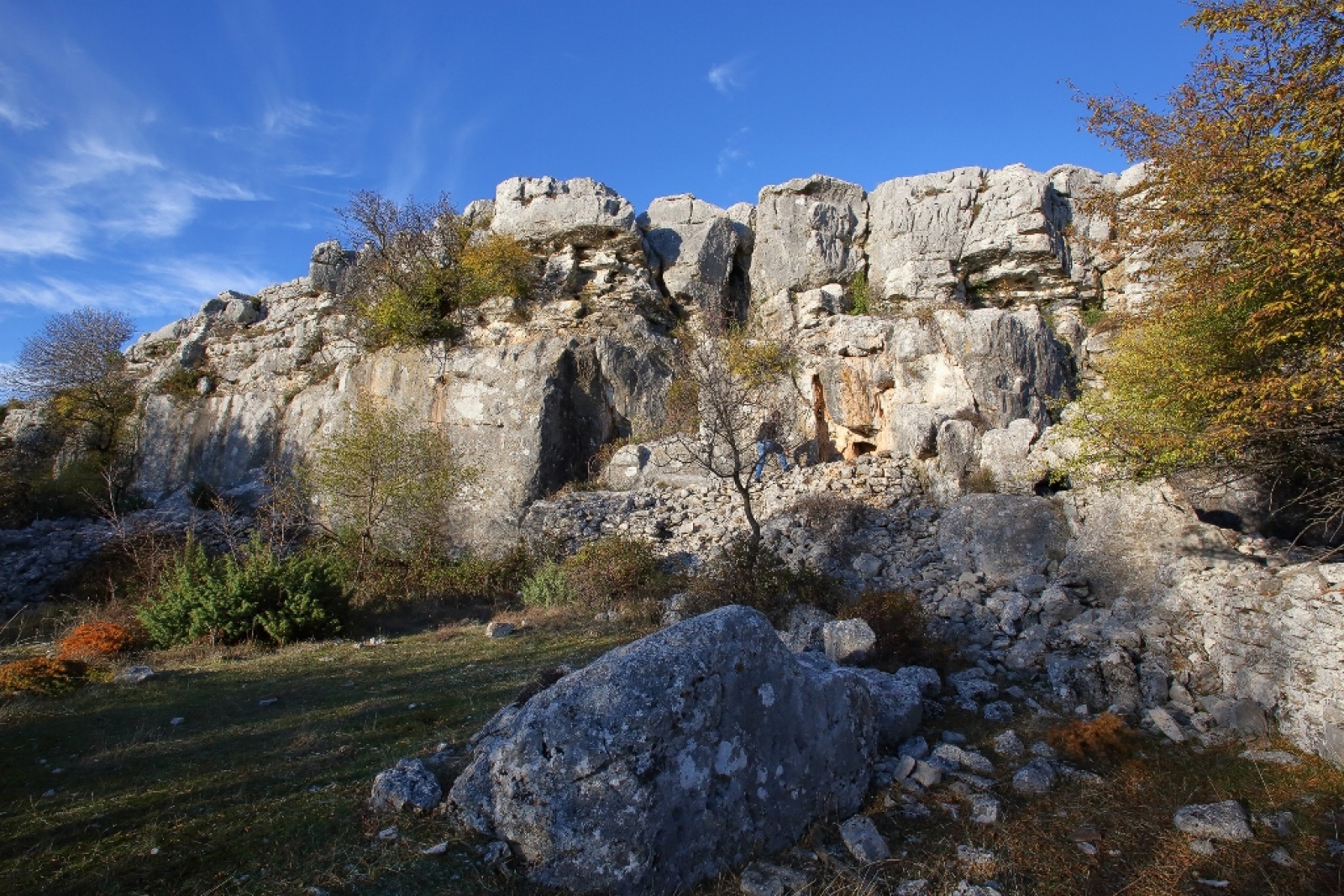
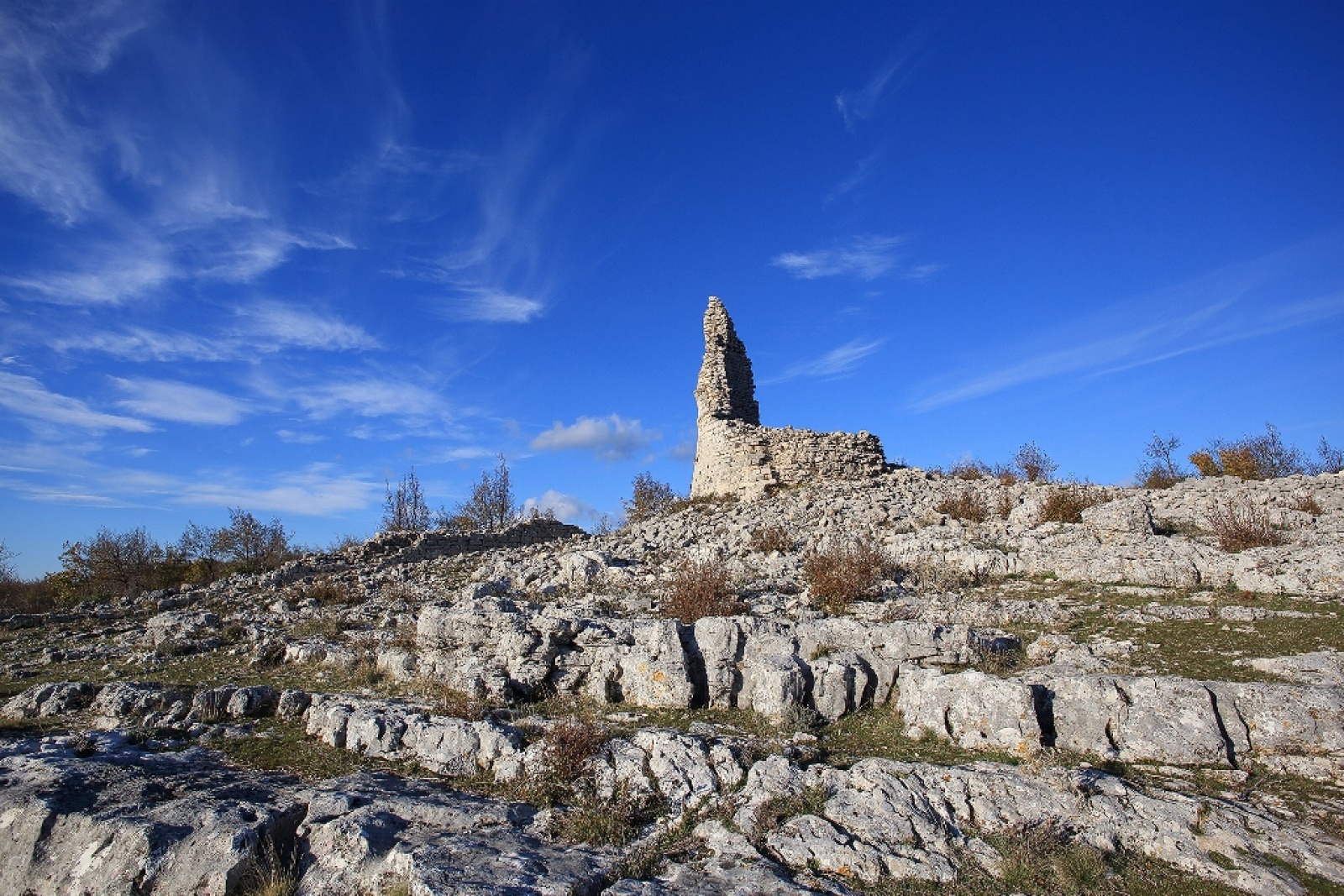
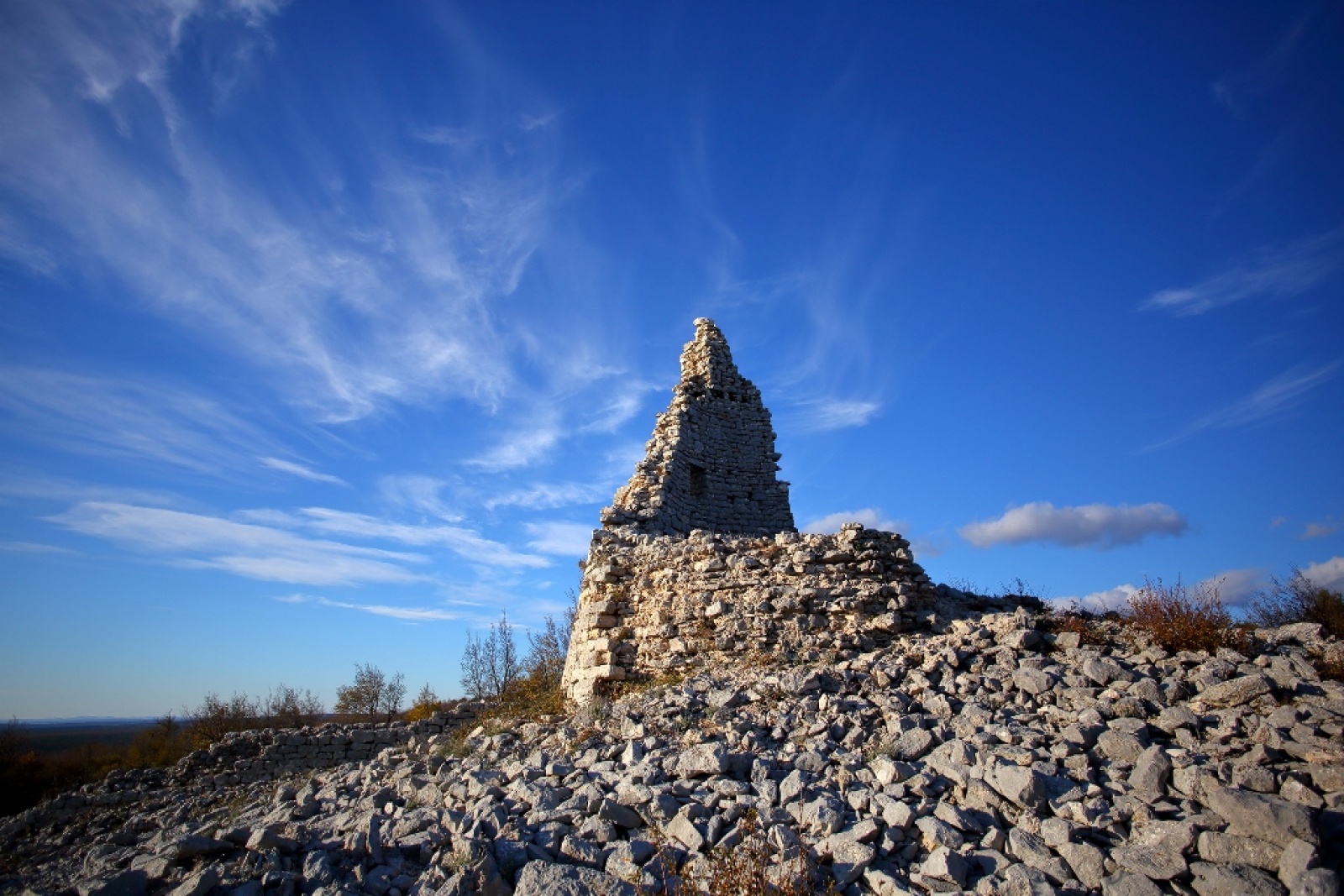
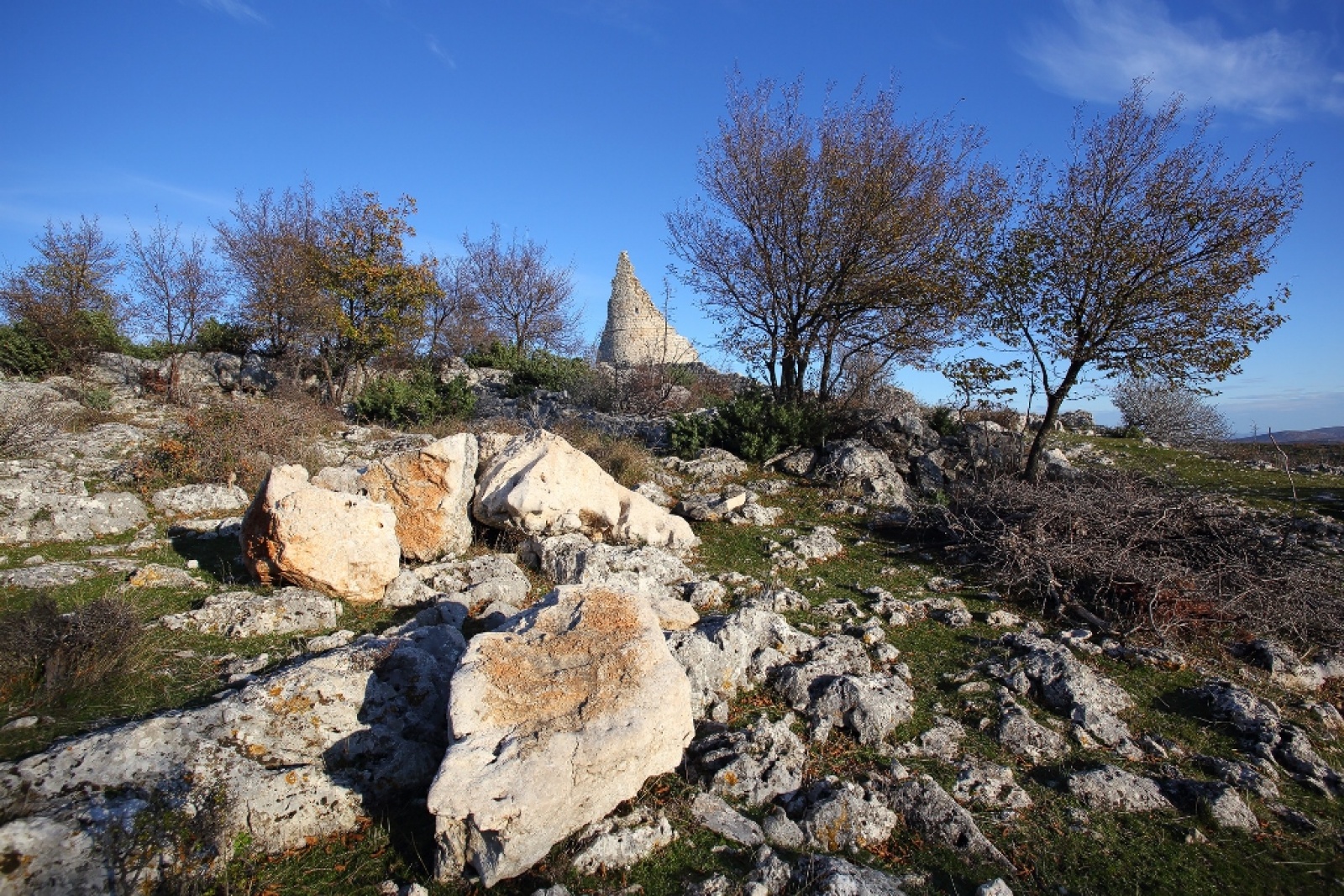
The tower and Roman quarry are located on Otavac Hill, which rises above the village of Popovići, five kilometers northeast of the town of Benkovac.
Otavac Tower
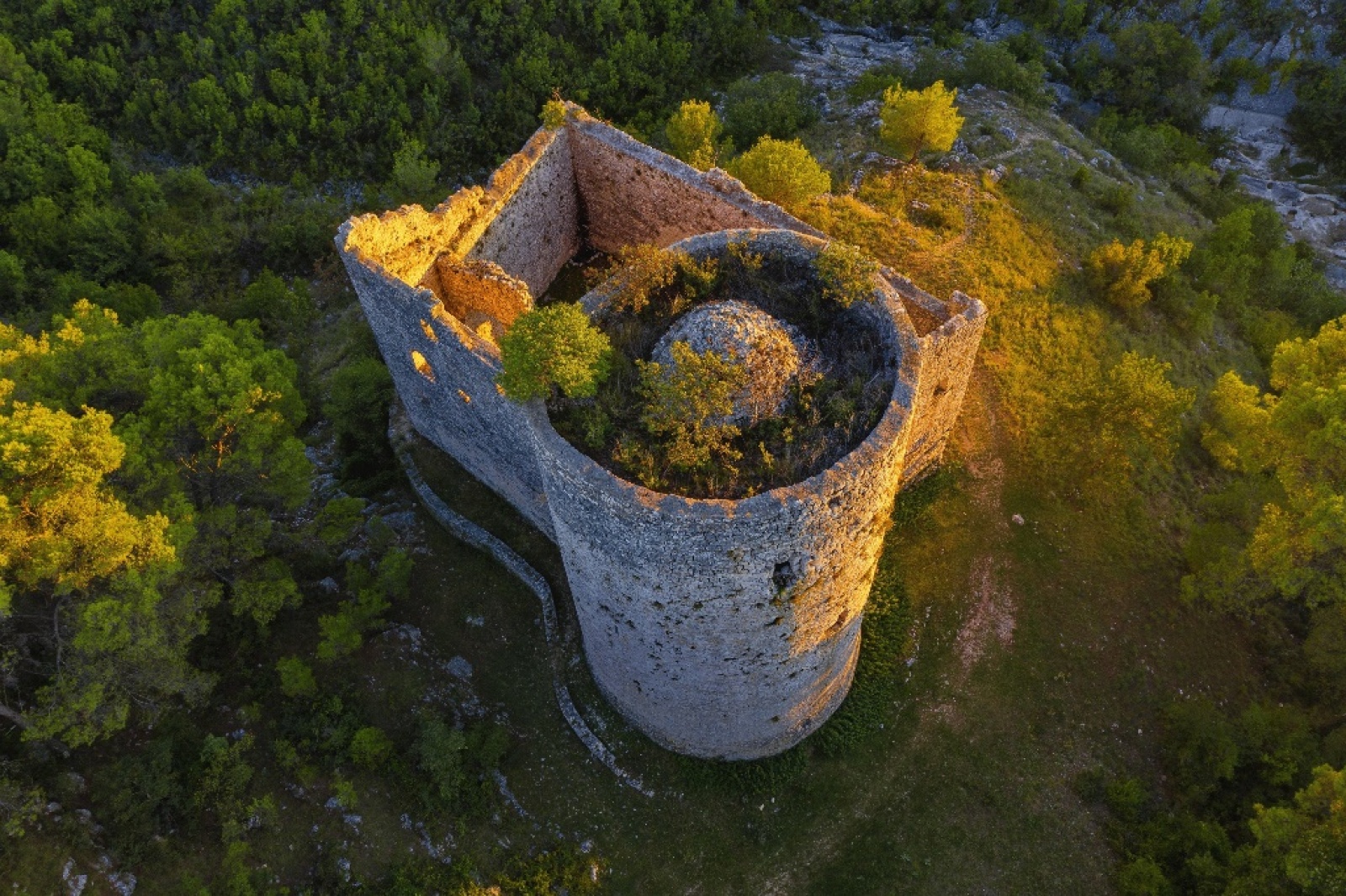
Round defence tower Otavac near the village Popovici is situated on a dominant rise above the local road that leads from Bukovici to Bruska.
The tower is mostly demolished and there aren’t many remains, but considering them, we can presume that it used to dominate this area through visual communication with the tower in Brgud.
One can also presume that it was built like similar towers in Ravni Kotari, which means that it consisted of a ground floor, two floors, and a guard patrol on the third floor, covered with a tented roof. One window loophole on the first floor can be seen on the preserved remains of the wall.
The tower was built with cut and carved stone of different dimensions that was laid into lines. There are remains of the fence wall around the tower that used to protect the plateau from the north, east, and west.
The tower is not accessible from the south because there are remains of the antique quarry.
Roman Quarry
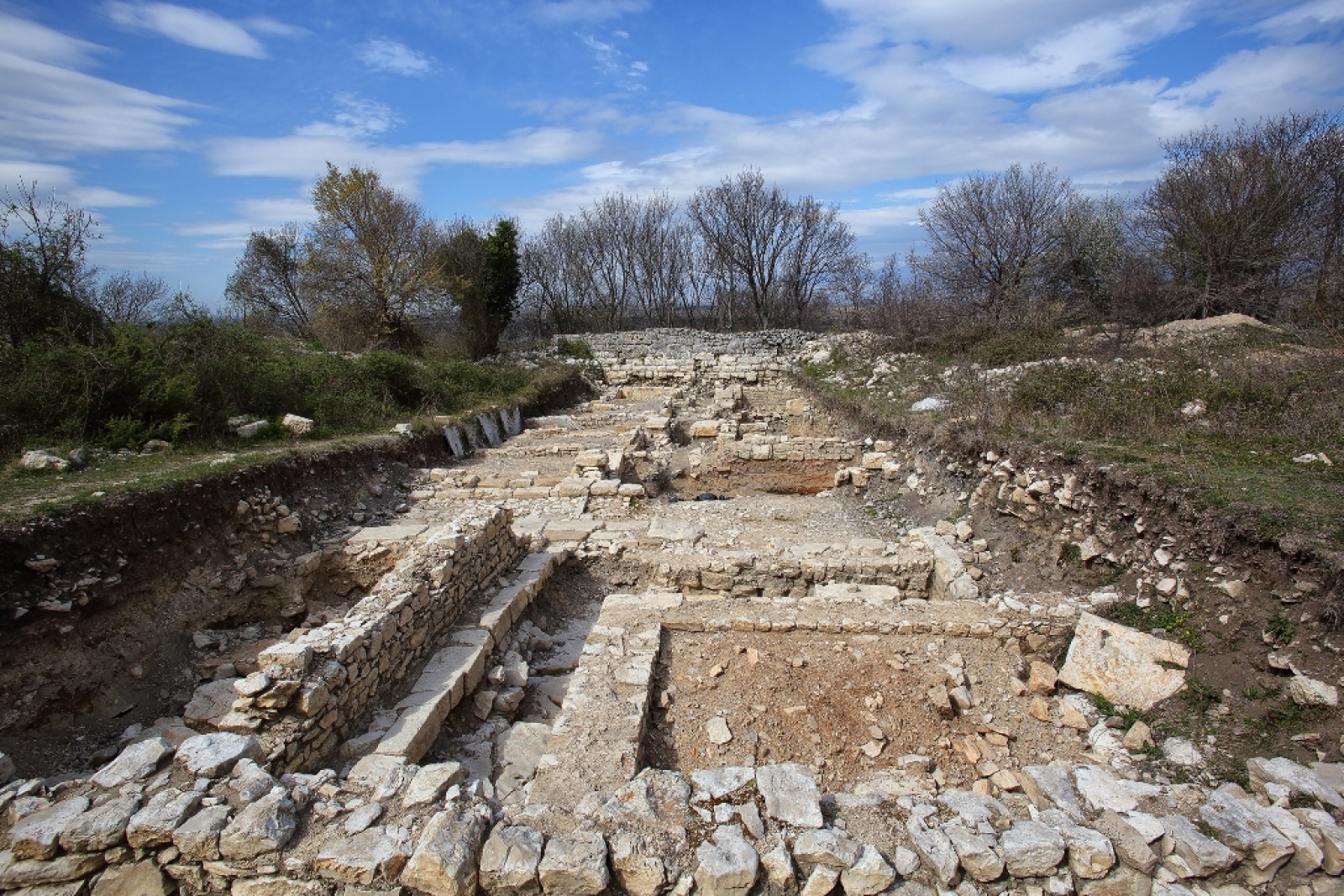
The cliff of the quarry is almost 70 m long and the highest point is 8 m high. The surface layer shows the laying in slabs, which was specific for the Benkovac area, and under that is the limestone deposit of the architectural stone. Limestone is light yellow and of fine-grained texture that reminds of a sandstone.
Tool traces are visible on all vertical cliffs of the quarry. The striae from deep pasarins* (the channel used to separate stone blocks from the rock) are clearly visible as a consequence of work with heavy two-spiked hammers.
The foundations of various objects can be traced on the top of the waste heap and its structure tells us that they were built after the most intensive usage of the quarry and that they are probably connected to the tower above the quarry.
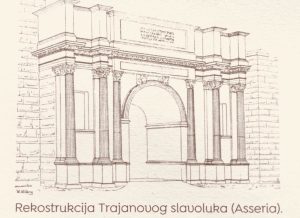
The quarry in Popovići probably dates from the period of the Roman administration, which can be related to the increased demand for the architectural stone of the antique Asseria.
Location
Benkovac
The first traces of human life in the Benkovac area were found around the village of Smilčić that belonged to the Danilo culture. Before Roman conquest the area was inhabited by the Illyrian tribe of Liburnians. During the Roman Civil war the Liburnians sided with Caesar. The Romans mention the following Liburnian settlements: Nedinum (Nadin), Carinium (Karin), Varvaria (Bribir) and Asseria (Podgrađe). In 7th century the area was settled by Croats. The area of Benkovac was at the crossroads of four Croatian župas – Novljanska, Sidraška, Bribirska and Karinska. Near the village of Šopot, an inscription from the 9th century was found that mentions Branimir as a Croatian Duke.
ExploreAncient Rome
Romans subdued the Greek colonial cities in the 3rd century BC. They imposed an organization based on a military-economical system. Furthermore, the Romans subdued the Illyrians in the first century BC and organized the entire coastal territory by transforming the citadels into urban cities. After that, the history of these parts is the history of the Illyrian provinces of the Roman Empire. Numerous rustic villas, and new urban settlements (the most impressive are Verige in Brijuni, Pula, and Trogir – formerly Tragurion) demonstrate the high level of Roman urbanization. There were at least thirty urban cities in Istria, Liburnia and Dalmatia with Roman citizenship (civitas). The best-preserved networks of Roman streets (decumanus/cardo) are those in Epetion (Poreč) and Jader (Zadar). The most perfectly preserved Roman monuments are in Pola (Pula); founded in the first century dedicated to Julius Caesar. It is full of classical Roman art such as: stone walls, two city gates, two temples on the Forum, and remains of two theaters, as well as the Arch from the year 30 AD, and the temple of Augustus built in the years 2 to 14 AD, and finally the Fluvian Amphitheater (so called – Arena) from the 2nd century. In the 3rd century AD, the city of Salona became the largest (it had 40,000 inhabitants) and most important city of Dalmatia. Near the city emperor Diocletian, born in Salona, built Diocletian’s Palace around the year 300 AD, which is the largest and most important monument of late antique architecture in the world. On its pathways, cellars, domes, mausoleums, arcades and courtyards we can trace numerous different art influences from the entire Empire. In the 4th century, Salona became the center of Christianity for the entire western Balkans. It had numerous basilicas and necropolises, and even two saints: Domnius (Duje) and Anastasius (Stošija).
Explore








Reviews
There are no reviews yet.