
Three Wells Square in Zadar

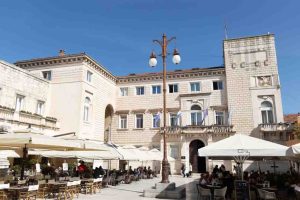
Three Wells Square originated in the area that once served as a defensive moat around the Venetian Kaštel (citadel).
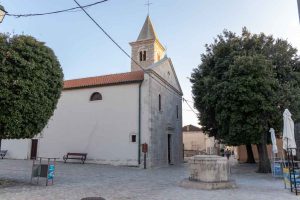
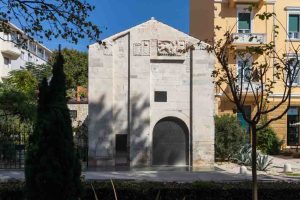
It came into being in the Middle Ages when the Venetians built the Kaštel with a defensive moat at the northern tip of the Zadar peninsula. At that time, a number of houses were demolished to create a clear space in front of the Kaštel. Around 1570, a cistern with three wellheads was built in the location of the defensive canal, giving the entire area its name. Shortly after, a smaller, round church, Our Lady of the Kaštel (Health), was also built and later extended.
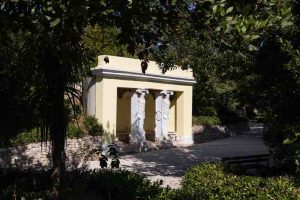
The wellheads themselves are considerably younger, dating back to 1751, and are baroque in style. The area once also functioned as a defensive moat around the Kaštel.
The square wasn’t carefully landscaped until 1865, when the ‘New Theater’ was built on its southeastern side. This gave importance to this part of the city, making it an opportune time to add greenery to the square.
For the last few decades, the wellheads were barely visible in the historic square, which was used as a parking lot.
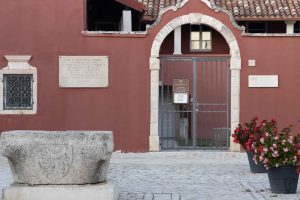
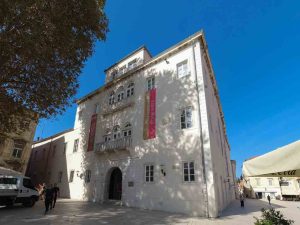
On the square, at the site of the former Kaštel, stands the Narodni list Palace, the first example of modern architecture in Zadar. The palace is also known as the Biankini Palace, after Don Juraj Biankini, the long-time editor of the ‘Narodni list’ newspaper and a figure in the Croatian National Revival.
Location
Zadar
Zadar is the oldest continuously inhabited city in Croatia. It is situated on the Adriatic Sea, at the northwestern part of Ravni Kotari region. Zadar serves as the seat of Zadar County and of the wider northern Dalmatian region. The city proper covers 25 km2 (9.7 sq mi) with a population of 71,000 in 2025, making it the second-largest city of the region of Dalmatia and the fifth-largest city in the country.
ExploreBaroque
One of the most remarkable periods in Croatian art history is the Baroque, which lasted from the 17th to the late 18th century. During this time, Croatia was reunited with the parts of its territory that were occupied by the Venetian Republic and the Ottoman Empire, after centuries of fragmentation and division. This reunification not only brought political stability and economic prosperity but also stimulated a cultural revival and a flourishing of art in every segment.
Explore














Reviews
There are no reviews yet.