
St. Mary’s Church in Zadar – the Exhibition of the Gold and Silver of Zadar


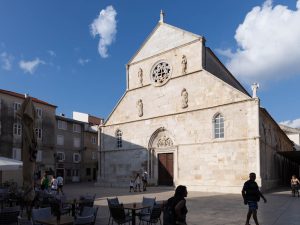
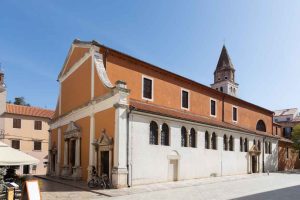
Through the turbulent history of the city of Zadar, the Benedictine nuns managed to preserve an invaluable collection of church art known as the Gold and Silver of the City of Zadar.
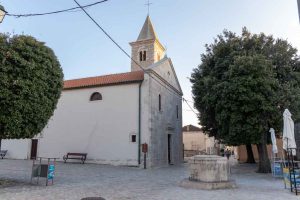
The Benedictine monastery was founded beside an existing church in 1066 by the Zadar noblewoman Čika. The monastery subsequently received royal protection and grants from king Petar Krešimir IV. After becoming a nun later in life, Čika endowed the monastery with two hymnariums and a prayer book, along with other valuable items. Both hymnariums are lost, but the prayer book survived and is currently kept in the Bodleian Library in Oxford.
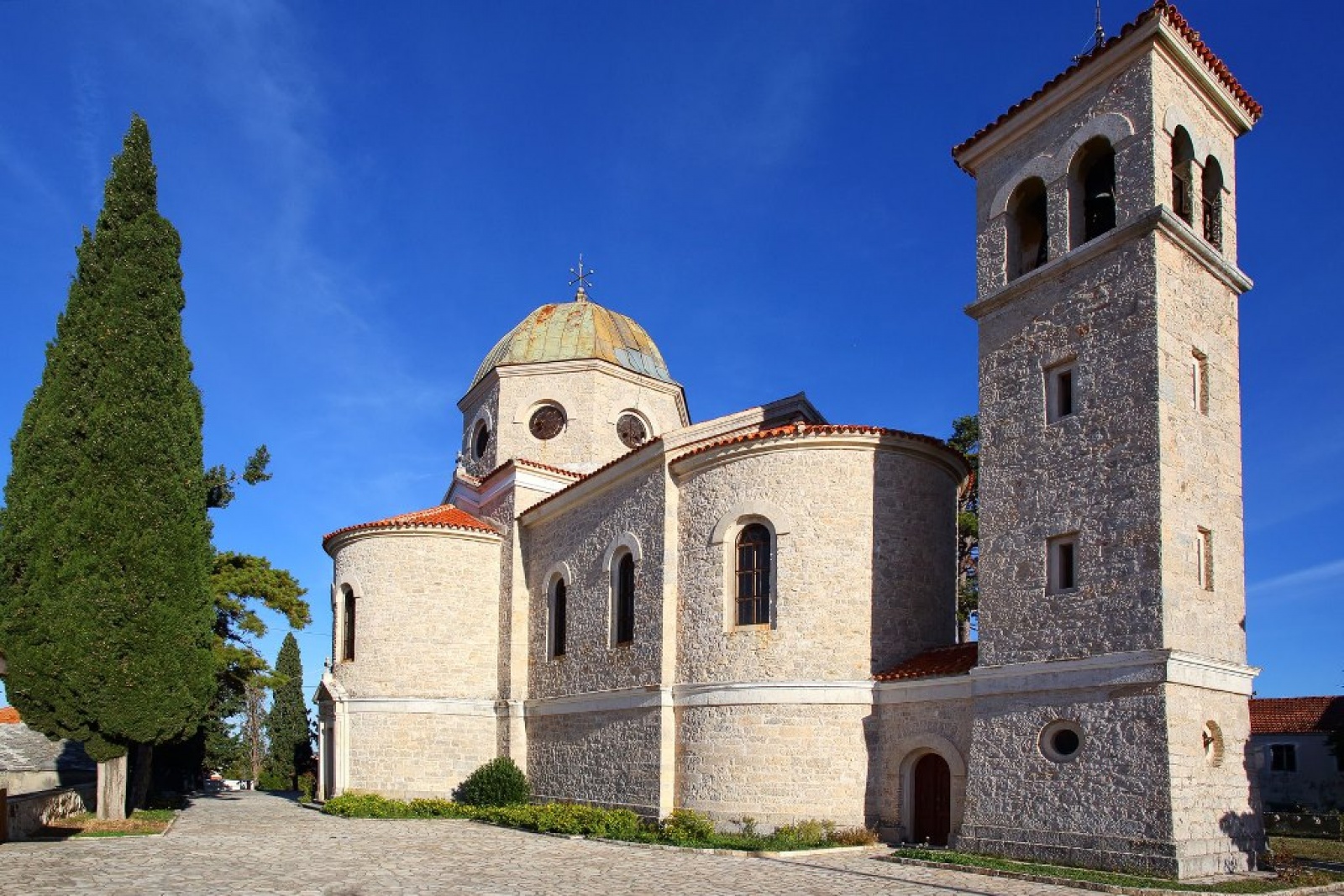
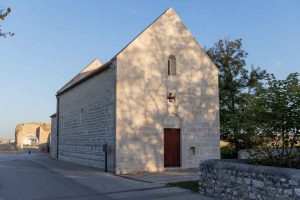
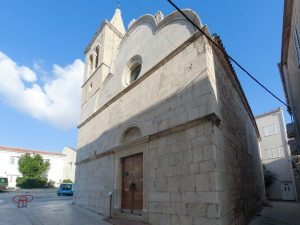
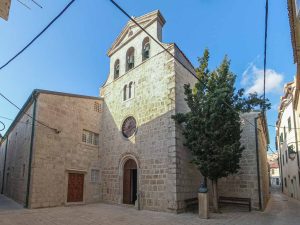
Čika’s daughter Vekenega entered the monastery as a nun in about 1072, after the death of her husband Dobroslav. Vekenega, as the first successor of Čika, sought financial aid from the new king Coloman of Hungary to finish the monastery, and to erect new monastery objects. The monumental romanesque tower bears Coloman’s name and the year 1105. The tower bears the inscription which commemorates the king’s entrance to Zadar in 1102. The chapel of the tower also features the remains of 12th century frescoes. The church bears her tomb, which are decorated by Latin verses.
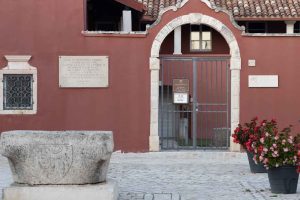
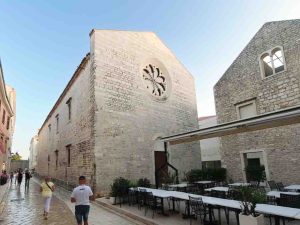
In 1507, a new Renaissance style portal and a southern facade were added by the Korčula-born builder and stone worker Nikola Španić. In 1744 baroque motifs were added to the interior decorations.
During World War II, when the city was a part of Italy, the church and the surroundings were destroyed by Allied bombing. The church was rebuilt after the war.
Permanent Exhibition of Religious Art, popularly known as the Gold and Silver of Zadar – with around 200 artifacts that date from the 8th to the 18th centuries. The Exhibition is one of the most valuable exhibitions in Croatia.
Location
Zadar
Zadar is the oldest continuously inhabited city in Croatia. It is situated on the Adriatic Sea, at the northwestern part of Ravni Kotari region. Zadar serves as the seat of Zadar County and of the wider northern Dalmatian region. The city proper covers 25 km2 (9.7 sq mi) with a population of 71,000 in 2025, making it the second-largest city of the region of Dalmatia and the fifth-largest city in the country.
ExploreRenaissance
In the 15th century, Croatia was divided between three states – northern Croatia was a part of the Austrian Empire, Dalmatia was under the rule of the Venetian Republic (with the exception of Dubrovnik), and Slavonia was under Ottoman occupation. Dalmatia was on the periphery of several influences, equidistant from Italy, Ottoman Bosnia, and Austria, so it drew influence from all. In those circumstances in Dalmatia flourished religious and public architecture with clear influences of the Italian Renaissance, but still original.
ExploreRomanesque
In the 11th century, monumental cities were built along the entire Dalmatian coast. Houses were constructed from stone. On the ground floor there were shops or taverns (natively – konoba), seen today in cities such as Poreč, Rab, Zadar, Trogir, and Split. In those cities the most important buildings were churches. They were commonly stone-built basilicas with three naves, three apses, columns, arches, arcades and wooden roofs, and were erected near the monasteries of Benedictine monks who came out of Italy. St. Peter in Supetarska Draga on the island of Rab (11th century) is the best-preserved church of that type in Croatia. On the same island is the Cathedral of Rab (12th century) has a high-Romanesque bell tower, the largest in Dalmatia. It is specific with its openings, which multiply with each level of floor (Latin: mono-fore, bi-fore, tri-fore, quadro-fore). This is typical for Romanesque architecture, but also architecturally innovative, as each floor is slightly lighter than the one below.
Explore








Reviews
There are no reviews yet.