
Vladimir Nazor Park – Forte Fortress – St. Martin’s Suburb


The Vladimir Nazor Park was developed on the Forte city fortress. This fortress, in turn, had been constructed in the 16th century on the site of the former city’s suburb, St. Martin.
Vladimir Nazor Park, formerly known as Dragutin Blažeković Park, is Zadar’s largest park, spanning approximately 5.5 hectares. It was established on the city fortress, Forte, which itself had been built in the 16th century on the grounds of Zadar’s suburb St. Martin. The fortress was constructed under the design and supervision of the Venetian General Sforza Pallavicino. Within its walls, several barracks, warehouses, a gunpowder magazine, and a cistern were erected.
The Strategic Forte Fortress
The Forte fortress, slightly lower than the older Ponton bastion, was an addition to Zadar’s defensive system, designed to strengthen the city’s defenses. It’s strategically located where the peninsula connects to the mainland, further isolated by two moats.
Construction of Forte began in 1567 and was completed within just a few years. The suburb St. Martin, was relocated within the city walls to the area around today’s Kovačka Street. Unlike the regular Roman grid pattern of streets that characterizes the rest of the city, the streets here are irregular and narrow, with houses tightly packed together.
Unique Architectural Features
The fortress stands out not only for its dimensions but also for its distinctive shape: on the landward side, it features two pincer-shaped demi-bastions. A quarter-century earlier, a similar, albeit smaller, solution was employed in the construction of St. Nicholas Fortress in the Šibenik Channel. Such structures would become commonplace in the 17th and 18th centuries.
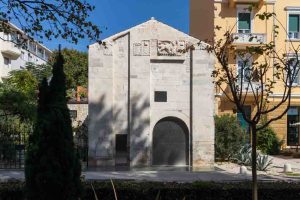
The Renaissance gate of the fortress includes a relief depicting a seven-headed dragon (hydra) with the inscription “Ut cumque” – meaning “in any case.” Until 1967, it was presumed that the dragon symbolized Zadar’s seven rebellions against Venice. However, no one thought to consult the second canto of Juraj Baraković‘s Vila Slovinka. There, the construction of Zadar’s new fortifications is described in detail, clarifying that the “hydra, seven-headed serpent” is none other than the coat of arms of the fortress’s builder, Sforza Pallavicino.
From Military Base to Public Park
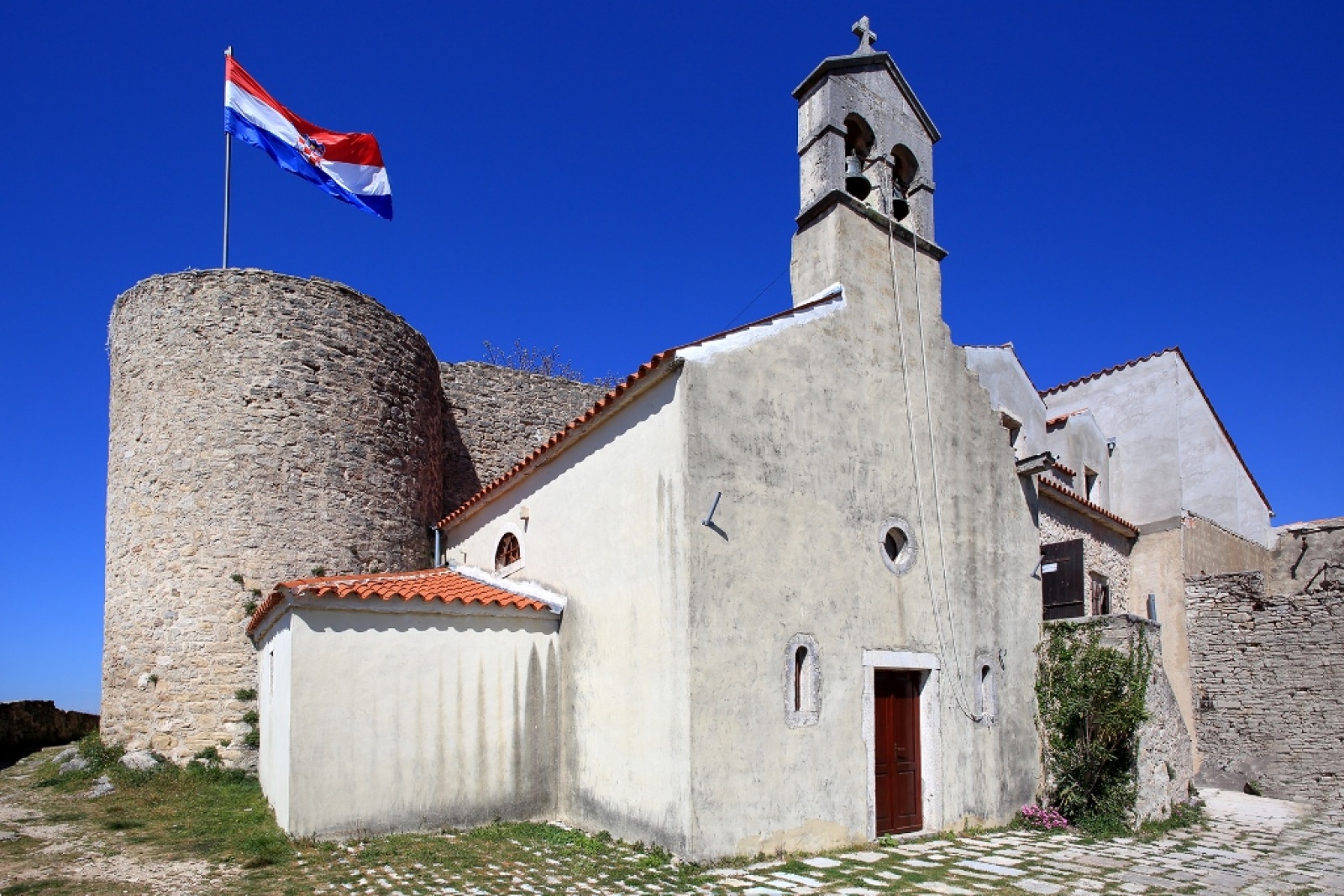
At the center of the fortress, a cavalry house built in 1689 and renovated in 1789 is now used by the public utility company Nasadi. In the late 19th century, a barracks, now commonly known as the Gymnasium – preparatory high school, was built along the southern wall. In the western part of the fortress, a large cistern with an ornate relief of a winged lion has been preserved.
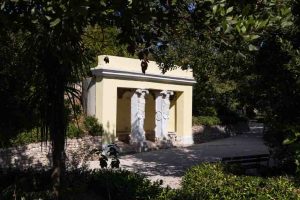
Vladimir Nazor Park was established between 1888 and 1890, thanks to the efforts of Dragutin Blažeković, the Austrian governor for Dalmatia. Upon its opening in 1890, it was named the Military Park. Although open to the public, it remained under military administration. To retain ownership rights over the fortress and the park, the military would close the park to the public one day a year, usually in the spring. Newspapers would announce the closure due to military exercises, but it was likely also an opportune time for thorough maintenance before the vegetation started to grow.
A UNESCO World Heritage Site
Forte fortress is considered one of the most important architectural achievements of the Serenissima (Venice) in Dalmatia. Since 2017, it has been a UNESCO World Heritage site, as part of the broader “Venetian Works of Defence between the 16th and 17th Centuries“, while the park itself is protected as a monument of park architecture.
Location
Zadar
Zadar is the oldest continuously inhabited city in Croatia. It is situated on the Adriatic Sea, at the northwestern part of Ravni Kotari region. Zadar serves as the seat of Zadar County and of the wider northern Dalmatian region. The city proper covers 25 km2 (9.7 sq mi) with a population of 71,000 in 2025, making it the second-largest city of the region of Dalmatia and the fifth-largest city in the country.
ExploreRenaissance
In the 15th century, Croatia was divided between three states – northern Croatia was a part of the Austrian Empire, Dalmatia was under the rule of the Venetian Republic (with the exception of Dubrovnik), and Slavonia was under Ottoman occupation. Dalmatia was on the periphery of several influences, equidistant from Italy, Ottoman Bosnia, and Austria, so it drew influence from all. In those circumstances in Dalmatia flourished religious and public architecture with clear influences of the Italian Renaissance, but still original.
Explore








Reviews
There are no reviews yet.