
Nassis Palace – the birthplace of zoologist Spiridon Brusina


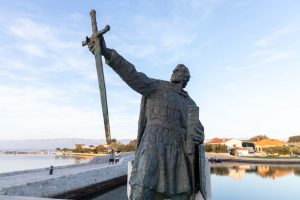
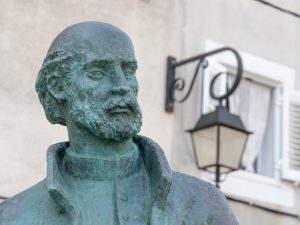
The distinguished Croatian naturalist Spiridon Brusina was born in this house in 1845. The street where Nassis Palace is located is also named after him, and his monument stands on the waterfront in front of the university.
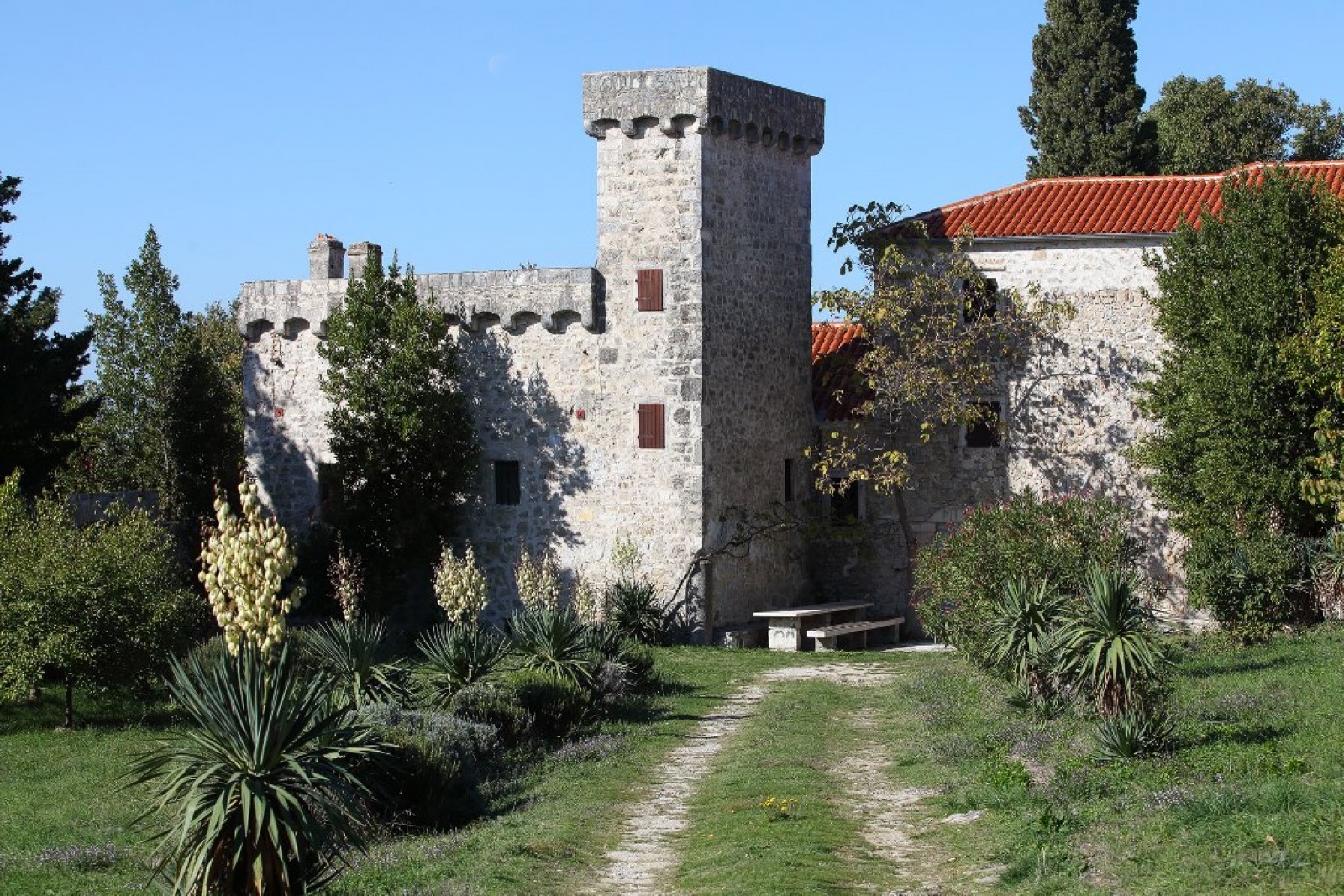
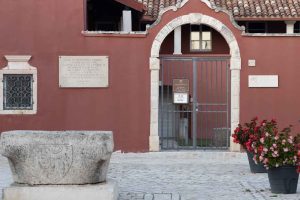
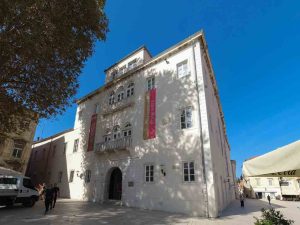
The two-story Nassis house is a layered structure, originally medieval, it was adapted throughout the 15th and 16th centuries, and the most valuable parts of the building belong to the Flamboyant or Late Gothic and Renaissance periods.
Passing through the valuable Late Gothic portal leads to an inner courtyard with a well, on which a stone wellhead was placed in the 18th century.
On the first floor is a large single-light window (monofora), and on the second floor, a harmonious double-light window (bifora) in the Late Gothic style from the end of the 15th century. Several square windows were opened in the 18th century.
It is assumed that the Flamboyant Gothic window elements of Nassis Palace were created by Marko Andrijić, a member of the renowned builder and stonemason family from the island of Korčula.
The Nassi or de Nassis (Našići) were a Croatian noble family from Zadar, mentioned in sources from the first half of the 13th century. Members of the respected and powerful Nassis noble family were merchants, city judges, and rectors throughout history. They held estates in all parts of the Zadar district as well as on the islands, and they also owned mills in the village of Crno near Zadar and salt pans on the island of Pag. The Nassi family died out in the 19th century.
Location
Zadar
Zadar is the oldest continuously inhabited city in Croatia. It is situated on the Adriatic Sea, at the northwestern part of Ravni Kotari region. Zadar serves as the seat of Zadar County and of the wider northern Dalmatian region. The city proper covers 25 km2 (9.7 sq mi) with a population of 71,000 in 2025, making it the second-largest city of the region of Dalmatia and the fifth-largest city in the country.
ExploreGothic
Gothic appeared relatively late in Croatia. In addition to the 13th and 14th centuries, as long as it lasted in Europe, its influence is also visible in the 15th and 16th centuries – for example, on the Trogir and Sibenik cathedrals. Also on the territory of Croatia, you can often see admixtures of Romanesque and Renaissance in Gothic buildings. Gothic influence from European countries adapted to its possibilities and needs and thus created a “domestic artistic expression”. This mixture of styles is most pronounced in Dalmatia. The northern regions were exposed to the influences of Central Europe, while the coastal regions tied their artistic expression to Italian models.
ExploreRenaissance
In the 15th century, Croatia was divided between three states – northern Croatia was a part of the Austrian Empire, Dalmatia was under the rule of the Venetian Republic (with the exception of Dubrovnik), and Slavonia was under Ottoman occupation. Dalmatia was on the periphery of several influences, equidistant from Italy, Ottoman Bosnia, and Austria, so it drew influence from all. In those circumstances in Dalmatia flourished religious and public architecture with clear influences of the Italian Renaissance, but still original.
Explore








Reviews
There are no reviews yet.