
Rector’s Palace – Museum II Palaces
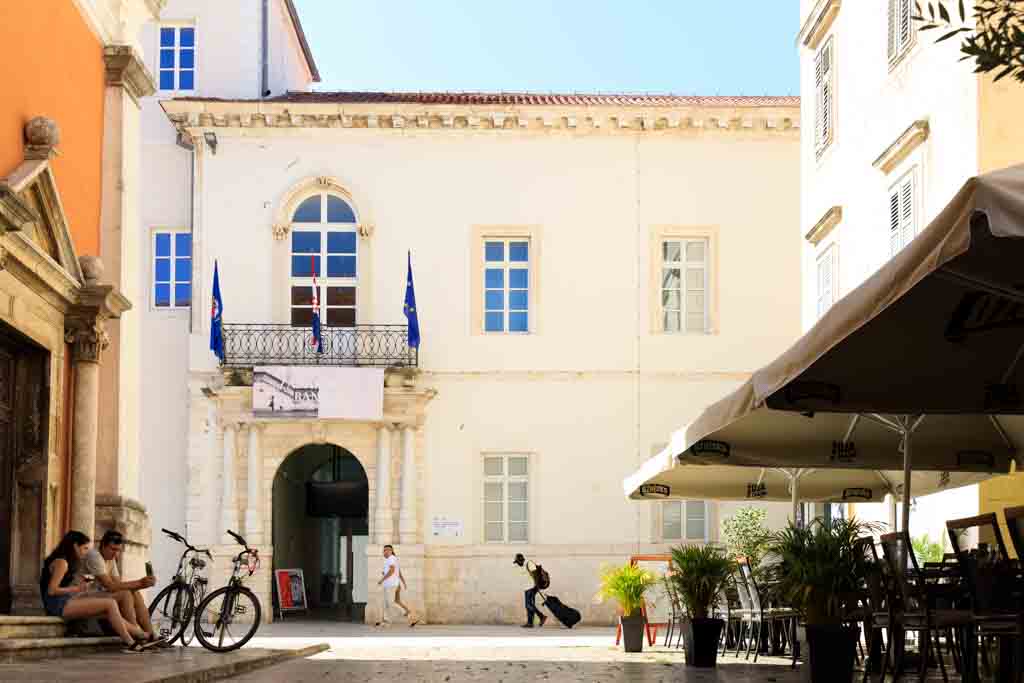
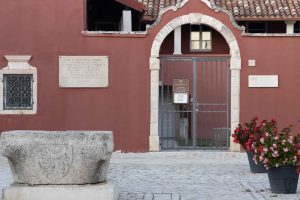
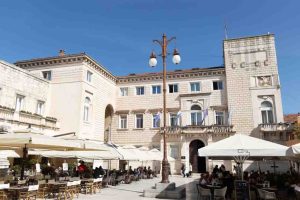
In the modernly renovated space of the Rector’s and Providur’s Palaces are situated the Heritage Museum or the Museum of Two Palaces, various departments of the National Museum Zadar, the Concert Office, and a branch of the Zadar City Library.
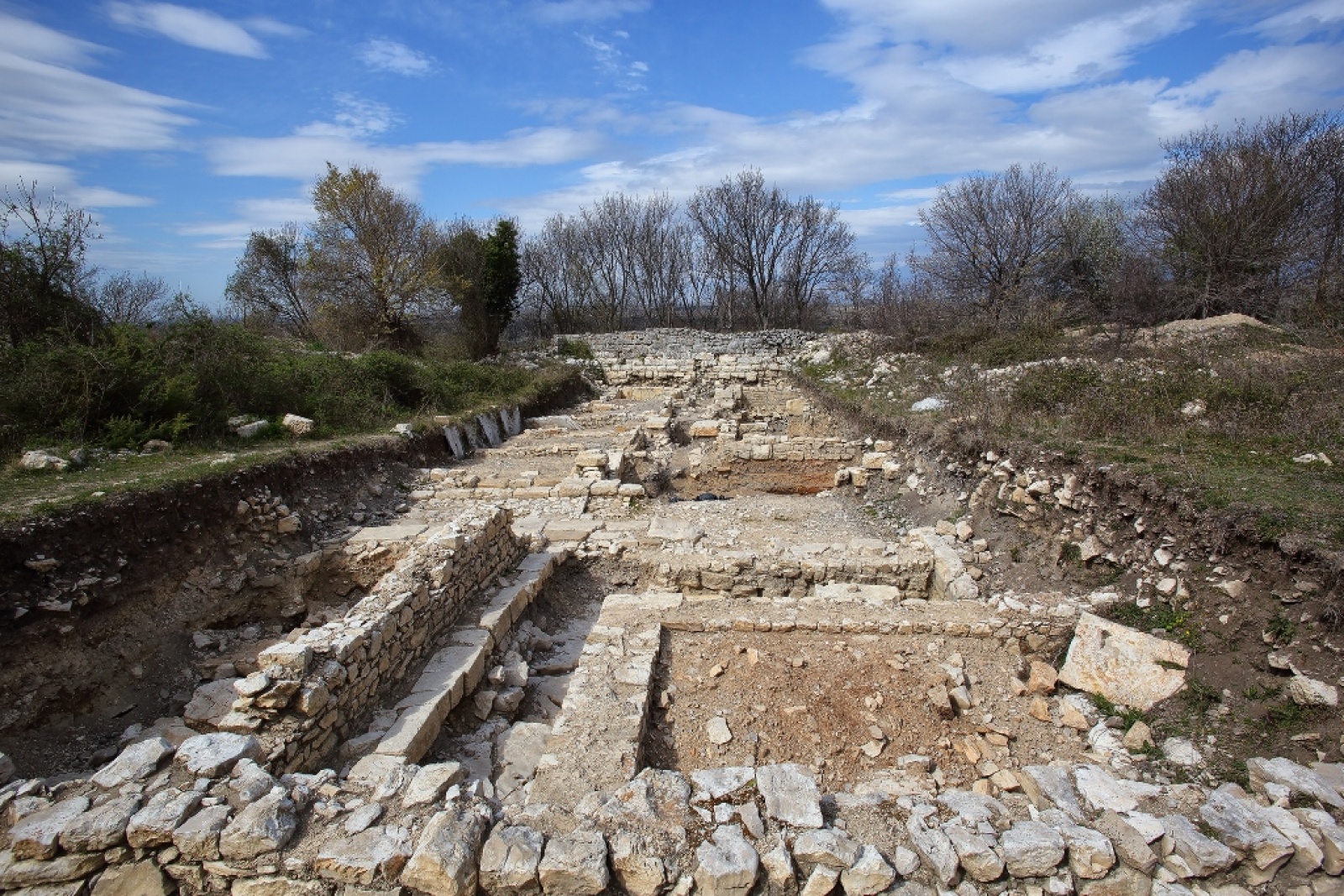
The site of today’s Rector’s Palace was built upon and inhabited as early as Roman times. The Rector’s Palace is mentioned for the first time in a document from 1288 under the name “municipal palace.” Documents also reveal that during the 14th and 15th centuries, the council of the Zadar commune met in the palace.
The main room of the palace, the great hall or council chamber, served various functions over the centuries. In the 16th century, it was a courtroom, in the 18th century, the city theater, in the 19th century, a hall for games and entertainment, and in the 20th century, a concert hall. Today, it is officially called the Bersa Brothers Concert Hall and is managed by the Zadar Concert Office.
As its functions changed, the palace also acquired different names, being historically known as the municipal palace, the court palace, the governor’s palace, the government palace, the viceroy’s palace, and the House of Culture.
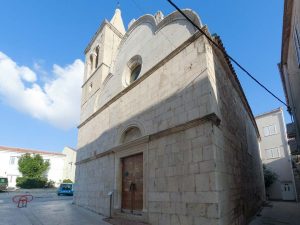
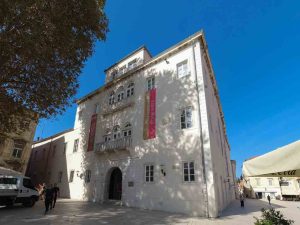
The northern facade, which overlooks the Church of Saint Simeon, is a Neoclassical work by the local architect Frane Zavoreo from 1804. Zavoreo was tasked with renovating the Rector’s and Providur’s Palaces into a residence for the Austrian governor of Dalmatia. It was the first realized project in the symmetrical spirit of Neoclassicism in Zadar, featuring new technical and aesthetic achievements in construction.
After World War II, the Rector’s Palace enriched the cultural life of the city of Zadar for many years through its multiple functions as a city library, a music and ballet school, a concert hall, and it also housed HRT Radio Zadar, the Petar Zoranić mixed choir, and the Juraj Baraković girls’ choir.
It was severely damaged in the Croatian War of Independence in 1991. A shell from one of the city’s barracks caused extensive damage and compromised the building’s stability, rendering it unusable.
Renovation began in 1999 and was completed in 2017, transforming it into a modernly equipped cultural-historical complex and tourist attraction.
In April 2022, the Two Palaces complex – the Providur’s and Rector’s Palaces – was opened. The new complex spans seven thousand square meters and houses:
- Exhibition halls
- City Library – City branch
- Art Gallery – National Museum Zadar
- Natural History Department – National Museum Zadar
- Multipurpose hall – Concert Office Zadar
- Bersa Brothers Concert Hall – Concert Office Zadar
- Multimedia hall – Concert Office Zadar
- Creative hall – Concert Office Zadar
This historical complex has thus become not only a Zadar but also a national modern cultural and artistic center.
Location
Zadar
Zadar is the oldest continuously inhabited city in Croatia. It is situated on the Adriatic Sea, at the northwestern part of Ravni Kotari region. Zadar serves as the seat of Zadar County and of the wider northern Dalmatian region. The city proper covers 25 km2 (9.7 sq mi) with a population of 71,000 in 2025, making it the second-largest city of the region of Dalmatia and the fifth-largest city in the country.
ExploreClassicism
The term Classicism refers to two distinct periods in the evolution of European fine art: an earlier period spanning the 16th to 17th centuries, and a later period (also called Neoclassicism) from 1760 to 1830. In the Austrian lands (which included Croatia at the time), it emerged in the early 19th century.
Explore









Reviews
There are no reviews yet.